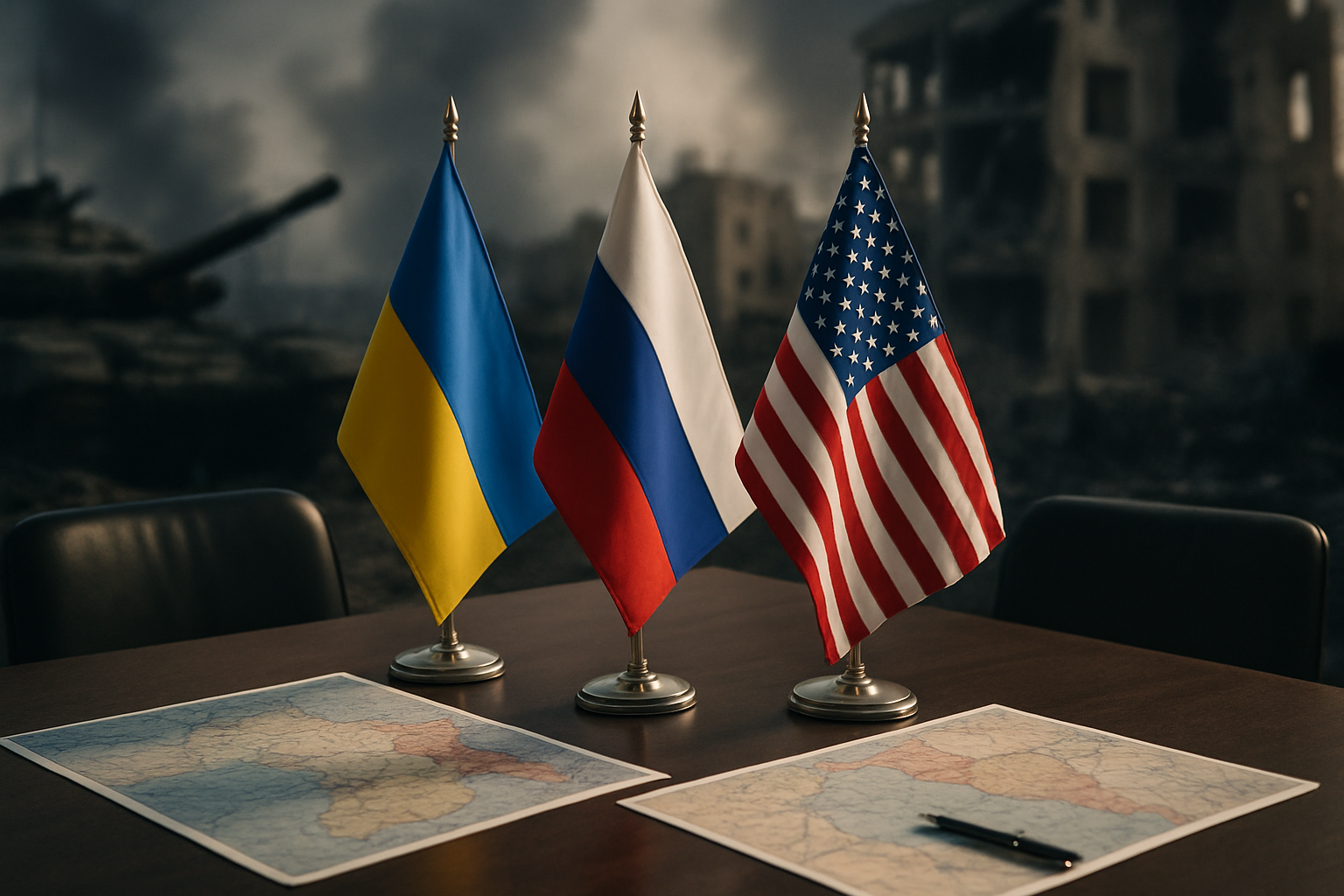
Ukraine-Russia-US trilateral peace talks in Abu Dhabi concluded with historic achievements including a 314-prisoner exchange, while Russian military actions intensified across Ukrainian territories, resulting in multiple civilian casualties and widespread infrastructure damage just hours after negotiations ended.
Abu Dhabi Peace Talks Deliver Mixed Results
The second round of trilateral peace negotiations between Ukraine, Russia, and the United States concluded Thursday in Abu Dhabi with what Ukrainian Defense Minister Rustem Umerov described as "substantial and productive" discussions. The talks, facilitated by UAE neutral hosting, resulted in the first prisoner exchange in five months—314 prisoners of war swapped, with 157 military personnel from each side plus three Russian civilians from the Kursk region returned from Ukrainian custody.
The negotiations, led by Ukrainian Defense Minister Rustem Umerov, Russian military intelligence director Igor Kostyukov, and US Special Envoy Steve Witkoff, represented the most significant diplomatic effort to end the nearly four-year conflict. The structured approach included working groups by topic followed by joint position synchronization, establishing a tested framework for complex conflict resolution.
"New talks between Russians, Ukrainians and Americans are scheduled 'in the coming weeks,' announced Kiev's chief negotiator. They will most likely take place in the United States, according to Volodymyr Zelensky."
— Le Monde Report
Immediate Military Escalation Following Diplomacy
Despite diplomatic progress, Russian forces launched immediate attacks following the talks' conclusion. In Zaporizhzhia region's Vilniansk, two people aged approximately 50 were killed in a Russian drone strike, according to regional military administration head Ivan Fedorov. The attack occurred mere hours after the peace negotiations ended, highlighting the fragile nature of current diplomatic efforts.
Russian forces conducted 517 attacks on 32 settlements in Zaporizhzhia region on February 5-6, resulting in two deaths and five wounded in the city and district. The strikes damaged 18 buildings in the Shevchenkivskyi and Zavodskyi districts, including four multistory apartment buildings.
Ukrainian forces reported 152 combat clashes with Russian invaders on February 5, with the fiercest fighting concentrated on the Pokrovsk axis where 31 separate engagements occurred. According to Ukrainian military sources, Russia suffered approximately 720 soldiers killed or wounded in the past 24 hours, bringing total Russian casualties to approximately 1,244,560 since the conflict began in February 2022.
Widespread Infrastructure Attacks
Russian military operations extended beyond frontline combat to civilian infrastructure targets. In Sumy, Russian forces struck an apartment building with a drone on the morning of February 6. Meanwhile, in Novhorod-Siverskyi, Chernihiv region, Russian attacks damaged administrative and storage facilities of an enterprise, along with approximately 15 households during nighttime strikes.
Kherson region faced particular intensity, with Russian forces using drones, artillery, and aircraft to strike 19 settlements on February 5, leaving one person wounded. The systematic targeting of civilian areas demonstrates Russia's continued strategy of applying pressure through infrastructure damage and civilian casualties.
A separate incident in Odesa's Kyivskyi district involved a car explosion that killed a 21-year-old man, though the circumstances remain under investigation and may not be directly related to military operations.
International Context and Support
Japan emerged as a leading international supporter of Ukraine through economic and humanitarian aid, with commentators noting the conflict tests Japan's ability to sustain international economic diplomacy four years into the war. The sustained international support reflects global recognition that Ukraine "still needs the world" despite the prolonged nature of the conflict.
The Pentagon announced restoration of high-level US-Russia military communications after a four-year suspension since autumn 2021, representing a significant diplomatic achievement alongside the prisoner exchange. The agreement includes deconfliction measures, incident prevention protocols, and advance notification systems designed to reduce escalation risks while military operations continue.
Ukrainian Retaliatory Operations
Ukrainian forces responded to Russian attacks with strikes on Russian territory. Romanian media reported that Ukrainian bombardments caused "serious damage" in the Russian border city of Belgorod, according to the region's governor. These retaliatory strikes demonstrate Ukraine's capability to respond to Russian aggression while maintaining defensive postures.
The targeting of Belgorod represents part of Ukraine's strategy to impose costs on Russian territory for continued attacks on Ukrainian civilian infrastructure and population centers.
Economic and Investment Developments
Despite ongoing conflict, Ukraine's western Zakarpattia region has attracted over UAH 10 billion in investment during four years of Russia's full-scale war. The Batiovo community's success in securing investment demonstrates resilience and continued economic activity even under wartime conditions, providing hope for post-conflict reconstruction efforts.
This investment flow indicates international confidence in Ukraine's long-term stability and economic prospects, even amid current military challenges.
Diplomatic Framework Evolution
The UAE's role as neutral host proved crucial for achieving concrete humanitarian results amid ongoing military operations. Future meetings are planned to continue the established framework, with potential venues including the United States according to President Zelensky's latest statements.
However, fundamental positions remain far apart, with Russia insisting on territorial control of eastern Ukrainian regions while Ukraine maintains its position on territorial integrity. The prisoner exchange serves as a confidence-building measure, demonstrating that sustained diplomatic engagement can produce tangible results even during active conflict.
"Work on an agreement to end the war between Russia and Ukraine will take at least 1.5 months, said a TASS source familiar with the course of negotiations."
— Russian Source via Meduza
Future Prospects and Challenges
The talks' structure with working groups provides a proven methodology for addressing the multi-dimensional nature of the conflict. However, the main sticking point remains the long-term fate of eastern Ukrainian territories currently under Russian control.
Ukrainian sources indicate that the Ukrainian side seeks security guarantees for Odesa, highlighting concerns about maritime access and economic viability in any future agreement. The complexity of these issues suggests that while diplomatic progress is possible, fundamental disagreements will require unprecedented compromise from all parties.
The timing of continued Russian attacks immediately following diplomatic engagement underscores the challenges facing negotiators. The pattern suggests that military pressure tactics continue alongside diplomatic efforts, complicating the peace process and requiring sustained international support for Ukraine's negotiating position.
As negotiations prepare to continue in coming weeks, the international community watches closely for signs of genuine progress toward ending Europe's deadliest conflict since World War II. The prisoner exchange breakthrough provides hope, but the continued military escalation demonstrates that achieving lasting peace will require sustained diplomatic commitment from all parties and continued international engagement to support conflict resolution efforts.