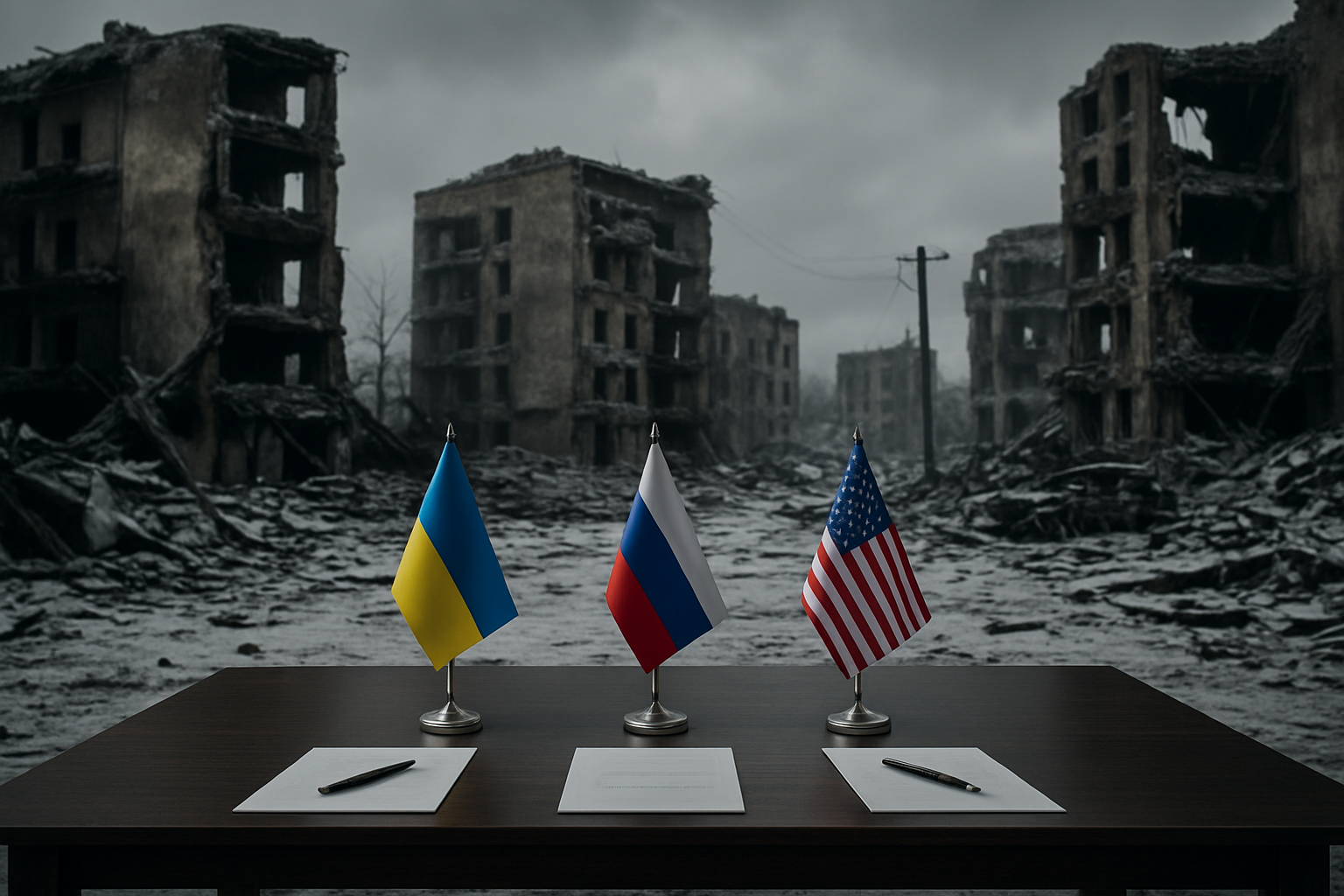
As Ukraine approaches the fourth anniversary of Russia's full-scale invasion on February 24, 2022, the conflict has entered a decisive phase marked by unprecedented diplomatic breakthroughs alongside continued military escalation and systematic attacks on civilian infrastructure.
Current Military Situation and Civilian Impact
Recent developments paint a stark picture of intensifying warfare across multiple fronts. Russian forces have dramatically accelerated territorial gains, capturing 481 square kilometers in January 2026 compared to 260 square kilometers in December 2025—an 85% increase representing the fastest monthly expansion in recent periods.
The human cost continues to mount with President Volodymyr Zelensky's historic disclosure that 55,000 Ukrainian soldiers have been officially confirmed killed since the invasion began, with a "large number" still classified as missing in action. International research centers estimate the actual military death toll could be 2-3 times higher when including undocumented casualties and missing personnel.
Civilian casualties remain a devastating aspect of the conflict, exemplified by the recent drone attack on a suburban train in Ukraine's Dnipropetrovsk region that killed one person and wounded nine others, including children. This attack represents part of Russia's systematic targeting of civilian infrastructure that has characterized the "winter warfare" strategy.
"This winter has been the most difficult since the beginning of the war," President Zelensky stated in his recent video address, highlighting the unprecedented challenges facing Ukrainian civilians.
— President Volodymyr Zelensky
Energy Infrastructure Under Siege
Russia's strategy of targeting energy infrastructure has reached new levels of intensity, with attacks leaving over 1,170 buildings in Kyiv without heating during minus-30°C temperatures. This "energy terrorism" approach represents systematic violations of the Geneva Conventions regarding civilian protections during extreme winter conditions.
Ukrainian nuclear power plants have been forced to halt electricity production for the first time since the conflict began, creating unprecedented security risks according to International Atomic Energy Agency (IAEA) monitoring reports. The attacks have put "all of Europe at risk of a nuclear incident," according to Ukrainian Foreign Ministry warnings.
Emergency warming centers have been activated nationwide, with over 17.8 million Ukrainians currently accessing winter support programs. The systematic targeting of repair personnel—with 15 DTEK energy workers killed in recent attacks—demonstrates calculated efforts to maximize civilian impact.
Historic Diplomatic Breakthrough
Despite military escalation, February 2026 witnessed unprecedented diplomatic progress through trilateral peace negotiations involving Ukraine, Russia, and the United States. The breakthrough came through talks hosted in Abu Dhabi, achieving the first prisoner exchange in five months with 314 personnel swapped—157 military personnel from each side plus 3 Russian civilians from the Kursk region.
Ukrainian Defense Minister Rustem Umerov described the talks as "substantial and productive," representing the most significant diplomatic engagement since the conflict began. The negotiations also restored US-Russia military communications after a four-year suspension, establishing Pentagon deconfliction protocols that extend globally to operations in Syria, the Arctic, and Africa.
Building on this momentum, Geneva peace talks held February 17-18 achieved "significant progress" on ceasefire monitoring mechanisms according to US Special Envoy Steve Witkoff, though fundamental territorial disputes remain unresolved. European "Big 5" observers—Germany, France, Italy, the UK, and Poland—participated for the first time, adding institutional weight to the negotiations.
Nuclear Governance Crisis
The diplomatic efforts occur against the backdrop of an unprecedented nuclear governance crisis. The New START treaty between the United States and Russia expired on February 5, 2026, marking the first time in over 50 years without bilateral nuclear constraints between the superpowers. Together, the two nations control approximately 80% of the world's nuclear weapons—Russia with 4,380 warheads and the US with 3,708.
UN Secretary-General António Guterres has warned of a "grave turning point" with nuclear risks at their "highest level in decades." The restored military communications between Moscow and Washington now represent the only remaining major diplomatic channel between the nuclear superpowers.
International Support Reaches Historic Levels
International backing for Ukraine has reached unprecedented scales despite growing divisions within Europe. The European Union approved a historic €90 billion loan package—the largest single-nation assistance package in EU history—though Slovakia, the Czech Republic, and Hungary refused participation, exposing deep European divisions.
Additional support includes Sweden and Denmark's €246 million air defense package featuring Tridon systems, Germany's delivery of 35 Patriot missiles, and World Bank allocation of $40 million for energy restoration efforts. NATO Secretary-General Mark Rutte made a surprise visit to Kyiv, condemning Russian attacks as sending a "bad signal" during diplomatic negotiations.
However, European unity faces its deepest test since the conflict began, with Hungarian Prime Minister Viktor Orbán threatening to veto both the €90 billion loan and the EU's 20th sanctions package over disputes regarding the Druzhba oil pipeline. Lithuania's Foreign Minister warned that "the EU cannot become Budapest's hostage."
Territorial Disputes Remain Core Challenge
Despite diplomatic breakthroughs, the fundamental sticking point remains unchanged: eastern Ukrainian territories currently under Russian control. Russia demands territorial recognition and insists that any Putin-Zelensky direct talks must occur in Moscow. Ukraine maintains its territorial integrity position while seeking long-term security guarantees.
President Zelensky has categorically rejected territorial concessions regarding Donbas, stating that the Ukrainian people would reject any referendum "handing over territories" as a "failure story." He has also criticized pressure from the Trump administration, arguing it is "not fair that Trump keeps calling on Ukraine, not Russia, to make concessions."
The acceleration of Russian territorial gains in January potentially strengthens Moscow's bargaining position, creating urgency for innovative diplomatic solutions that can bridge the gap between Ukraine's sovereignty demands and Russia's territorial acquisitions.
June 2026 Deadline and Washington Venue
The Trump administration has established a comprehensive peace timeline with a June 2026 deadline, with talks potentially moving to Washington—suggesting the possibility of presidential-level engagement. This evolution from Abu Dhabi to Geneva to Washington represents a deliberate diplomatic escalation strategy.
The June deadline creates unprecedented pressure for territorial compromise innovation, testing whether sustained diplomatic engagement can overcome military escalation in Europe's deadliest conflict since World War II. Success could provide a template for 21st-century conflict resolution, while failure might intensify operations globally and undermine diplomatic credibility.
Ongoing Military Operations
Military operations continue across multiple fronts despite diplomatic engagement. Russian forces launched over 10,000 drones and bombs in January 2026 alone, with recent attacks killing civilians in Zaporizhzhia and other regions. Ukrainian air defenses successfully neutralized 95 of 115 Russian drones in recent overnight operations, demonstrating continued defensive capabilities.
On the Ukrainian side, forces have conducted long-range strikes including attacks on Russian oil facilities in Crimea and successful operations in the Zaporizhzhia region where nine settlements have been retaken since late January according to military sources.
A tragic incident highlighted the war's impact on Ukrainian society when a 16-year-old Russian agent was detained in Kharkiv while planning attacks on police officers, demonstrating the conflict's reach into domestic security concerns.
Humanitarian and Legal Implications
The systematic targeting of civilian infrastructure during life-threatening winter conditions represents clear violations of international humanitarian law. The Geneva Conventions explicitly protect civilian populations, yet the pattern of attacking energy systems, repair personnel, and residential areas during extreme cold constitutes what Ukrainian officials term "energy terrorism."
International legal experts document these attacks as war crimes, with implications extending beyond Ukraine to questions of international law enforcement and territorial sovereignty principles in the 21st century. The systematic nature of civilian targeting during diplomatic negotiations raises questions about genuine peace commitments versus humanitarian pressure tactics.
Looking Ahead: Critical Phase Approaching
As the conflict approaches its fourth anniversary, Ukraine faces what may be the most significant diplomatic opportunity since the invasion began. The restoration of US-Russia military communications and successful prisoner exchanges demonstrate that sustained diplomatic engagement can produce concrete humanitarian results even amid ongoing military operations.
However, the fundamental challenge remains bridging the gap between Ukraine's territorial integrity demands and Russia's control over eastern territories. The June 2026 Washington venue talks represent the highest level of potential US engagement, testing whether innovative diplomatic solutions can resolve decade-old territorial challenges.
The stakes extend far beyond Ukraine and Russia, encompassing European security architecture redefinition, international law enforcement credibility, democratic governance under extreme pressure, and conflict prevention mechanisms for global application. Success could end Europe's deadliest war since World War II while providing a template for modern conflict resolution. Failure may intensify military operations globally and undermine diplomatic solutions' credibility for territorial disputes worldwide.
As winter 2026 continues and diplomatic momentum builds toward the June deadline, the international community watches to see whether diplomatic innovation can overcome traditional limitations in resolving complex territorial disputes, with implications that will shape global security frameworks for decades to come.