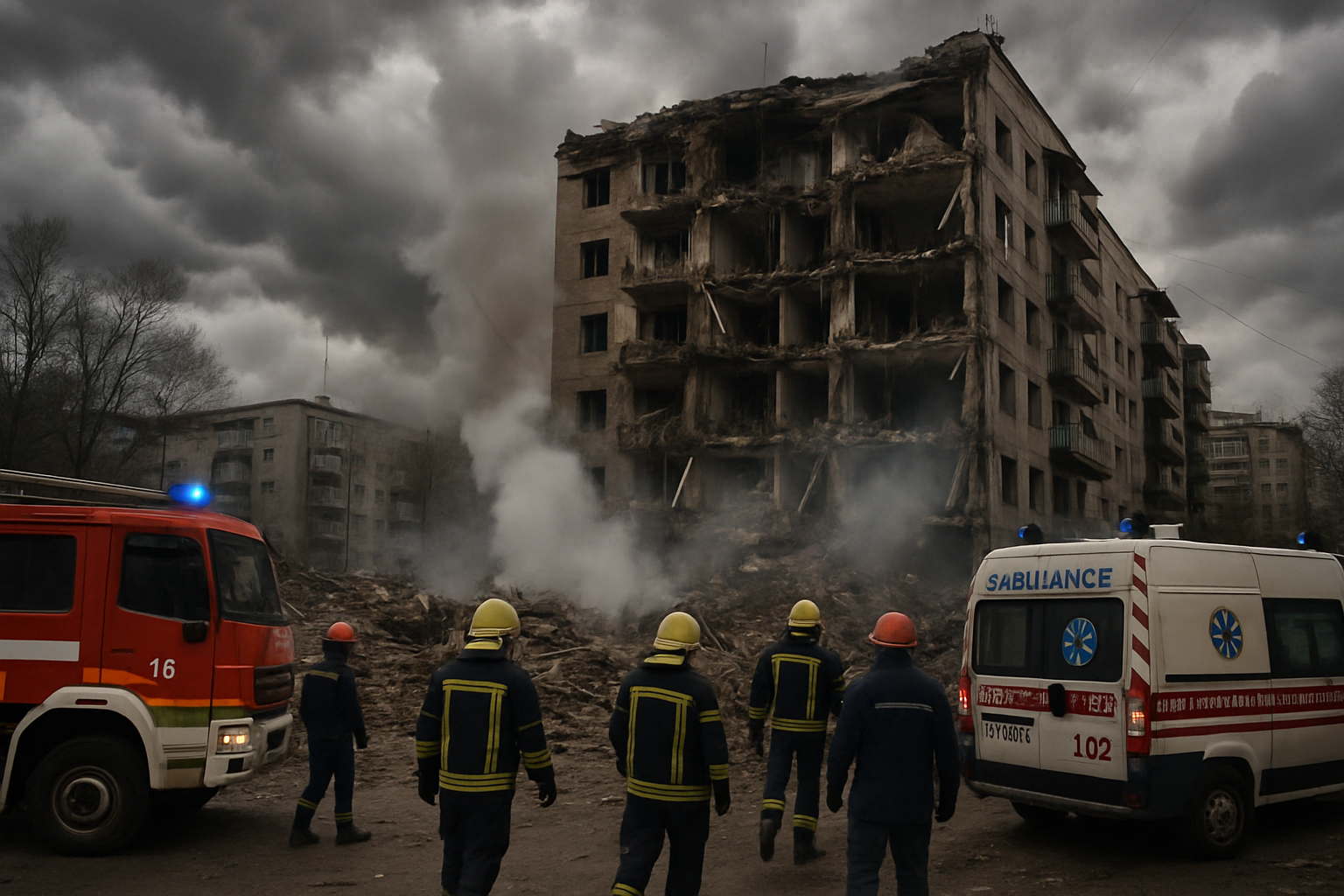
Russian strikes on the Ukrainian city of Dnipro killed at least eight people and wounded 47-56 others, according to regional military administration officials, as Ukrainian forces continued operations on the Kupiansk front where they destroyed Russian shelters and equipment.
The deadly attacks on Dnipro occurred as part of a broader Russian assault using over 660 drones and missiles targeting multiple Ukrainian cities. Ukrainian air defenses intercepted approximately 80% of missiles and 94% of drones, but several strikes penetrated defenses, causing significant civilian casualties in the eastern city.
Dnipro Under Attack
According to French media reports citing Ukrainska Pravda, the Russian attacks on Dnipro also left at least 56 people wounded. Regional authorities confirmed that a four-story residential apartment building was partially destroyed in the strikes, with rescue operations ongoing as people remained potentially trapped under debris.
Local police reported that 208 residents filed property damage claims following the enemy attacks on April 25, highlighting the extensive civilian infrastructure damage beyond the human casualties. The systematic targeting of residential areas represents a continuation of what Ukrainian officials characterize as "energy terrorism" against civilian populations.
Kupiansk Front Operations
Despite the defensive pressures from Russian attacks, Ukrainian Defense Forces successfully destroyed a Russian shelter in the Kupiansk sector of the front, demonstrating continued operational capabilities along the contested frontlines. The operation reflects ongoing efforts to disrupt Russian positions in strategically important areas of eastern Ukraine.
Military analysts note that the Kupiansk front remains one of the most active sectors, with Ukrainian forces working to maintain defensive positions while conducting targeted strikes against enemy infrastructure and personnel concentrations.
Broader Strategic Context
The latest attacks occur against the backdrop of suspended trilateral peace talks between Ukraine, Russia, and the United States. These negotiations, which achieved significant breakthroughs in February 2026 including a 314-prisoner exchange and restored US-Russia military communications after a four-year suspension, remain indefinitely postponed due to the Iran crisis consuming American foreign policy attention.
The February diplomatic achievements represented the most significant progress since the conflict began, with Geneva talks achieving what US Special Envoy Steve Witkoff described as "significant progress" on ceasefire monitoring mechanisms. However, fundamental territorial disputes remain unresolved, with Russia demanding recognition of occupied eastern territories while Ukraine maintains its territorial integrity position.
International Response and Support
The attacks have drawn condemnation from international partners who continue to provide substantial military and humanitarian support to Ukraine. The European Union's historic €90 billion loan package represents the largest single-nation assistance ever provided, though divisions persist with Slovakia, Czech Republic, and Hungary refusing participation.
Germany continues to provide Patriot missile systems, while Sweden and Denmark have committed €246 million in air defense systems. The United Kingdom has revealed four operational maintenance, repair, and overhaul (MRO) facilities in Ukraine servicing Western-supplied equipment, with a fifth facility planned.
Nuclear Governance Crisis
The ongoing conflict operates under unprecedented conditions following the expiration of the New START treaty on February 5, 2026 - marking the first time in over 50 years without US-Russia nuclear constraints. Both nations control approximately 80% of global nuclear weapons, with Russia possessing 4,380 warheads and the US maintaining 3,708.
UN Secretary-General António Guterres has warned of a "grave turning point," describing current nuclear risks as the "highest in decades." The restoration of Pentagon-Russian General Staff communications represents the only remaining formal superpower diplomatic channel.
Humanitarian Crisis Deepens
Ukrainian President Volodymyr Zelensky has disclosed that 55,000 Ukrainian soldiers have been officially killed, with a "large number" missing in action. International estimates suggest actual casualties may be 2-3 times higher than official figures. Additionally, over 17.8 million Ukrainians are accessing winter support programs due to systematic infrastructure targeting.
The pattern of attacks on civilian infrastructure, including the targeting of repair personnel, represents violations of Geneva Conventions. Fifteen DTEK energy workers have been killed while restoring power infrastructure, demonstrating the calculated nature of civilian pressure strategies during extreme conditions.
Regional Security Implications
The conflict's expansion beyond Ukrainian borders was highlighted when Russian drone fragments fell in Romania's Galati region, damaging an electricity pole and household annex. This marks the first recorded property damage in a NATO country from Russian debris, underscoring the conflict's potential for geographic spillover.
Romania evacuated the affected area citing explosive charge concerns, demonstrating how the conflict's technological warfare methods pose risks to neighboring allied territories. The incident highlights the expanding geographic impact that threatens NATO borders and complicates regional security calculations.
Ukraine's Strategic Transformation
Despite facing continued attacks, Ukraine has evolved from aid recipient to security provider, deploying over 200 military specialists to Middle Eastern countries including the UAE, Qatar, Jordan, Bahrain, and Kuwait. These experts share drone defense expertise against Iranian Shahed drones - the same weapons being used to attack Ukrainian infrastructure.
This strategic transformation creates potential new negotiating leverage for future diplomatic conditions while demonstrating Ukraine's growing role as a global security partner. The evolution reflects the country's adaptation to 21st-century warfare technologies and international cooperation frameworks.
Economic Pressure Campaign
Ukrainian intelligence reports indicate that Russian authorities are seeking new revenue sources to replenish the state budget, including increasing the burden on citizens and businesses. This suggests growing economic pressures from the sustained conflict and international sanctions regime.
The combination of military operations, international isolation, and resource allocation challenges is forcing Moscow to make difficult economic choices that may influence long-term strategic calculations about the conflict's sustainability.
Looking Ahead
The timeline for resumed peace negotiations depends on the resolution of the Iran crisis and broader Middle East stability. Military escalation continues with systematic civilian targeting while Ukraine expands international partnerships and maintains operational capabilities across multiple fronts.
Framework preservation mechanisms from the February breakthrough remain intact for potential reactivation when favorable diplomatic conditions return. The stakes include European security architecture redefinition, international law enforcement credibility, and territorial sovereignty principles that will influence 21st-century conflict resolution approaches.
Success in eventual resumed talks could end Europe's deadliest war since World War II and provide a template for territorial dispute resolution. However, failure may allow continued escalation with global implications for diplomatic solutions to territorial conflicts worldwide.