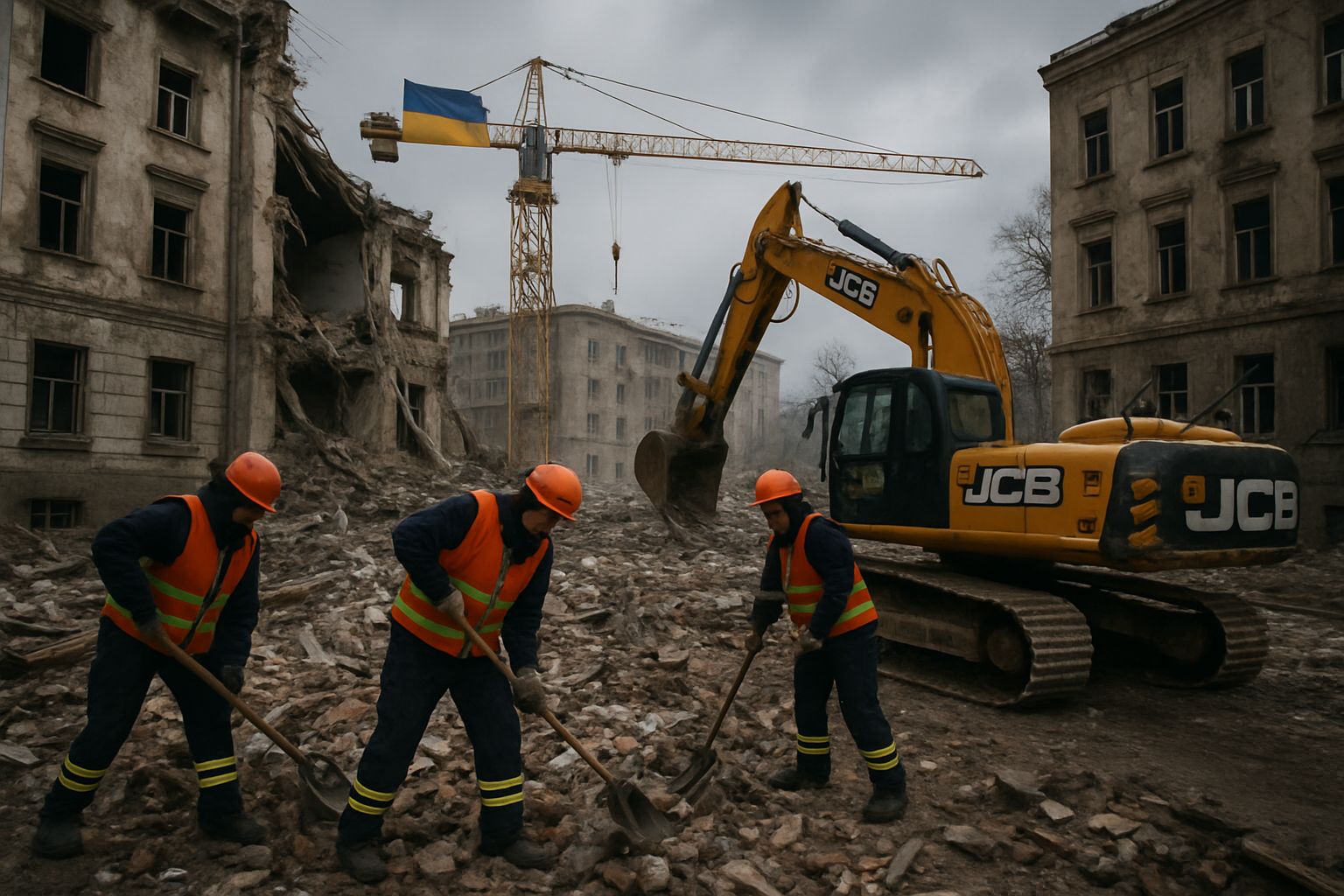
Russia launched one of its largest coordinated drone assaults of the war, deploying nearly 1,000 attack drones over 24 hours with over 550 launched in rare daytime operations across western Ukrainian cities, marking a significant escalation in aerial warfare tactics.
The unprecedented assault killed at least six people and wounded over 40 others, including children, according to multiple Ukrainian officials. President Volodymyr Zelensky described the attacks as "absolute depravity," emphasizing the systematic targeting of civilian infrastructure and cultural sites.
Historic Daytime Drone Offensive
Ukrainian air defense forces successfully intercepted 367 of 396 drones launched by Russian forces, with the assault representing one of the largest single-day drone attacks since the full-scale invasion began. The attacks primarily targeted western Ukrainian regions including Lviv, Ivano-Frankivsk, and Vinnytsia – areas that have experienced fewer large-scale assaults throughout the conflict.
In a particularly concerning development, Russian drones caused damage to UNESCO World Heritage sites in Lviv's historic city center, representing the first confirmed targeting of internationally protected cultural property. The attacks on UNESCO sites violate the 1954 Hague Convention protecting cultural heritage during armed conflict.
In Ivano-Frankivsk, two people were killed including a National Guard soldier and his 15-year-old daughter who were visiting a maternity hospital at the time of the attack. The targeting of medical facilities constitutes additional war crimes under international humanitarian law.
Diplomatic Stalemate Continues
The massive drone assault occurred as peace negotiations between Ukraine, Russia, and the United States remain indefinitely suspended due to the Iran crisis in the Middle East. President Zelensky confirmed that trilateral talks originally scheduled for this period have been postponed, stating there are "no necessary signals for trilateral meeting until security situation allows."
The suspension represents a significant setback to diplomatic momentum that had achieved historic breakthroughs in February 2026, including a 314-prisoner exchange – the first in five months – and the restoration of US-Russia military communications after a four-year suspension following the initial invasion.
Geneva peace talks in February had shown "significant progress" on ceasefire monitoring mechanisms with European "Big 5" observers (Germany, France, Italy, UK, Poland) participating for the first time in the trilateral format. However, fundamental territorial disputes remain unresolved, with eastern Ukrainian territories under Russian control continuing to be the primary sticking point.
Ukraine's Strategic Evolution
Despite the diplomatic challenges, Ukraine has continued expanding its international partnerships and evolving from aid recipient to security provider. Ukrainian military experts are now deployed to Middle Eastern nations including the UAE, Qatar, Jordan, Bahrain, and Kuwait to share expertise in combating Iranian Shahed drones – the same weapons systems being used in attacks against Ukrainian infrastructure.
The United Kingdom has revealed the existence of four operational maintenance, repair, and overhaul (MRO) facilities within Ukraine servicing Western-supplied equipment, with a fifth facility planned. This represents the first public acknowledgment of extensive military infrastructure enabling rapid equipment repair without transport to neighboring countries.
"Ukraine's transformation from an aid recipient to a security provider demonstrates our nation's resilience and the strategic value of our battlefield experience."
— Ukrainian Defense Ministry Official
Reconstruction and Financial Challenges
As Ukraine continues to face military pressure, the country's reconstruction and financial needs remain substantial. According to the Ukrainian Finance Ministry, external financing requirements amount to approximately $52 billion in 2026 to cover state budget needs alone.
The US-Ukraine Reconstruction Investment Fund (URIF) has approved its first investment, backing Ukrainian technology company Sine Engineering, marking a significant milestone in post-conflict economic recovery planning. Additionally, Ukraine has successfully returned 2,058 deported children with active support from 38 countries as well as the Council of Europe and the European Union.
International support continues with the EU's historic €90 billion loan package – the largest single-nation assistance program in European history – though Slovakia, Czech Republic, and Hungary have refused participation, exposing persistent divisions within the European Union.
Nuclear Governance Crisis
The conflict continues against the backdrop of an unprecedented nuclear governance crisis. The New START treaty between the United States and Russia expired on February 5, 2026, marking the first time in over 50 years without bilateral nuclear constraints between the superpowers.
Both nations control approximately 80% of global nuclear weapons, with the UN Secretary-General describing the situation as a "grave turning point" where nuclear risks are at their "highest in decades." The restoration of military communications through diplomatic channels represents the only remaining formal superpower diplomatic mechanism.
Humanitarian Impact and International Response
The systematic targeting of civilian infrastructure continues to violate Geneva Convention protections. Over 1,170 buildings in Kyiv remain without adequate heating following previous "energy terrorism" attacks during harsh winter conditions. Ukrainian nuclear plants were forced to halt electricity production for the first time in the conflict due to grid attacks.
President Zelensky has disclosed that 55,000 Ukrainian soldiers have been officially killed, with a "large number" still missing. International estimates suggest actual casualties could be 2-3 times higher when including undocumented deaths and missing personnel.
The 16th meeting of the Steering Committee of the Donor Platform for Ukraine took place in Kyiv, where Prime Minister Svyrydenko outlined reconstruction priorities to international partners. Over 17.8 million Ukrainians continue to access winter support programs through coordinated international assistance.
Regional Impact and Future Outlook
The conflict's impact extends beyond Ukraine's borders, with casualties from recent Russian drone attacks in the Vinnytsia region rising to 21 injured civilians, with damage reported to 84 households across three communities. The systematic expansion of targeting to western Ukrainian regions represents a strategic shift in Russian military doctrine.
Hungary's continued threats to veto EU aid packages over the Druzhba pipeline dispute create ongoing tensions within European unity. Lithuanian officials have warned that "the EU cannot become Budapest's hostage," highlighting the challenges of maintaining unified Western support.
The suspension of trilateral peace talks due to competing Middle East priorities demonstrates how interconnected regional conflicts can derail promising diplomatic initiatives. The framework for negotiations remains intact, with prisoner exchange mechanisms and structured negotiation formats preserved for potential reactivation when conditions permit.
Strategic Implications
The current phase represents one of the most critical junctures since the conflict began. Success in eventual resumed talks could end Europe's deadliest war since World War II and provide a template for 21st-century territorial dispute resolution. Failure may result in continued military escalation with global implications for international law enforcement and territorial sovereignty principles.
Ukraine's evolution into a security provider role, combined with its growing defense industry comprising 450 companies and 10 European export centers, suggests a fundamental transformation in the country's strategic positioning regardless of immediate diplomatic outcomes.
The stakes extend far beyond Ukraine itself, encompassing European security architecture redefinition, international law enforcement credibility, and territorial sovereignty principles that will shape power competition for decades to come. The international community continues to watch whether diplomatic innovation can ultimately overcome military escalation in resolving this pivotal conflict.