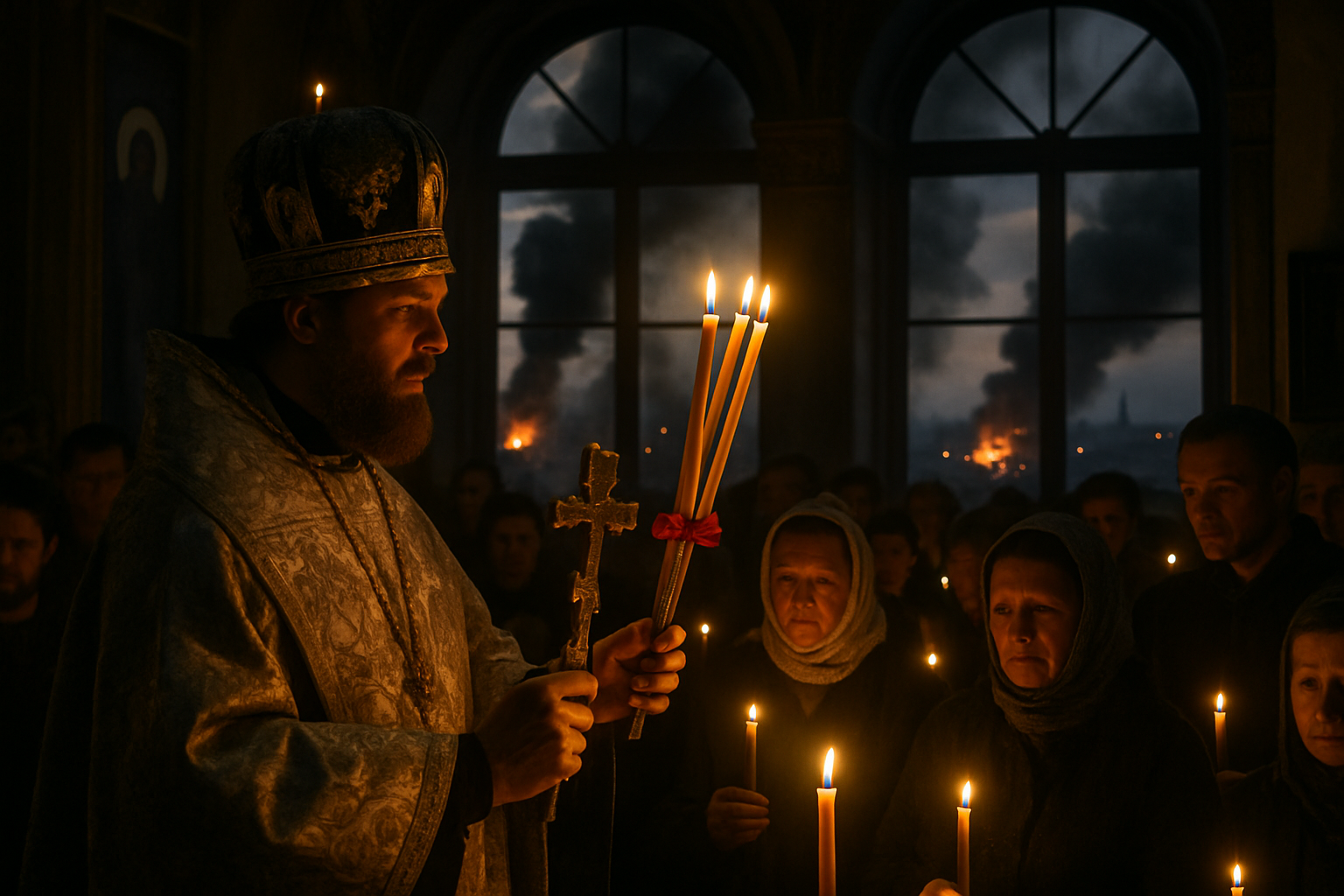
Ukraine documented 7,696 ceasefire violations by Russian forces during the 32-hour Orthodox Easter humanitarian pause, marking another failed attempt at religious observance amid the ongoing four-year conflict that has devastated Eastern Europe.
President Vladimir Putin had declared the ceasefire to run from Saturday at 4 PM until midnight Sunday, following a week-long advocacy campaign by Ukrainian President Volodymyr Zelensky. However, Ukrainian military officials reported 91 combat clashes along the frontline, with Russian forces continuing drone operations and artillery strikes throughout the supposed truce period.
Systematic Ceasefire Violations Documented
According to Ukrainian Defense Ministry reports, Russian forces maintained aggressive operations despite the declared humanitarian pause. The violations included drone strikes, artillery bombardments, and ground assaults across multiple sectors of the 1,000-kilometer front line.
"Since the ceasefire was declared, Russian forces have generally adhered to its terms, but continue combat operations in certain areas, particularly using drones," Ukrainian military officials stated, highlighting the selective nature of Russian compliance.
The Easter ceasefire marked the fourth consecutive failed Orthodox Easter truce since the February 2022 invasion began, demonstrating the entrenched nature of the conflict that transcends even shared religious traditions observed by over 500 million Orthodox Christians worldwide.
Ukraine's Unmanned Systems Forces Achievement
In a significant military milestone, Ukraine's Unmanned Systems Forces (USF) reported striking over 24,000 pieces of Russian military equipment during their first 10 months of operation. The specialized unit, established in response to the evolving nature of modern warfare, has fundamentally changed battlefield dynamics through precision drone operations.
"We are doing what needs to be done"
— Ukrainian Unmanned Systems Forces Statement
The achievement represents a transformation in military strategy, with Ukrainian forces leveraging technological advantages to offset conventional military disparities. The USF's success has contributed to Ukraine's evolution from aid recipient to security provider, with Ukrainian military experts now deployed across five Middle Eastern countries sharing drone defense expertise.
Peace Talks Remain Suspended
The ceasefire violations occurred against the backdrop of indefinitely suspended trilateral peace talks between Ukraine, Russia, and the United States. The negotiations, which had achieved significant breakthroughs in February 2026 including a historic 314-prisoner exchange and restoration of US-Russia military communications, have been derailed by the ongoing Iran crisis consuming American foreign policy attention.
The February diplomatic momentum had raised hopes for substantive progress, with Geneva talks achieving what US Special Envoy Steve Witkoff described as "significant progress" on ceasefire monitoring mechanisms. European "Big 5" observers from Germany, France, Italy, the UK, and Poland participated for the first time, adding institutional weight to the process.
However, the fundamental territorial disputes remain unchanged. Russia continues to demand recognition of occupied eastern Ukrainian territories and insists on Moscow as the venue for Putin-Zelensky talks, while Ukraine maintains its territorial integrity position.
Russia's Agricultural Budget Crisis
Adding to Russia's mounting challenges, intelligence reports indicate the Kremlin is planning to reduce state support for its agricultural sector amid a growing budget deficit. This decision represents a significant policy shift, as the agricultural sector had been positioned as a strategic priority for food security and export revenues.
The budget constraints reflect the broader economic pressures facing Russia after four years of conflict and international sanctions. The reduction in agricultural support comes as the country faces increased military expenditure and the need to fund continued operations across multiple fronts.
International Context and Nuclear Concerns
The failed Easter ceasefire occurs within an unprecedented nuclear governance crisis. The New START treaty between the United States and Russia expired on February 5, 2026, marking the first time in over 50 years without bilateral nuclear constraints between the superpowers. Both nations control approximately 80% of global nuclear weapons, with Russia possessing 4,380 warheads and the US maintaining 3,708.
UN Secretary-General António Guterres has described the current situation as a "grave turning point," warning that nuclear risks are at their "highest levels in decades." The restored military communications protocols represent the only remaining formal diplomatic channel between the nuclear superpowers.
Humanitarian Impact and War Crimes
The systematic violations during a religious holiday underscore the calculated nature of Russia's approach to civilian pressure tactics. Ukraine has officially disclosed that 55,000 soldiers have been killed since the invasion began, with a "large number" missing. International estimates suggest actual casualties may be two to three times higher.
The "energy terrorism" strategy continues to affect civilian populations, with over 1,170 Kyiv buildings still lacking adequate heating from previous attacks. Nuclear power plants were forced to halt electricity production for the first time in the conflict, violating Geneva Convention protections for civilian infrastructure.
Framework Preservation and Future Prospects
Despite the suspension of formal talks, diplomatic achievements from the February breakthrough remain intact. The prisoner exchange mechanisms, Pentagon-Moscow deconfliction protocols covering operations in Syria, the Arctic, and Africa, and the proven UAE methodology for structured negotiations can be reactivated when conditions permit.
President Zelensky has categorically rejected territorial concessions, stating that the Ukrainian people would reject "handing over territories" as a "failure story." The territorial sovereignty principles at stake extend far beyond Ukraine, affecting international law enforcement credibility and territorial dispute resolution templates for the 21st century.
Strategic Implications for European Security
The failed Easter ceasefire demonstrates the conflict's entrenchment, transcending religious and cultural boundaries that have historically provided respite during times of war. The Orthodox Easter period, observed by hundreds of millions of Christians worldwide, failed to provide even a temporary humanitarian pause.
The stakes include European security architecture redefinition, with the Munich Security Conference declaring that the "post-war order no longer exists." France has begun discussions about expanding nuclear deterrent capabilities beyond national scope for the first time since the Cold War, reflecting the fundamental changes in European security calculations.
Success in eventual resumed talks could end Europe's deadliest war since World War II and provide a conflict resolution template for territorial disputes worldwide. However, failure risks continued escalation with global implications for diplomatic solutions and territorial sovereignty principles.
Coming Phase Uncertain
The timeline for resumed negotiations depends on resolution of the Iran crisis and broader Middle East stability. Military escalation continues with systematic civilian targeting while Ukraine expands its international partnerships and maintains operational capabilities through its innovative unmanned systems approach.
The test of whether diplomatic innovation can overcome military escalation will determine the European security trajectory for decades to come. With fundamental compromises absent on both sides, the fourth consecutive failed Easter ceasefire serves as a sobering reminder of the conflict's intractable nature and the urgent need for breakthrough diplomatic solutions.