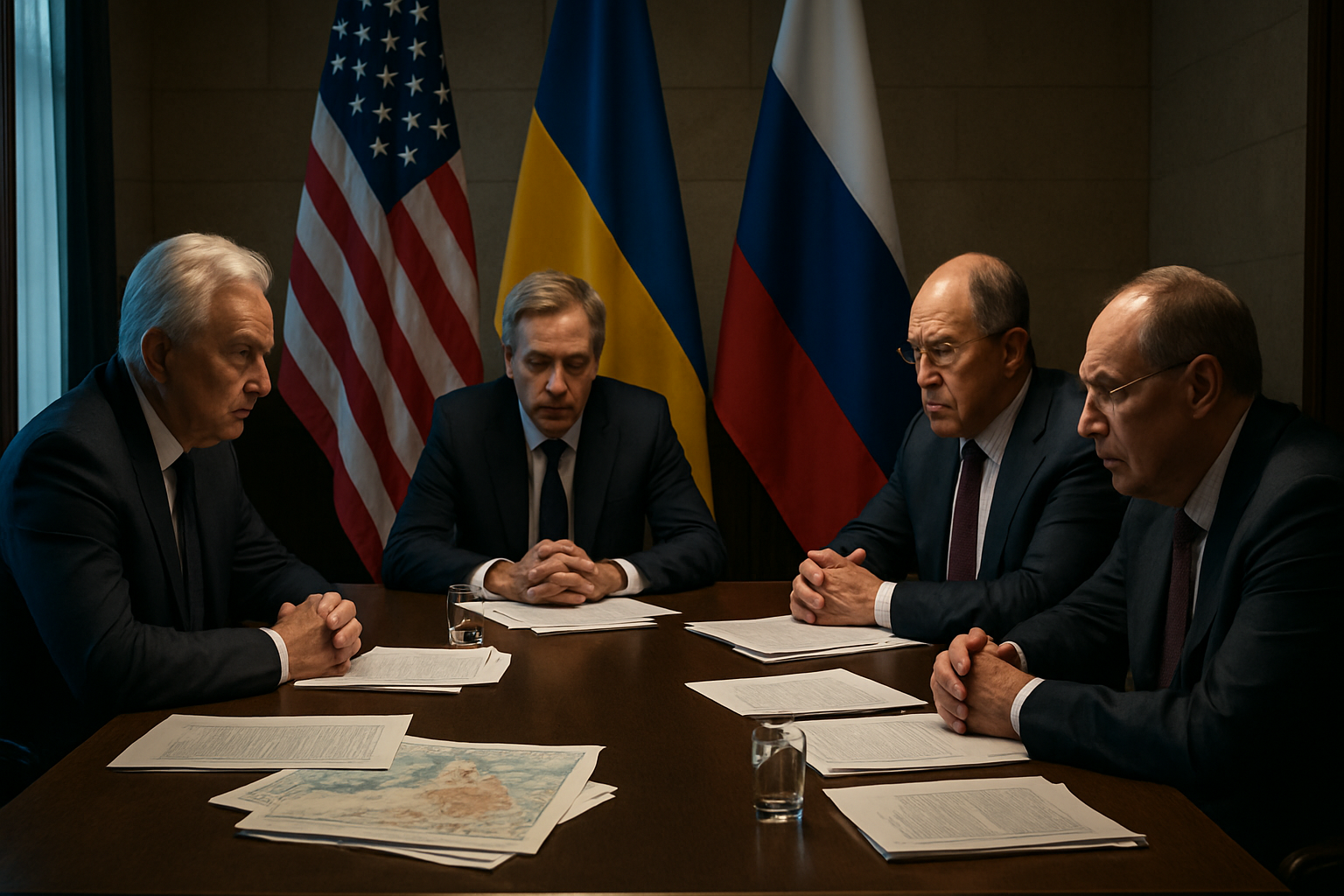
As Ukraine's war with Russia approaches its fourth anniversary on February 24, 2026, the conflict presents a complex paradox of unprecedented diplomatic breakthroughs occurring alongside accelerating military escalation and continued territorial disputes that remain unresolved.
Recent diplomatic momentum has emerged from trilateral negotiations in Geneva, building upon earlier successes in Abu Dhabi that achieved the historic exchange of 314 prisoners of war—the first such swap in five months. These talks, involving Ukraine, Russia, and the United States, represent the most significant diplomatic opportunity since the conflict began, yet fundamental disagreements over territorial control persist.
Territorial Gains and Military Escalation
Despite ongoing peace efforts, Russian forces have demonstrated accelerating territorial expansion, capturing 481 square kilometers in January 2026 compared to 260 square kilometers in December 2025. This represents a dramatic increase in the pace of territorial acquisition, with over 10,000 Russian drones and bombs launched in January alone.
Ukrainian President Volodymyr Zelensky has acknowledged the severity of losses, disclosing that 55,000 Ukrainian soldiers have been officially confirmed killed since the February 2022 invasion, with a "large number" still classified as missing in action. International research organizations estimate actual military casualties could be two to three times higher when including missing personnel and undocumented deaths.
"We cannot say we are losing the war, honestly, we are definitely not losing it. The question is whether we will win, yes, that is the question—a question that comes at a very high price."
— President Volodymyr Zelensky, AFP Interview
The systematic targeting of civilian infrastructure has continued throughout recent diplomatic efforts. Energy attacks during extreme winter conditions left over 1,170 Kyiv buildings without heating during temperatures of minus-30°C, representing what Ukrainian officials describe as "energy terrorism." Ukrainian nuclear plants were forced to halt electricity production for the first time during the conflict following Russian attacks on the electrical grid.
Diplomatic Breakthroughs and Peace Talks
The recent Geneva talks on February 17-18, 2026, marked a significant evolution from earlier Abu Dhabi negotiations, with European "Big Five" nations (Germany, France, Italy, UK, and Poland) participating as observers for the first time in the trilateral format. US Special Envoy Steve Witkoff reported "significant progress" on ceasefire monitoring mechanisms, though territorial disputes remained unresolved.
A major breakthrough occurred with the restoration of US-Russia military communications after a four-year suspension, establishing deconfliction protocols that extend globally to operations in Syria, the Arctic, and Africa. This represents the most significant US-Russia military agreement since the conflict began and provides the only remaining formal diplomatic channel between the nuclear superpowers.
The prisoner exchange framework has proven particularly effective, with the 314-person swap representing the 71st exchange since the invasion began. The UAE's neutral hosting methodology, utilizing working groups organized by topic followed by joint position synchronization, has demonstrated that sustained diplomatic engagement can produce concrete humanitarian results even amid military operations.
International Support and Nuclear Crisis Context
International support for Ukraine has reached historic levels, with the European Union approving a €90 billion loan package—the largest financial assistance package ever provided by the EU to a single nation. This comes alongside Sweden and Denmark's €246 million air defense package featuring Tridon Mk2 systems, and Germany's provision of 35 Patriot missiles.
However, European divisions persist, with Slovakia, Czech Republic, and Hungary refusing to participate in the EU financing package, while maintaining broader support through other mechanisms. Over 17.8 million Ukrainians are currently accessing winter support programs due to infrastructure damage from systematic attacks.
The diplomatic urgency is heightened by the expiration of the New START treaty between the US and Russia on February 5, 2026—the first time in over 50 years without nuclear constraints between the superpowers who control 80% of global nuclear weapons. UN Secretary-General António Guterres warned this represents a "grave turning point" with nuclear risks at their "highest level in decades."
Territorial Integrity vs. Russian Demands
The fundamental sticking point in all negotiations remains the status of eastern Ukrainian territories currently under Russian control. Russia demands territorial recognition and insists that any Putin-Zelensky talks must occur in Moscow. Ukraine maintains its position on territorial integrity while seeking comprehensive security guarantees extending 20-30 years, compared to reported US proposals of 15 years.
President Zelensky has categorically rejected any peace agreement requiring unilateral withdrawal from the Donbas region, stating that the Ukrainian people would reject a referendum "handing over territories" as a "failure story." He has criticized the Trump administration for pressuring Ukraine rather than Russia to make concessions.
Recent tragic incidents underscore the human cost of continued fighting. A Russian drone strike on Bohodukhiv in the Kharkiv region killed four civilians, including three children (two one-year-old boys and one two-year-old girl) along with their 34-year-old father—the second deadly attack on the same town within three days.
Future Peace Timeline and Washington Venue
The Trump administration has established a June 2026 deadline for a comprehensive peace agreement, with talks potentially evolving to Washington venues that could involve presidential-level engagement. This evolution from Abu Dhabi to Geneva to Washington suggests a deliberate diplomatic escalation designed to create unprecedented pressure for territorial compromise solutions.
Ukrainian officials have confirmed progress on ceasefire monitoring mechanisms during Geneva talks, with the United States prepared to take primary responsibility for oversight of any future ceasefire. The next round of peace negotiations is expected within ten days, though the venue remains to be determined.
"In case of a ceasefire with Russia, Ukraine would want to see international troops responsible for guaranteeing its maintenance deployed as close as possible to combat zones."
— President Zelensky, France Press Interview
Civilian Casualties and Humanitarian Crisis
The systematic targeting of civilians continues to violate international humanitarian law, with documented attacks on residential buildings, energy infrastructure, and repair personnel. The pattern includes attacks during extreme weather conditions designed to maximize humanitarian pressure during diplomatic negotiations.
Recent reporting from southern Ukraine indicates Ukrainian forces have liberated approximately 300 square kilometers of territory, demonstrating continued military capabilities despite defensive pressures. However, these gains occur against the backdrop of accelerating Russian territorial acquisition in other sectors.
The humanitarian crisis extends beyond immediate casualties, with Ukrainian officials beginning sperm cell freezing programs to address demographic concerns—a stark reminder of the war's long-term societal impacts on a generation of young men.
Nuclear Governance and European Security
The expiration of nuclear arms control agreements coincides with Ukrainian nuclear facilities being forced offline, creating unprecedented security risks. The International Atomic Energy Agency has expressed concerns about electrical system disruptions affecting nuclear plant safety, with Ukrainian officials warning that attacks put "Europe at risk of nuclear incident."
European strategic autonomy discussions have intensified, with France exploring nuclear deterrent expansion beyond national scope for the first time since the Cold War ended. The Munich Security Conference theme "Era of Disruptive Politics" reflected the most sobering assessment in the event's 62-year history, with German Chancellor declaring "the post-war order no longer exists."
Assessment and Implications
As the Ukraine war enters its fourth year, the conflict represents the deadliest in Europe since World War II, with implications extending far beyond regional boundaries. The success or failure of current diplomatic efforts will determine not only the trajectory of European security architecture but also provide templates for 21st-century conflict resolution.
The diplomatic breakthrough represented by prisoner exchanges and communications restoration demonstrates that sustained engagement can produce humanitarian results even amid military escalation. However, the fundamental challenge of bridging Ukrainian demands for territorial integrity with Russian territorial gains remains unresolved.
The June 2026 deadline creates unprecedented pressure for innovative territorial compromise solutions that could either end Europe's deadliest conflict in decades or, if unsuccessful, potentially intensify military operations with global implications for territorial sovereignty principles and international law enforcement.
International observers are closely monitoring whether diplomatic innovation can overcome traditional limitations in territorial dispute resolution, with stakes including European security redefinition, conflict prevention mechanisms, and democratic governance principles that will influence international relations for decades to come.