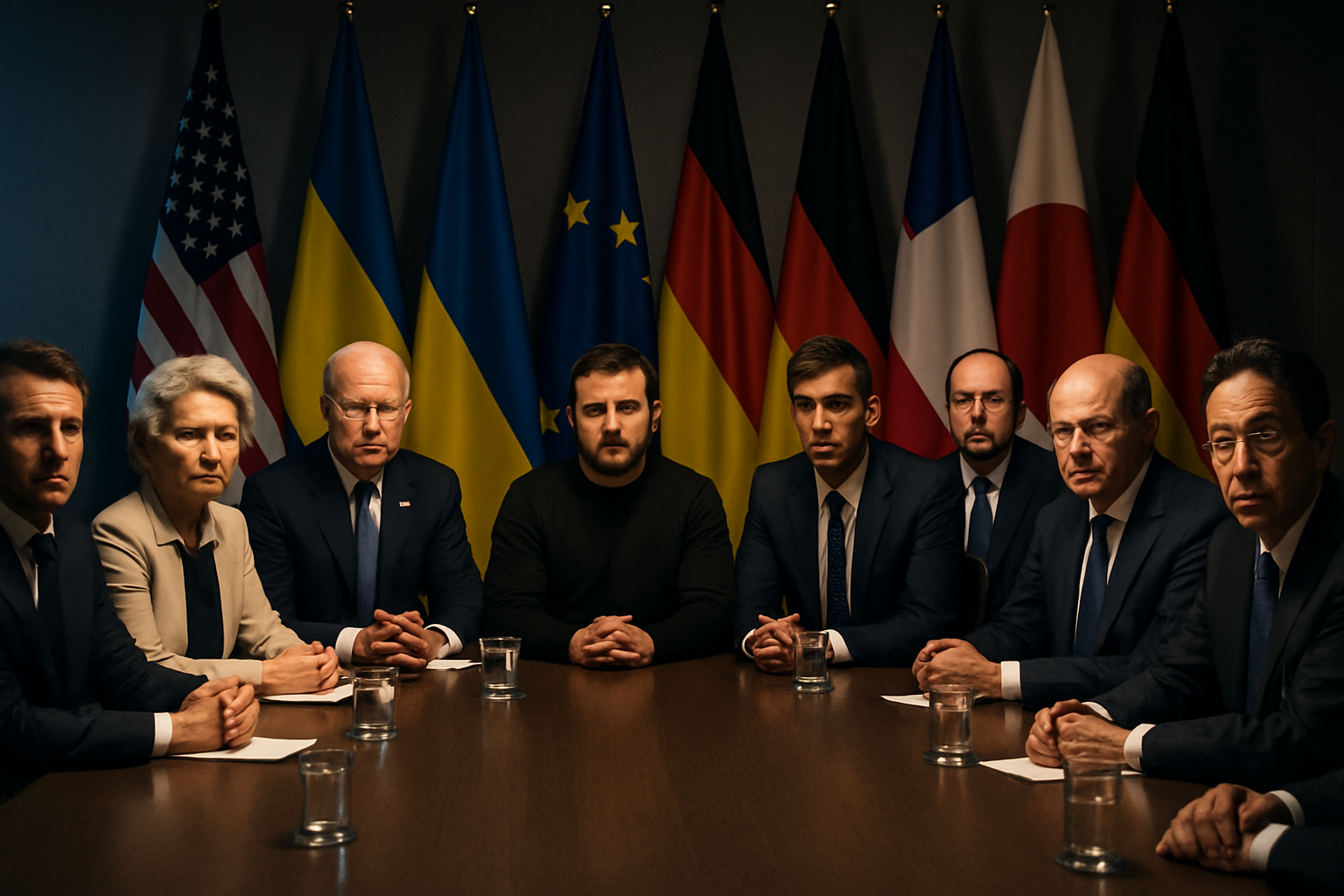
Four years after Russia launched its full-scale invasion of Ukraine on February 24, 2022, world leaders gathered virtually and in person to commemorate the anniversary with unprecedented pledges of support, while Ukraine confronts an estimated $831 billion reconstruction cost as the conflict enters its fifth year with no clear resolution in sight.
European Commission President Ursula von der Leyen led a high-profile delegation to Kyiv on the anniversary, alongside EU Council President António Costa and multiple European prime ministers, reaffirming the bloc's commitment to Ukraine's sovereignty and territorial integrity. The visit coincided with the approval of a historic €90 billion loan package—the largest EU financial assistance ever provided to a single nation.
Massive International Financial Commitments
The scale of international support has reached unprecedented levels as the conflict persists. The European Union's €90 billion loan package, approved by Parliament with 458 votes for, 140 against, and 44 abstentions, represents a watershed moment in European solidarity, despite Slovakia, Czech Republic, and Hungary refusing to participate in the financing.
"We will deliver this €90 billion loan one way or another, with various options available to ensure Ukraine receives the support it needs,"
— Ursula von der Leyen, European Commission President
Nordic and Baltic countries announced an additional €12.5 billion in defense support for 2026, along with €918 million specifically for energy resilience—a critical need as Ukraine faces systematic attacks on its power infrastructure during the harsh winter months.
The financial commitments extend beyond Europe. Sweden and Denmark pledged €246 million for advanced air defense systems, including Tridon Mk2 technology, while Germany committed 35 Patriot missiles to bolster Ukraine's defensive capabilities.
Staggering Reconstruction Challenges
Australian reports revealed the massive scope of Ukraine's reconstruction needs, with estimates reaching $831 billion to rebuild the country's shattered infrastructure, housing, and economy. This figure represents one of the largest post-conflict reconstruction challenges since World War II, highlighting the systematic nature of damage inflicted during four years of warfare.
The reconstruction estimates encompass destroyed cities, bombed hospitals and schools, devastated energy infrastructure, and the massive displacement of populations. Ukrainian officials acknowledge that rebuilding will require sustained international coordination and funding over decades.
Energy infrastructure has been particularly targeted, with over 1,170 buildings in Kyiv alone lacking heating during sub-zero winter temperatures. Ukrainian nuclear plants have been forced to halt electricity production for the first time during the conflict, raising serious concerns about European energy security.
Diplomatic Breakthroughs Amid Military Escalation
Despite the challenging military situation, significant diplomatic progress emerged through trilateral peace talks involving Ukraine, Russia, and the United States. The negotiations, which have taken place in Abu Dhabi and Geneva, achieved concrete humanitarian breakthroughs including a historic 314-prisoner exchange—the first in five months.
Most significantly, US-Russia military communications were restored after a four-year suspension, establishing deconfliction protocols for global operations. Pentagon officials confirmed this represents the most substantial US-Russia military agreement since the conflict began, providing a crucial channel for preventing dangerous escalations.
However, fundamental territorial disputes remain unresolved. Russia continues to demand recognition of captured territories in eastern Ukraine, while Ukraine maintains its position on territorial integrity. The establishment of a June 2026 deadline by the Trump administration for comprehensive peace negotiations in Washington suggests potential presidential-level engagement.
Human Cost and Humanitarian Crisis
President Volodymyr Zelensky disclosed that 55,000 Ukrainian soldiers have been officially confirmed killed, with a "large number" still missing in action. International estimates suggest actual military casualties could be two to three times higher when including undocumented deaths and missing personnel.
The systematic targeting of civilian infrastructure has created a humanitarian crisis affecting millions. Recent attacks have killed civilians including young children, with a particularly tragic incident in Bohodukhiv claiming the lives of three children aged one and two years old, along with their father.
Over 17.8 million Ukrainians are currently accessing winter support programs as the country struggles with damaged heating systems and power outages during one of its harshest winters. Emergency warming centers have been activated nationwide to provide shelter for those without heat.
Nuclear Security Concerns
The conflict's fourth anniversary coincides with a critical nuclear governance crisis. The New START treaty between the United States and Russia expired on February 5, 2026—marking the first time in over 50 years without bilateral nuclear constraints between the superpowers who control 80% of global nuclear weapons.
UN Secretary-General António Guterres warned of a "grave turning point," describing current nuclear risks as the "highest in decades." The restoration of US-Russia military communications provides the only remaining formal diplomatic channel between the nuclear superpowers.
Attacks on Ukrainian nuclear facilities have raised additional concerns, with Ukrainian officials warning that targeting electrical distribution networks supporting nuclear plants puts "all of Europe at risk of a nuclear incident."
European Unity Under Strain
While demonstrating unprecedented financial solidarity, the fourth anniversary has also exposed divisions within the European Union. Hungary's threats to block both the €90 billion loan package and new sanctions over the Druzhba pipeline dispute have created the deepest European divisions since the conflict began.
Hungarian Prime Minister Viktor Orbán accused Ukraine of using energy supplies as "political blackmail," while Ukraine maintains the pipeline was damaged in Russian attacks and requires repairs. The dispute has forced Slovakia to declare an oil emergency and release strategic reserves.
Lithuanian Foreign Minister Kestutis Budrys declared that "the EU cannot become Budapest's hostage," reflecting growing frustration with Hungary's stance. The crisis is accelerating discussions about enhanced cooperation mechanisms that would allow willing EU states to proceed without unanimity requirements.
Global Commemorations and Support
The fourth anniversary was marked by solidarity demonstrations worldwide, from vigils in Dublin and Athens to commemorative lighting of government buildings in Ukrainian colors. Romania illuminated the Cotroceni and Victoria palaces in blue and yellow, while similar displays occurred across European capitals.
The UN General Assembly passed a resolution calling for immediate ceasefire and lasting peace in Ukraine, with 107 member states voting in favor, 12 against, and 51 abstaining. Notably, the United States abstained from the vote, reflecting the complex diplomatic dynamics under the Trump administration's approach to the conflict.
Israel backed the UN resolution while announcing the delivery of 117 power generators to the Kyiv region, demonstrating how the conflict continues to influence global diplomatic alignments.
Looking Ahead: Critical Negotiations
As Ukraine enters its fifth year of conflict, the international community faces crucial decisions about sustaining support while pursuing diplomatic solutions. The June 2026 deadline for Washington peace talks represents the most significant diplomatic opportunity since the invasion began.
Success could provide a template for 21st-century conflict resolution and end Europe's deadliest war since World War II. However, failure could intensify military operations globally and undermine diplomatic credibility for territorial disputes worldwide.
The stakes extend beyond Ukraine and Russia, encompassing European security architecture, international law enforcement, and territorial sovereignty principles that will shape global power dynamics for decades to come.
A Test of Democratic Solidarity
President Zelensky's declaration that World War III has "already begun" with Putin having "already started it" reflects the broader implications of this conflict for the international order. European leaders increasingly view this as a test of democratic resilience against authoritarian pressure.
The fourth anniversary marks a critical juncture where unprecedented international financial commitments meet the harsh realities of continued warfare, humanitarian suffering, and the challenge of rebuilding a nation while conflict persists. The coming months will determine whether diplomatic innovation can overcome military escalation or whether the world's deadliest conflict since World War II will continue to reshape global security for years to come.