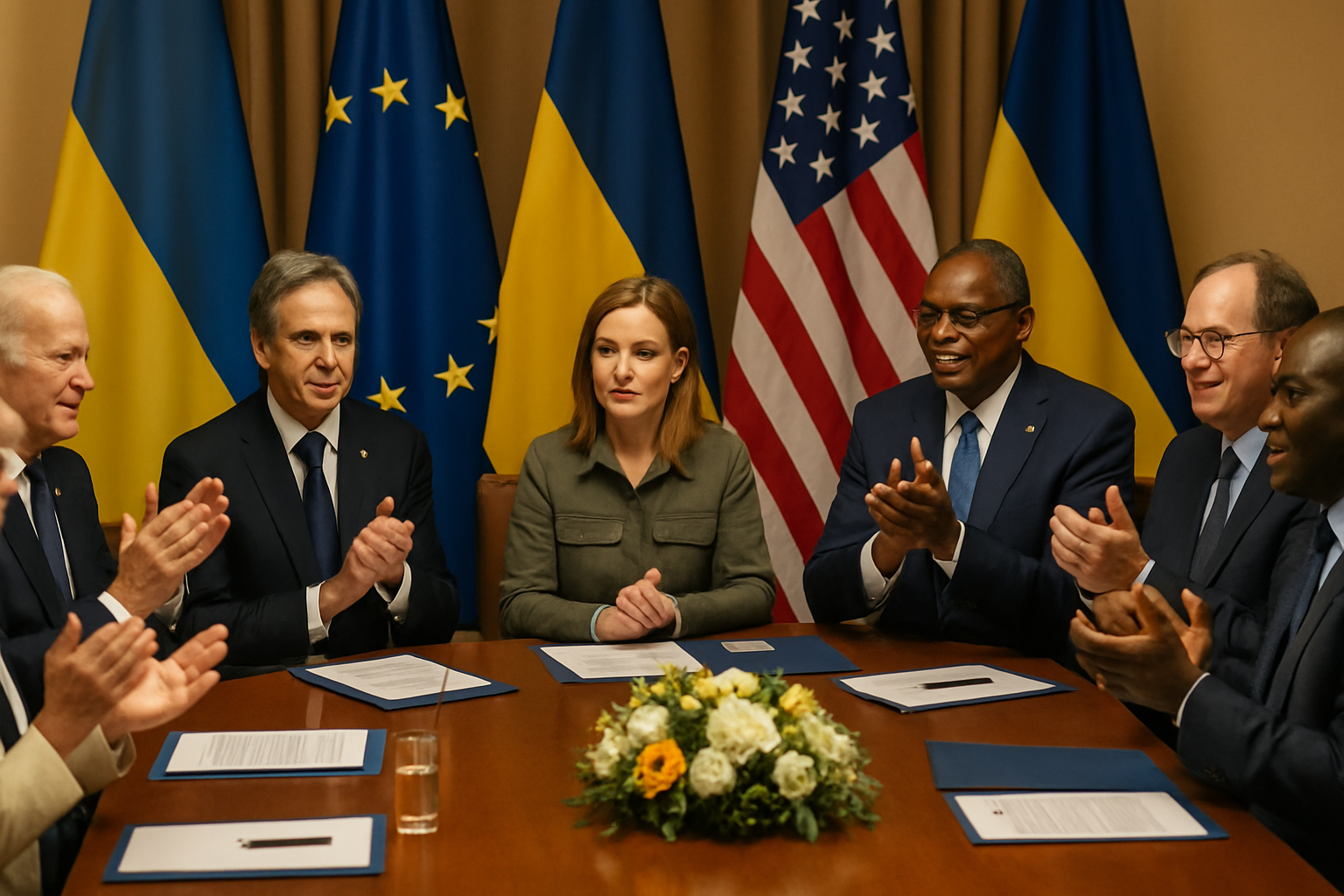
Ukraine marked the fourth anniversary of Russia's full-scale invasion on February 24, 2026, with unprecedented international support totaling over €100 billion, while facing massive reconstruction costs and continued military escalation as the conflict enters its fifth year.
The somber milestone was marked by world leaders visiting Kyiv, with European Commission President Ursula von der Leyen and Council President António Costa leading a delegation of EU prime ministers to reaffirm European solidarity. The visit came amid Russia's continued systematic attacks on civilian infrastructure and ongoing diplomatic efforts to resolve the conflict.
Historic International Support Package
The European Union has delivered on its promise of historic financial assistance, with a €90 billion loan package representing the largest single-nation aid commitment in EU history. Despite opposition from Hungary, Slovakia, and Czech Republic—who refused to participate in financing—the package passed the European Parliament with a decisive 458-140-44 vote.
Von der Leyen confirmed the EU would deliver the funds "one way or another" through various mechanisms to bypass potential vetoes, demonstrating European resolve to support Ukraine despite internal divisions. The loan covers defense procurement and civilian reconstruction for 2026-2027, addressing Ukraine's immediate needs as the conflict continues.
"This represents the largest EU single-nation assistance ever committed, showing our unwavering support for Ukraine's sovereignty and territorial integrity."
— Ursula von der Leyen, European Commission President
Military Support and Defense Aid
Beyond financial assistance, international partners have committed substantial military aid. Germany provided 35 Patriot missiles, while Sweden and Denmark announced a €246 million air defense package featuring advanced Tridon systems. Estonia committed €11 million in additional air defense weapons and ammunition, with Latvia providing €1.88 million for energy and military sectors.
The Nordic and Baltic states collectively pledged €12.5 billion in defense support, alongside €918 million specifically for energy resilience. This comprehensive support demonstrates sustained commitment from Ukraine's closest European allies.
Humanitarian Crisis and Reconstruction Challenges
Ukraine faces staggering reconstruction costs estimated at $831 billion, representing one of the largest post-conflict rebuilding challenges since World War II. The systematic destruction of infrastructure includes energy systems that have left over 1,170 buildings in Kyiv without heating during extreme winter conditions.
The humanitarian toll continues to mount, with President Zelensky disclosing that 55,000 Ukrainian soldiers have been officially killed, with a "large number" still missing. International estimates suggest actual casualties could be 2-3 times higher, underscoring the conflict's devastating human cost.
Over 17.8 million Ukrainians are currently accessing winter support programs, while emergency warming centers operate nationwide to address the ongoing "energy terrorism" strategy targeting civilian infrastructure.
Diplomatic Breakthrough and Peace Efforts
Despite continued military escalation, significant diplomatic progress has emerged through trilateral talks involving Ukraine, Russia, and the United States. The February breakthrough in Abu Dhabi achieved the first prisoner exchange in five months—314 prisoners swapped—and restored US-Russia military communications after a four-year suspension.
The talks established Pentagon deconfliction protocols and incident prevention measures globally, representing the most significant US-Russia military agreement since the conflict began. However, territorial disputes over eastern Ukrainian territories under Russian control remain the fundamental sticking point.
The Trump administration has established a June 2026 deadline for comprehensive peace negotiations, with talks potentially moving to Washington venue suggesting presidential-level engagement.
EU Internal Divisions and Challenges
The anniversary highlighted significant internal EU tensions, particularly over Hungary's threats to block both the €90 billion loan and the EU's 20th sanctions package against Russia. The crisis stems from disputes over the Druzhba oil pipeline, with Hungarian PM Viktor Orbán demanding restoration of Russian oil transit through Ukraine.
Lithuania's Foreign Minister warned that the "EU cannot become Budapest's hostage," reflecting broader concerns about unanimity requirements undermining collective action during wartime. The crisis has accelerated discussions about enhanced cooperation mechanisms that would allow willing states to proceed without unanimous support.
Nuclear Security Concerns
The fourth anniversary coincided with a critical nuclear governance crisis, as the New START treaty between the US and Russia expired on February 5, 2026—marking the first time in over 50 years without bilateral nuclear constraints between the superpowers. Both nations control approximately 80% of global nuclear weapons, creating unprecedented risks.
UN Secretary-General António Guterres warned of a "grave turning point" with nuclear risks at their "highest in decades." Ukrainian nuclear facilities have been repeatedly targeted, forcing plants to halt electricity production for the first time since the conflict began, raising concerns about potential nuclear incidents.
Russia's Military Strategy and Escalation
Russian forces have accelerated their territorial gains, capturing 481 square kilometers in January 2026 compared to 260 square kilometers in December 2025. The systematic targeting of civilian infrastructure continues as a "winter weapon" strategy, violating Geneva Conventions protections for civilian populations.
Recent attacks have demonstrated the calculated nature of Russia's approach, with strikes occurring just before and during diplomatic meetings to strengthen bargaining positions. The pattern includes targeting repair personnel and energy workers, representing systematic violations of international humanitarian law.
Global Implications and Stakes
The fourth anniversary of the Ukraine war represents a critical juncture for European security architecture and international order. Success in achieving a diplomatic resolution could end Europe's deadliest conflict since World War II and provide a template for 21st-century conflict resolution.
Failure could intensify military operations globally and undermine diplomatic credibility for resolving territorial disputes worldwide. The stakes extend beyond Ukraine-Russia relations to encompass fundamental questions about territorial sovereignty, international law enforcement, and democratic resilience against authoritarian pressure.
Looking Ahead: Critical Decisions
As Ukraine enters its fifth year of conflict, the international community faces crucial decisions about sustaining support while pursuing diplomatic solutions. The June 2026 peace deadline creates unprecedented pressure for innovative territorial compromise solutions while preserving sovereignty principles.
The restoration of US-Russia communications and successful prisoner exchanges demonstrate that sustained diplomatic engagement can produce humanitarian results amid military operations. However, fundamental territorial disagreements persist, requiring breakthrough innovations in international conflict resolution.
European leaders emphasize that continued unity and support for Ukraine remain essential, regardless of diplomatic outcomes. The historic financial commitments and military aid packages demonstrate long-term investment in Ukrainian statehood and democratic values.
The coming months will prove decisive in determining whether diplomatic momentum can translate into territorial dispute resolution or whether the conflict will continue to escalate with global implications for security, international law, and democratic governance principles that will shape international relations for decades to come.