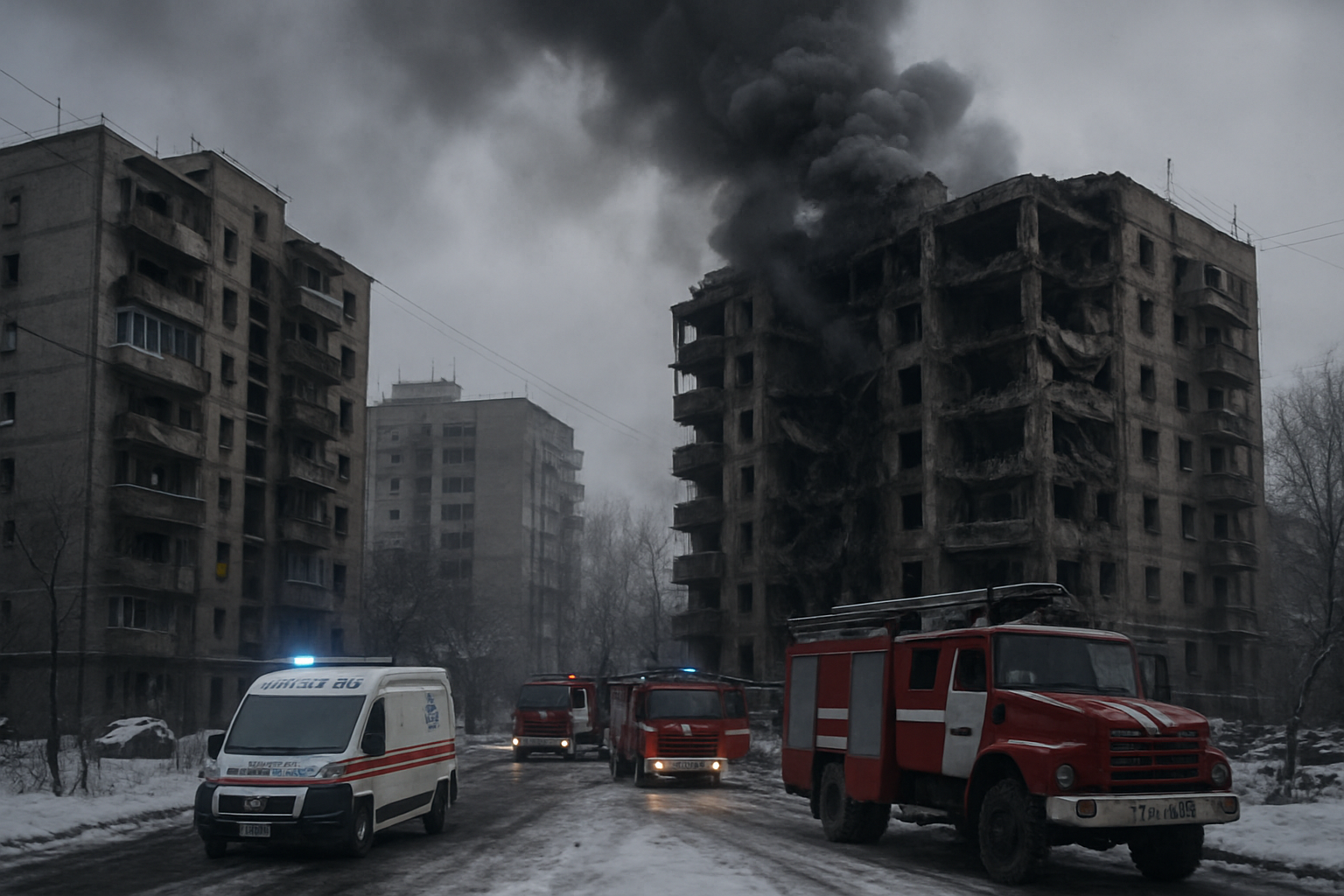
Russia unleashed a devastating barrage of over 521 missiles and drones on Ukraine's energy infrastructure overnight on February 3, 2026, cutting power and heating to hundreds of thousands of civilians amid plummeting winter temperatures and just days before scheduled trilateral peace talks in Abu Dhabi.
The massive coordinated attack, described by Ukrainian officials as the largest of 2026, targeted critical energy facilities across multiple regions, leaving over 1,170 buildings in Kyiv alone without heating as temperatures dropped to minus-20°C in the capital and were expected to reach minus-30°C in some areas.
Scale of the Assault
According to Ukrainian President Volodymyr Zelensky, Russian forces launched more than 70 missiles and 450 combat drones in the overnight assault, marking a dramatic escalation after several days of relative calm. The Kyiv Post reported that Russia fired a total of 521 drones and missiles, with some attacks reportedly targeting energy workers attempting to restore damaged infrastructure.
The attacks struck multiple regions including Kyiv, Kharkiv, Zaporizhzhia, and the Odesa region, with Ukrainian air defenses working throughout the night to intercept incoming projectiles. Emergency power cuts were imposed on parts of Kyiv's left bank, while the Darnytskyi and Dniprovskyi districts were left without heat supply.
"Moscow chooses terror and escalation,"
— President Volodymyr Zelensky
Targeting Critical Infrastructure
The assault specifically targeted Ukraine's energy sector, with a thermal power plant in Kharkiv shut down completely. Reports suggest Russian forces may have deliberately targeted workers attempting to restore a key Kyiv substation, using sophisticated Kh-22 missiles in what Ukrainian officials described as a calculated attack on civilian infrastructure.
In Kyiv, more than 1,170 buildings were left without heating, affecting tens of thousands of residents during one of the harshest winter periods in recent memory. The attacks also damaged civilian residential buildings and infrastructure across multiple districts of the capital.
Ukraine's Energy Minister Denys Shmyhal confirmed that several hundred thousand families across the country were left without electricity and heating following the strikes, with restoration efforts hampered by continued security concerns and extreme weather conditions.
Timing Before Peace Negotiations
The escalation comes with particularly provocative timing, occurring just days before the second round of trilateral peace talks between Ukraine, Russia, and the United States scheduled for February 5-6, 2026, in Abu Dhabi. The negotiations, mediated by US Special Envoy Steve Witkoff, represent the most significant diplomatic effort to end the nearly four-year conflict.
France 24 reported that the attacks came "just one day before Ukrainian and Russian delegations were due to meet in Abu Dhabi for a new round of peace talks," suggesting a deliberate strategy to strengthen Russia's negotiating position through escalation.
The assault effectively breaks an informal agreement between Russia and the Trump administration to avoid targeting energy infrastructure ahead of the diplomatic talks, according to diplomatic sources familiar with the negotiations.
International Response
The attacks drew immediate condemnation from international partners, with several countries offering assistance. Spain had previously donated water purification equipment capable of serving over 15,000 people daily to help with humanitarian needs, while the World Bank allocated $40 million for Ukrainian energy system restoration efforts.
Poland deployed fighter jets preemptively as a security measure, while NATO Secretary General Mark Rutte was scheduled to visit Kyiv on Tuesday to address the Ukrainian Parliament, though no official NATO announcement had been made at the time of the attacks.
The timing of the assault has complicated diplomatic efforts, with European nations remaining divided on engagement with Russia. Germany continues to oppose direct talks with President Putin, while France and Italy support maintaining diplomatic channels.
Humanitarian Impact
The attacks occurred during what Ukrainian meteorologists described as extreme winter conditions, with temperatures in some regions expected to drop to minus-30°C. The combination of damaged heating infrastructure and severe cold weather has created a humanitarian crisis for hundreds of thousands of Ukrainian civilians.
Emergency services in affected areas have been working around the clock to restore power and heating, but the scale of damage and ongoing security concerns have slowed repair efforts. Temporary shelters have been established in some areas, though capacity remains limited.
The assault follows a pattern of what Ukrainian officials term "logistics terror," with Russia shifting tactics to target transportation and energy infrastructure rather than military objectives, directly impacting civilian populations.
Historical Context
This latest attack represents an escalation in Russia's systematic targeting of Ukrainian civilian infrastructure, with over 10,000 Russian drones and bombs launched against Ukraine in January 2026 alone. The strategy appears designed to weaken Ukrainian morale and infrastructure capacity ahead of potential peace negotiations.
The attacks also come amid broader geopolitical tensions, with Ukraine having recently designated Iran's Islamic Revolutionary Guard Corps (IRGC) as a terrorist organization due to Iranian drone supplies to Russia, while SpaceX has implemented measures to prevent Russian forces from using hijacked Starlink terminals in their military operations.
Looking Ahead
Despite the escalation, Ukrainian officials maintain cautious optimism about the upcoming peace talks in Abu Dhabi. President Zelensky has expressed hope for achieving "lasting and dignified peace," though the latest attacks underscore the challenges facing negotiators.
The success of the trilateral format, which includes direct US participation through Special Envoy Steve Witkoff, will likely depend on whether all parties are genuinely committed to de-escalation rather than using negotiations as cover for continued military operations.
As Ukraine faces another harsh winter night with hundreds of thousands without heating, the contrast between Russia's actions and stated willingness to negotiate highlights the complex dynamics that peace negotiators will need to navigate in Abu Dhabi.