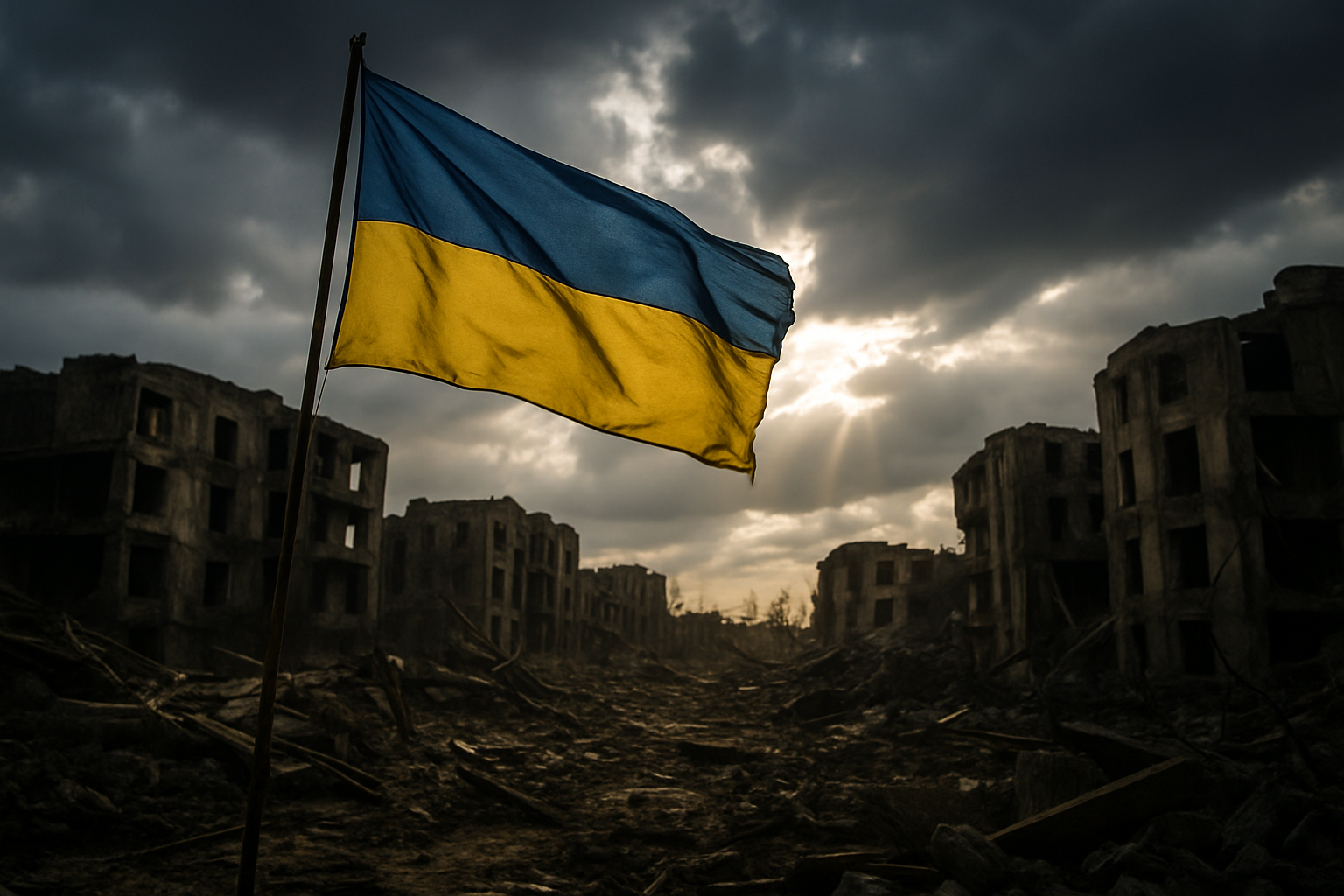
Despite a declared Orthodox Easter ceasefire between Russia and Ukraine, violence continued across multiple fronts as the two nations' most significant peace opportunity since the conflict began remains indefinitely suspended due to the ongoing Iran crisis consuming American diplomatic attention.
The temporary truce, announced by Russian President Vladimir Putin for 32 hours from April 11-12, 2026, was immediately undermined by reports of casualties and attacks. Ukrainian officials confirmed at least three deaths in Odesa before the ceasefire took effect, while attacks in Sumy, Kherson, and Poltava regions wounded dozens more civilians in the hours leading up to the religious pause.
Easter Ceasefire Violations Overshadow Religious Holiday
In Austria, reports indicated that two people were killed and several wounded in Russian strikes on Odesa just hours before the ceasefire was scheduled to begin at 4:00 PM Moscow time on April 11. Italian sources confirmed the attack, describing it as occurring "before the Easter truce," highlighting the fragile nature of any temporary cessation of hostilities.
The Ukrainian city of Kherson saw six people wounded over a 24-hour period, while the Sumy region reported 23 injured from Russian strikes. These casualties occurred despite President Zelensky's week-long advocacy for an Easter ceasefire, which he had framed as allowing "people to have Easter without threats."
"People need Easter without threats and a real move towards peace. Ukraine is ready to reciprocate if the Russians cease their attacks."
— President Volodymyr Zelensky
The ceasefire represented the first coordinated humanitarian pause since trilateral peace negotiations were suspended in March 2026. Russian Defense Minister Belousov had ordered Chief of General Staff Gerasimov to halt military operations across all directions while keeping troops ready to "eliminate provocations."
Historic Peace Talks Remain Stalled
The most significant diplomatic breakthrough since the conflict began remains frozen as American attention focuses on the escalating Iran crisis. February 2026 had witnessed unprecedented progress with a historic 314-prisoner exchange—the largest in five months—and the restoration of US-Russia military communications after a four-year suspension.
Geneva talks in February achieved "significant progress" on ceasefire monitoring mechanisms, with European "Big 5" observers (Germany, France, Italy, UK, Poland) participating for the first time. However, these achievements have been overshadowed by the suspension of trilateral negotiations between Ukraine, Russia, and the United States.
The Trump administration had established a June 2026 deadline for comprehensive peace talks with a potential Washington venue that could involve presidential-level engagement. This timeline now appears uncertain given the Middle East priorities consuming American diplomatic resources.
Military Escalation Despite Diplomatic Efforts
Russian territorial gains have accelerated dramatically, with forces capturing 481 square kilometers in January 2026 compared to 260 square kilometers in December 2025—an 85% increase representing the fastest monthly expansion in recent periods. Ukrainian officials report that Russian forces have launched over 10,000 drones and bombs since January 2026.
Air defense forces successfully intercepted 133 of 160 Russian drones launched overnight on April 10-11, demonstrating continued Ukrainian defensive capabilities. However, systematic attacks on civilian infrastructure persist, with over 1,170 Kyiv buildings still lacking adequate heating from previous energy infrastructure strikes.
The scale of the conflict's toll became clearer with President Zelensky's disclosure that 55,000 Ukrainian soldiers have been officially confirmed killed, with a "large number" missing. International intelligence estimates suggest actual casualties could be two to three times higher.
Nuclear Crisis Adds Urgency
The diplomatic suspension occurs against the backdrop of an unprecedented nuclear governance crisis. The New START treaty between the United States and Russia expired on February 5, 2026, marking the first time in over 50 years that the two nuclear superpowers operate without bilateral constraints on their arsenals.
Both nations control approximately 80% of the world's nuclear weapons, with Russia possessing 4,380 warheads and the US maintaining 3,708. UN Secretary-General António Guterres has warned of a "grave turning point" with nuclear risks at their "highest in decades."
Ukraine's Strategic Evolution
Amid the diplomatic stalemate, Ukraine has undergone a strategic transformation from aid recipient to security provider. Ukrainian military experts are now deployed across the Middle East—in the UAE, Qatar, Jordan, Bahrain, and Kuwait—sharing expertise in combating Iranian Shahed drones, the same weapons systems being used to attack Ukrainian civilians.
The United Kingdom has revealed the existence of four operational maintenance, repair, and overhaul (MRO) facilities within Ukraine servicing Western-supplied equipment, with a fifth facility planned. This represents the first public acknowledgment of extensive military infrastructure supporting Ukraine's defense capabilities.
International Support Despite Divisions
International backing for Ukraine remains at historic levels, with the European Union's €90 billion loan package representing the largest single-nation assistance effort in EU history. However, divisions have emerged, with Slovakia, Czech Republic, and Hungary refusing to participate in the loan program.
Additional support includes Sweden and Denmark's €246 million air defense package and Germany's provision of 35 Patriot missiles. Over 17.8 million Ukrainians continue to access winter support programs as the humanitarian crisis deepens.
Colombian sources revealed troubling accounts of Colombian nationals who traveled to Ukraine seeking better opportunities but encountered "deceptions, abuses, non-payments, and disappearances," highlighting the complex human dynamics surrounding the conflict.
Territorial Disputes Remain Unchanged
The fundamental sticking point in any peace negotiations remains unchanged: eastern Ukrainian territories under Russian control. Russia demands recognition of these territorial gains and insists that any Putin-Zelensky talks occur in Moscow. Ukraine maintains its territorial integrity position while seeking long-term security guarantees.
President Zelensky has categorically rejected territorial concessions, stating that the Ukrainian people would reject "handing over territories" as a "failure story." This position appears unlikely to change despite international pressure for compromise.
Framework for Future Negotiations
Despite the current suspension, diplomatic achievements from February 2026 remain intact. The prisoner exchange mechanisms, Pentagon-Moscow deconfliction protocols covering operations in Syria, the Arctic, and Africa, and structured negotiation formats developed through UAE methodology can be reactivated when conditions permit.
The proven framework demonstrates that sustained diplomatic engagement can produce concrete humanitarian results even amid active military operations. The question remains whether this foundation can eventually translate into territorial dispute resolution when the Iran crisis allows American diplomatic refocus.
"The framework for peace talks has been established and can be reactivated when the security situation allows for meaningful negotiations."
— Senior Ukrainian Official
Religious Significance Amid Conflict
The Orthodox Easter ceasefire held special significance as a demonstration of shared religious and cultural traditions transcending political boundaries. Over half a million Orthodox Christians worldwide participated in Easter celebrations, providing a moment for religious observance without immediate threat of violence.
However, the violations of even this brief humanitarian pause underscore the challenges facing any sustainable peace agreement. The moral weight of the Easter period highlighted both the possibility of temporary cooperation and the fundamental obstacles to lasting resolution.
Coming Phase Uncertain
The timeline for resumed peace negotiations depends entirely on the resolution of the Iran crisis and broader Middle East stabilization. Military escalation continues with systematic targeting of civilian infrastructure, while Ukraine expands its international partnerships and maintains operational capabilities.
The stakes for eventual resumed talks carry global implications for 21st-century territorial dispute resolution. Success could end Europe's deadliest war since World War II and provide a conflict resolution template for future international disputes. Failure may lead to continued escalation with implications extending far beyond Ukraine's borders.
The preservation of the diplomatic framework offers hope, but the fundamental disagreements over territorial integrity versus recognition of territorial gains require innovative solutions that have yet to emerge. Whether diplomatic innovation can ultimately overcome military approaches will determine European security trajectories for decades to come.
As the conflict approaches its fourth anniversary in February, the temporary Easter ceasefire served as both a reminder of what's possible through dialogue and a stark illustration of how far the parties remain from sustainable peace.