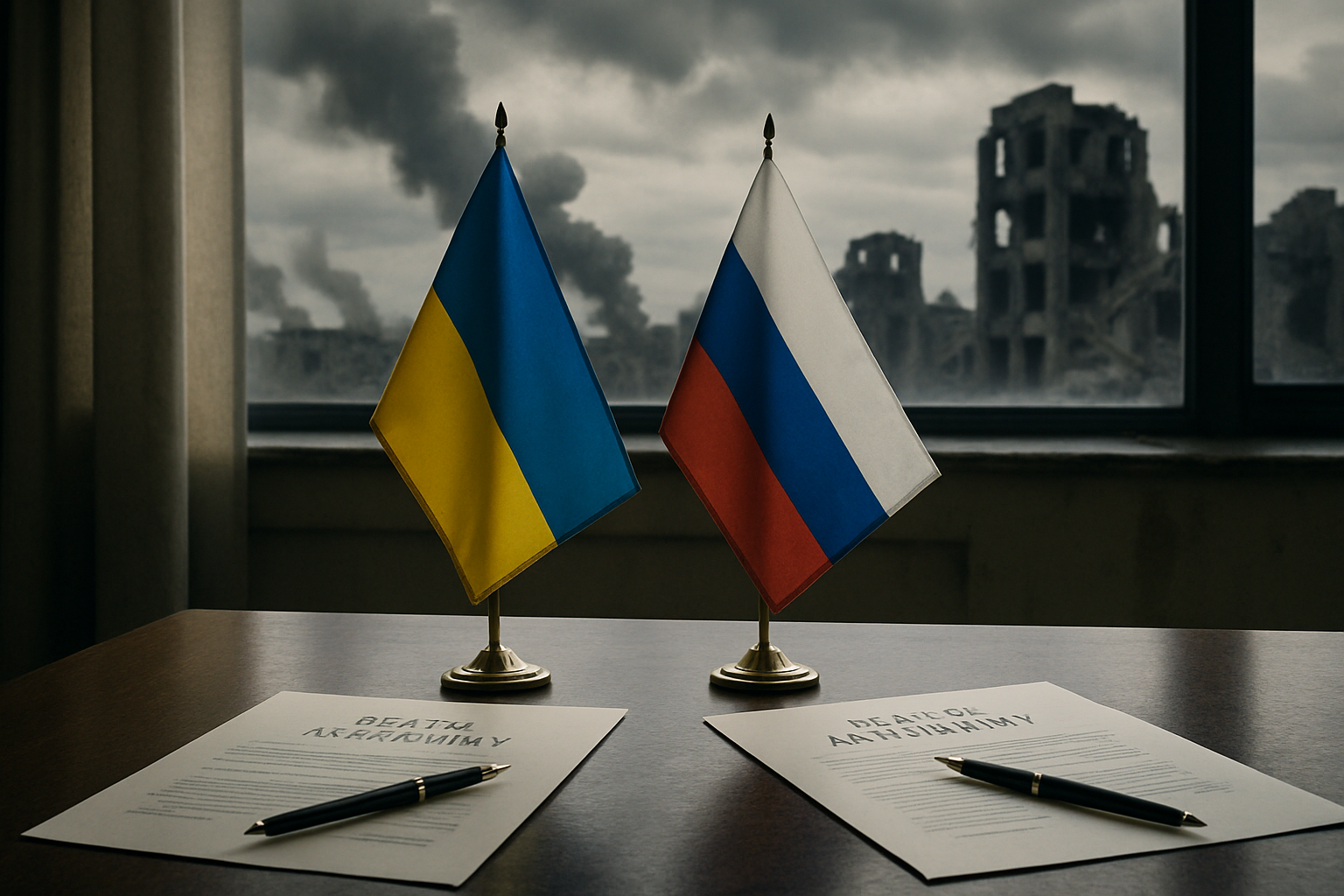
As the Ukraine-Russia conflict enters its fourth year, February 2026 has witnessed unprecedented diplomatic breakthroughs alongside continued military escalation, with Ukrainian forces reporting significant territorial gains while facing critical challenges over European Union financial assistance.
Ukrainian forces have achieved notable military success in the southern regions, with President Volodymyr Zelensky confirming that Ukrainian Defense Forces have liberated 300 square kilometers of territory during recent counteroffensive operations. This represents the largest territorial recovery since the summer 2023 counteroffensive, according to international strategic assessments attributed to Russian communication disruptions caused by Starlink restrictions.
Diplomatic Breakthrough in Peace Negotiations
The most significant diplomatic development has been the restoration of communication channels between major powers. Recent trilateral negotiations involving Ukraine, Russia, and the United States have achieved concrete humanitarian results, including a historic prisoner exchange involving 314 individuals - the first such swap in five months. Ukrainian Defense Minister Rustem Umerov described the talks as "substantial and productive," marking a potential turning point in diplomatic engagement.
The negotiations have also resulted in the restoration of US-Russia military communications after a four-year suspension, with Pentagon officials confirming the establishment of deconfliction protocols covering global operations. This breakthrough comes at a critical time, as the New START nuclear treaty expired on February 5, 2026, eliminating bilateral nuclear constraints between the superpowers for the first time in over 50 years.
"The situation around Sviato-Pokrovske in the Donetsk region remains difficult; however, the village is under the control of Ukraine's Defense Forces. Russian troops have made no advances and are being destroyed on the approaches."
— Ukrainian Military Command
Military Operations and Territorial Control
Despite diplomatic progress, military operations continue across multiple fronts. Over the course of February 20, there were 130 combat engagements between Ukraine's Defense Forces and Russian forces. In the strategically important Pokrovsk sector, the enemy attempted 22 attacks, with Ukrainian forces successfully neutralizing over 80 occupiers according to military reports.
The conflict has taken a severe toll on civilian infrastructure, with Russian forces preparing new strikes on Ukraine's energy facilities according to Prime Minister Denys Shmyhal. All services have been instructed to prepare thoroughly for upcoming challenges, highlighting the ongoing threat to civilian targets.
EU Financial Aid Disputes
A significant diplomatic crisis has emerged within the European Union regarding financial support for Ukraine. Hungary has announced it will block the allocation of a €90 billion EU loan to Ukraine until the transit of Russian oil via the Druzhba pipeline is restored. Hungarian Foreign Minister Peter Szijjarto stated that Hungary "will not give in to this blackmail" after oil flows from Ukraine were halted.
The dispute centers on damage to the Druzhba pipeline, which Kyiv recently said had been damaged by a Russian missile attack on western Ukraine. Budapest maintains that the loan will remain blocked until transit resumes through the Russian oil pipeline, creating a significant obstacle to Ukraine's financial support at a critical time.
International Monetary Fund Review
Adding to the financial complexity, the International Monetary Fund is expected to review a new $8.1 billion lending program for Ukraine at the staff level in the coming days. This review comes as Ukraine faces mounting economic pressures from the ongoing conflict and the need for reconstruction of damaged infrastructure.
Humanitarian Crisis and Civilian Casualties
The humanitarian situation remains severe, with continued attacks on civilian targets. Recent drone attacks in the Kharkiv region damaged private homes, highlighting the ongoing threat to civilian populations. Seven more Ukrainian children and teenagers have been successfully brought back from territories temporarily occupied by Russia as part of the "Bring Kids Back UA" initiative, demonstrating ongoing efforts to protect vulnerable populations.
The conflict has also resulted in significant military casualties, with previous official disclosures indicating substantial losses on both sides. The humanitarian impact extends beyond direct casualties, affecting millions of civilians who continue to face threats to their safety and basic services.
Energy Infrastructure Under Threat
Ukraine's energy infrastructure remains a primary target, with officials warning of Russia's preparation for new massive attacks on energy facilities. This systematic targeting of civilian infrastructure has been characterized as "energy terrorism" by Ukrainian officials, particularly given the timing during winter months when heating is essential for survival.
The attacks on energy infrastructure represent a violation of international humanitarian law, as they specifically target civilian facilities essential for the survival of the population. Emergency services and repair crews continue to work under dangerous conditions to restore power and heating to affected areas.
International Support and Diplomatic Efforts
Despite the challenges posed by Hungary's blocking of EU funds, international support for Ukraine continues through various channels. The restoration of diplomatic communication channels represents a significant breakthrough that could pave the way for more comprehensive negotiations in the future.
The involvement of multiple international actors in facilitating dialogue demonstrates the global nature of efforts to find a peaceful resolution to the conflict. However, fundamental disagreements over territorial control continue to pose significant obstacles to any lasting settlement.
Looking Forward: Challenges and Opportunities
As the conflict approaches its fourth anniversary in February 2026, the international community faces the challenge of maintaining pressure for a peaceful resolution while providing necessary support to Ukraine. The recent territorial gains by Ukrainian forces demonstrate continued military capabilities, while diplomatic breakthroughs offer hope for eventual negotiations.
The dispute over EU financial aid highlights the complex political dimensions of international support, where domestic energy concerns can impact broader strategic decisions. Resolving these internal EU disputes will be crucial for maintaining unified support for Ukraine's defense and eventual reconstruction efforts.
The coming weeks will be critical in determining whether the recent diplomatic momentum can be sustained and translated into more comprehensive peace negotiations. The restoration of communication channels provides a foundation, but significant challenges remain in addressing fundamental disagreements over territorial control and security guarantees.
The international community's response to these developments will be closely watched as indicators of long-term commitment to supporting Ukraine's sovereignty and territorial integrity while working toward a sustainable peaceful resolution of the conflict.