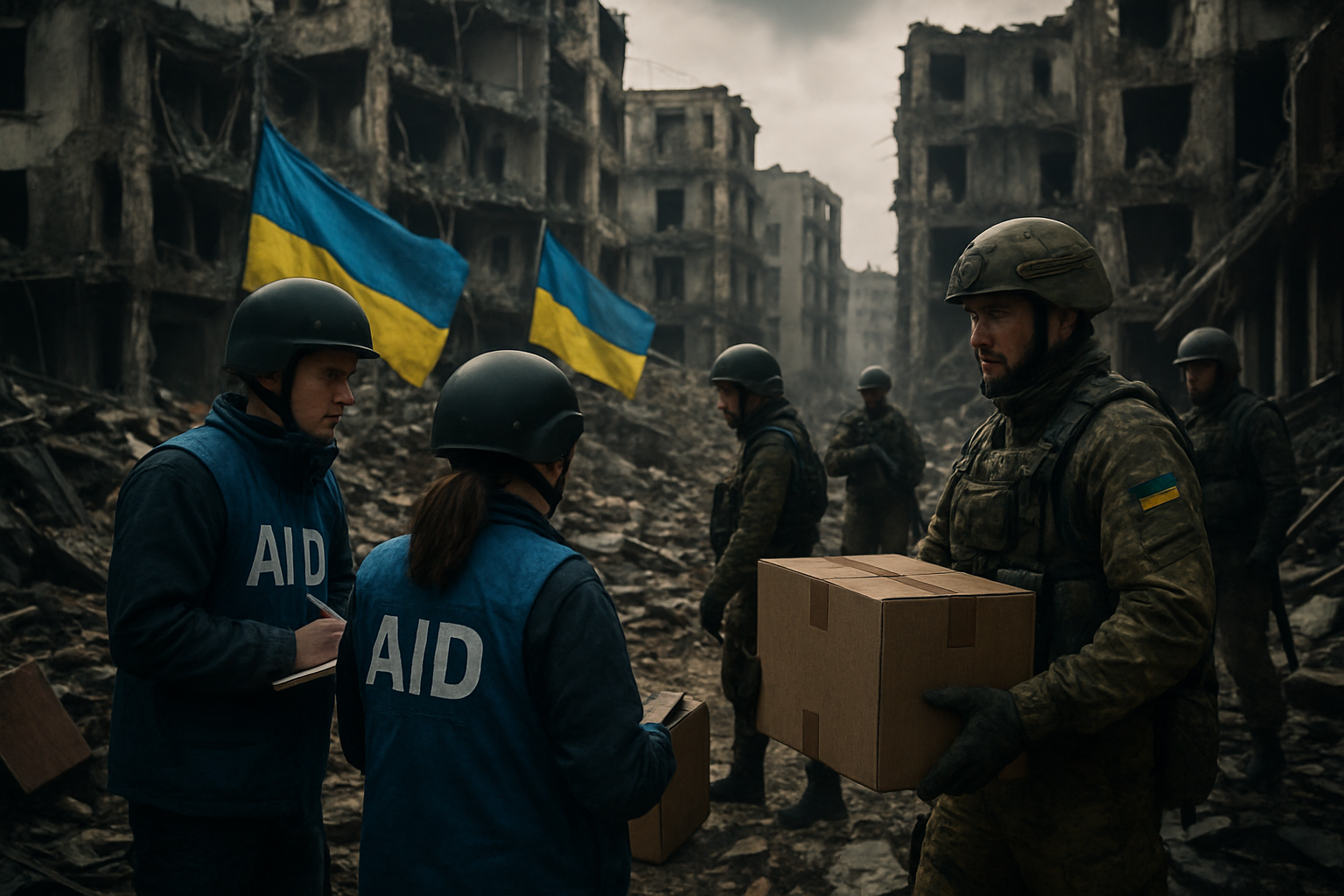
Russian forces launched a devastating overnight strike on a residential building in Kharkiv, killing at least 10 people and wounding 15 others, as international discussions continue over military aid and potential peace negotiations amid Ukraine's ongoing conflict with Russia.
The attack on the five-story residential building represents the latest escalation in Russia's systematic targeting of civilian infrastructure, occurring as diplomatic efforts to end the nearly three-year conflict continue to face significant challenges over territorial control issues.
Deadly Kharkiv Strike Claims Civilian Lives
Ukrainian officials confirmed that the Russian bombardment of Kharkiv's residential district resulted in 10 fatalities and 15 injuries, marking one of the most devastating single attacks on the city in recent weeks. The strike targeted a five-story apartment building during overnight hours when residents were sleeping, maximizing civilian casualties.
The attack follows a documented pattern of Russian forces targeting civilian infrastructure and residential areas, which international observers have characterized as systematic violations of the Geneva Conventions. Ukrainian air defense systems intercepted some incoming projectiles, but several penetrated defenses to cause significant damage to civilian structures.
"This deliberate targeting of civilian buildings represents a continuation of Russia's strategy to terrorize Ukrainian civilians and undermine their will to resist."
— Ukrainian Defense Ministry Official
Military Capabilities and International Support
As the humanitarian crisis deepens, new details have emerged about Ukraine's evolving military capabilities and international support networks. Ukraine has been negotiating with Persian Gulf states to share expertise in drone destruction technology in exchange for funding for its defense industry, according to recent reports.
The discussions with Gulf nations represent a significant shift in Ukraine's strategic partnerships, as the country seeks to leverage its hard-won battlefield experience combating Russian drone attacks. These negotiations come as Ukraine also considers technology-sharing arrangements with the United States, expanding its defense cooperation beyond traditional European allies.
Meanwhile, Ukraine continues to demonstrate long-range strike capabilities, with recent attacks on Russian energy infrastructure including oil refineries and military facilities located thousands of kilometers from the front lines. Ukrainian forces have maintained operational effectiveness despite facing continued pressure across multiple sectors of the front.
Territorial Battles and Strategic Developments
The conflict continues to see intense fighting across multiple regions, with Russian forces maintaining pressure in the Pokrovsk sector where Ukrainian defenders have repelled dozens of attacks. The Dnipropetrovsk region faced more than 40 Russian strikes in a single day, leaving three civilians wounded and causing extensive damage to residential buildings and agricultural facilities.
In the Kharkiv region, separate from the deadly residential building attack, Russian drone strikes killed two elderly civilians aged 81 and 61 in the Vovchansk community, while injuring two others. These attacks demonstrate the ongoing vulnerability of civilian populations across multiple Ukrainian regions.
The Kherson region also experienced Russian shelling that killed one person and wounded five others, indicating the widespread nature of Russian attacks across Ukrainian territory. Meanwhile, Ukrainian forces continue to maintain defensive positions while conducting counter-operations against Russian military targets.
Diplomatic Efforts and International Pressure
Ukrainian President Volodymyr Zelensky has been actively engaging with international partners, including recent discussions with French President Emmanuel Macron about Ukraine's defense needs and broader Middle East security issues. These high-level diplomatic contacts occur as international pressure mounts on various parties to seek peaceful resolution to the conflict.
Zelensky has specifically called on Hungary to unblock the €90 billion European Union financial aid package promised to Ukraine, while also urging approval of new sanctions against Russia. The EU aid represents one of the largest single-nation assistance packages in European history, though some member states have resisted participation.
Austrian defense experts have noted that Russian forces failed to achieve their objectives during winter operations and predict that the coming summer period will be critical in determining whether Russia can maintain its current offensive capabilities. This assessment suggests that the conflict may be approaching a decisive phase.
Humanitarian Impact and International Response
The conflict continues to exact a devastating humanitarian toll on Ukrainian civilians, with systematic targeting of energy infrastructure leaving hundreds of thousands without adequate heating and electricity during harsh winter conditions. International humanitarian organizations have documented widespread violations of international law in Russian attacks on civilian targets.
Recent prisoner exchanges have provided some humanitarian relief, with Ukraine and Russia conducting one of their largest swaps in the past year, involving 500 prisoners from each side. These exchanges represent rare moments of cooperation amid the broader conflict and serve as confidence-building measures for potential broader negotiations.
The scale of reconstruction needs continues to grow, with estimates suggesting that rebuilding Ukraine's damaged infrastructure will require unprecedented international coordination and funding. Energy systems, transportation networks, and residential buildings across multiple regions require extensive repair or complete reconstruction.
Regional Security Implications
The ongoing conflict has broader implications for regional security, with reports that Russia is using surveillance equipment to monitor critical infrastructure in neighboring Estonia. Russian aerostats equipped with reconnaissance technology are reportedly conducting around-the-clock surveillance of energy facilities in Estonia's border regions, indicating the conflict's spillover effects on regional security.
These developments highlight concerns among NATO allies about Russian intelligence activities and the potential for conflict escalation beyond Ukraine's borders. The surveillance activities represent a concerning expansion of Russian military reconnaissance operations in the Baltic region.
"The systematic nature of these attacks on civilian infrastructure demonstrates Russia's deliberate strategy to inflict maximum suffering on Ukrainian civilians while attempting to break their resolve."
— International Humanitarian Organization Official
Looking Ahead: Critical Challenges
As the conflict enters what many observers consider a critical phase, multiple challenges persist in finding sustainable solutions. The fundamental disagreement over territorial control remains the primary obstacle to meaningful peace negotiations, with Ukraine maintaining its position on territorial integrity while Russia continues to demand recognition of occupied territories.
Military experts suggest that the coming months will be decisive in determining the conflict's trajectory, particularly as both sides face logistical and resource constraints after nearly three years of intensive warfare. The ability of international supporters to maintain military and financial aid to Ukraine will likely play a crucial role in the conflict's ultimate resolution.
The humanitarian crisis continues to worsen, with civilian casualties mounting and infrastructure damage creating long-term challenges for recovery. International humanitarian law experts emphasize the importance of documenting violations and ensuring accountability for attacks on civilian targets.
As diplomatic efforts continue alongside military operations, the international community faces the challenge of balancing immediate humanitarian needs with longer-term strategies for achieving sustainable peace. The resolution of this conflict will have significant implications for international law, regional security, and the broader global order in the 21st century.