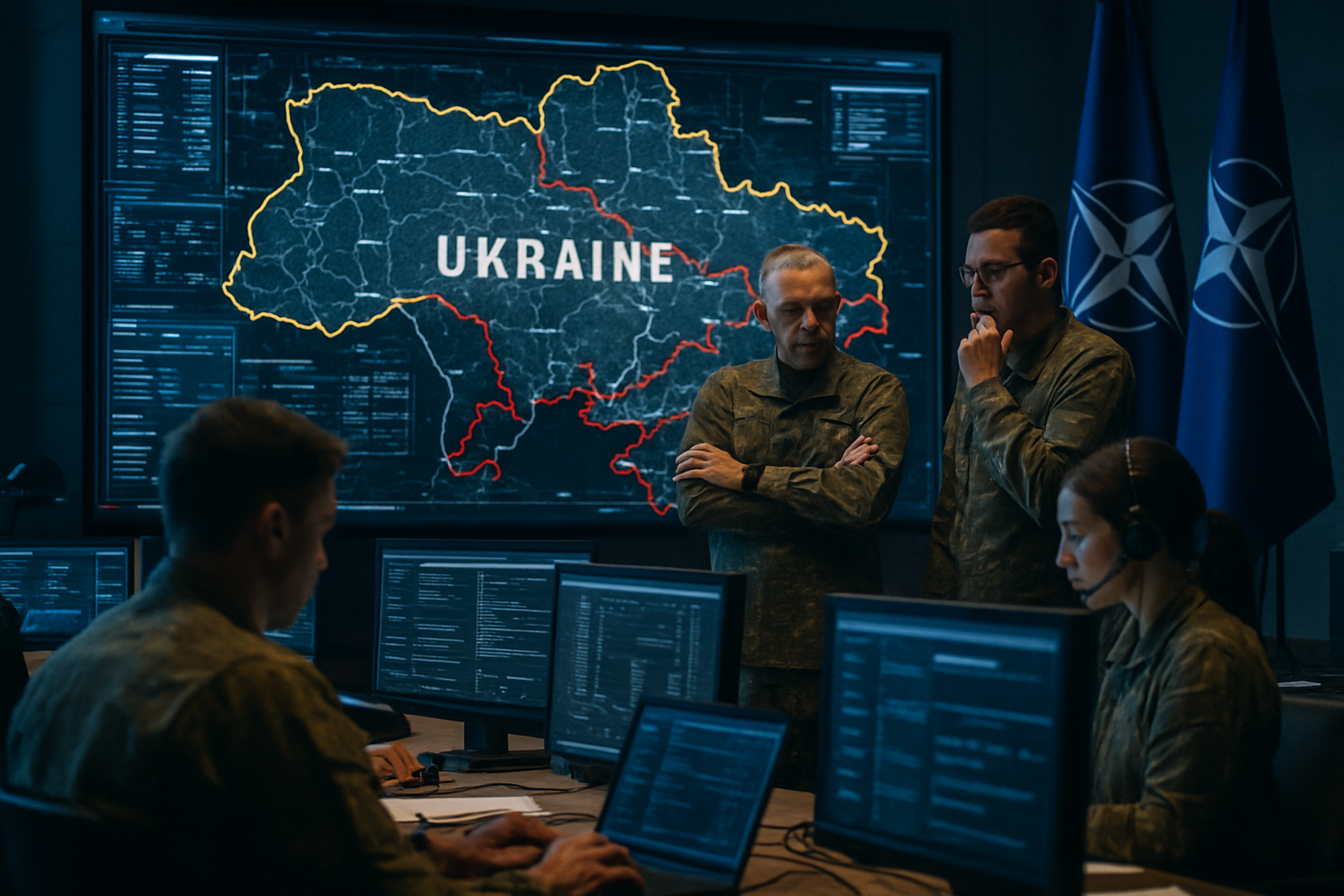
Ukraine's promising diplomatic momentum toward ending Europe's deadliest conflict since World War II faces indefinite suspension as trilateral peace negotiations between Ukraine, Russia, and the United States have been postponed due to the escalating crisis with Iran, while Russian forces continue systematic attacks on civilian targets and critical infrastructure.
President Volodymyr Zelensky announced the suspension of peace talks in a statement that underscores how regional conflicts have become interconnected in today's multipolar security environment. "Due to situation around Iran, there are still no necessary signals for trilateral meeting," Zelensky said, but emphasized that negotiations will resume "as soon as security situation and general political context allow."
Devastating Civilian Casualties Mount
The suspension comes as Russian forces have dramatically escalated attacks on civilian targets across Ukraine. In Zaporizhzhia, Russian guided aerial bombs killed one person and wounded ten others, including a 17-year-old boy in serious condition. The attack destroyed residential buildings and sparked fires throughout the region.
Russian forces also targeted the strategic city of Kherson, where civilians face daily bombardment from Russian positions across the Dnipro River. French media partner Mediapart reported that residents of the liberated city endure constant drone surveillance and targeted strikes, with twenty people wounded in attacks on March 11 alone.
Since the start of the day, Russian forces have launched 79 separate attacks on Ukrainian positions, with the most intense fighting reported near Kostiantynivka and Huliaipole. The systematic targeting of civilian areas violates international humanitarian law under the Geneva Conventions.
Nuclear Governance Crisis Deepens
The postponement of peace talks occurs against an unprecedented nuclear crisis backdrop. The New START Treaty between the United States and Russia expired on February 5, 2026 — marking the first time in over 50 years that the two superpowers have operated without bilateral nuclear constraints. Both nations control approximately 80% of the world's nuclear weapons, with Russia possessing 4,380 warheads and the U.S. maintaining 3,708.
UN Secretary-General António Guterres has called this development a "grave turning point," warning that nuclear risks are now at their "highest levels in decades." The restoration of military communications between Washington and Moscow through the Abu Dhabi peace process represents the only remaining formal diplomatic channel between the nuclear superpowers.
Diplomatic Achievements Now in Limbo
The suspended talks had achieved significant humanitarian breakthroughs that offered hope for broader resolution. The historic 314-prisoner exchange completed in February — the first such swap in five months — demonstrated that sustained diplomatic engagement could produce concrete results even amid military operations.
The restoration of U.S.-Russia military communications after a four-year suspension had established crucial deconfliction protocols for operations in Syria, the Arctic, and Africa. Pentagon officials described these arrangements as the most significant U.S.-Russia military agreements since the conflict began.
"This represents the most significant diplomatic opportunity since the conflict began. The framework success provides methodology for complex multilateral negotiations despite fundamental disagreements."
— Senior diplomatic source familiar with the peace process
Territorial Disputes Remain Unresolved
The core obstacle to peace remains unchanged: the fate of eastern Ukrainian territories under Russian control. Russian forces have accelerated territorial gains, capturing 481 square kilometers in January 2026 compared to 260 square kilometers in December 2025 — an 85% increase representing the fastest expansion in months.
Russia continues to demand territorial recognition and insists that any direct talks between Presidents Putin and Zelensky must occur in Moscow. Ukraine maintains its position on territorial integrity while seeking long-term security guarantees. President Zelensky has categorically rejected territorial concessions, stating that the Ukrainian people would reject "handing over territories" as a "failure story."
Energy Terrorism Strategy
Russia has employed what analysts describe as an "energy terrorism" strategy, systematically targeting civilian infrastructure during harsh winter conditions. These attacks left over 1,170 buildings in Kyiv without heating during minus-30°C temperatures, forcing Ukrainian nuclear plants to halt electricity production for the first time since the conflict began.
The pattern of attacks violates the Geneva Conventions' protections for civilian infrastructure, particularly during life-threatening weather conditions. Over 17.8 million Ukrainians have required access to emergency winter support programs.
International Support Reaches Historic Levels
Despite the diplomatic setback, international support for Ukraine has reached unprecedented levels. The European Union's €90 billion loan package represents the largest single-nation assistance effort in EU history, though Slovakia, the Czech Republic, and Hungary have refused participation, exposing deep European divisions.
Additional support includes Sweden and Denmark's €246 million air defense package with Tridon systems, Germany's provision of 35 Patriot missiles, and sustained NATO coordination. The World Bank has allocated billions for energy infrastructure restoration.
European Unity Crisis
Hungarian Prime Minister Viktor Orbán has threatened to veto both the EU's 20th sanctions package against Russia and the €90 billion loan over the Druzhba oil pipeline dispute. Lithuania's Foreign Minister warned that "the EU cannot become Budapest's hostage," highlighting the deepest European divisions since the conflict began.
Ukraine's Strategic Pivot
In a significant development, President Zelensky announced that Ukrainian military experts are deploying to Middle Eastern nations including the UAE, Qatar, Jordan, Bahrain, and Kuwait to combat Iranian "Shahed" drone attacks — the same weapons that have devastated Ukrainian infrastructure.
This represents a strategic evolution from aid recipient to security provider, as Ukraine leverages its battlefield experience into strategic partnerships that could create new negotiating leverage when peace talks eventually resume.
Human Cost Continues to Mount
President Zelensky has disclosed that 55,000 Ukrainian soldiers have been officially killed since the conflict began, with a "large number" still missing in action. International research centers estimate actual casualties could be two to three times higher than official figures.
A Russian military court in Moscow sentenced five Ukrainian prisoners of war to 15-18 years in prison for their alleged participation in Ukrainian operations in Russia's Kursk region, which Russian authorities have classified as terrorism. These actions raise serious concerns about the treatment of prisoners of war under international law.
Path Forward Uncertain
The Trump administration had established a June 2026 deadline for comprehensive peace agreements, with talks potentially escalating to a Washington venue for presidential-level engagement. The evolution from Abu Dhabi to Geneva to Washington had suggested deliberate diplomatic escalation, but the Iranian crisis has created uncertainty about this timeline.
The proven framework remains available for reactivation when conditions permit. The UAE-mediated methodology of working groups by topic followed by joint position synchronization has demonstrated effectiveness for achieving humanitarian results even amid fundamental political disagreements.
Global Implications
The suspension of Ukraine peace talks due to the Iranian crisis demonstrates the interconnected nature of regional conflicts in today's multipolar security environment. Success or failure of eventual resumed negotiations carries global implications for 21st-century territorial dispute resolution templates.
Stakes extend beyond the immediate conflict to include European security architecture redefinition, international law enforcement credibility, and territorial sovereignty principles that will shape power competition for decades to come.
"We are witnessing the most significant test of democratic institutions under extreme pressure and credible deterrence against expansion since World War II."
— European security analyst
As Ukraine continues to demonstrate operational capabilities through strikes on Russian military logistics in occupied territories and diplomatic innovation through expanding Middle Eastern partnerships, the international community faces the challenge of maintaining momentum for Europe's most significant security challenge since the Cold War while managing multiple simultaneous crises.
The framework for peace remains intact, but the path forward depends on resolving the Iranian crisis and creating conditions conducive to the innovative territorial compromise solutions that will ultimately determine whether diplomatic engagement can overcome military escalation in Europe's deadliest conflict since World War II.