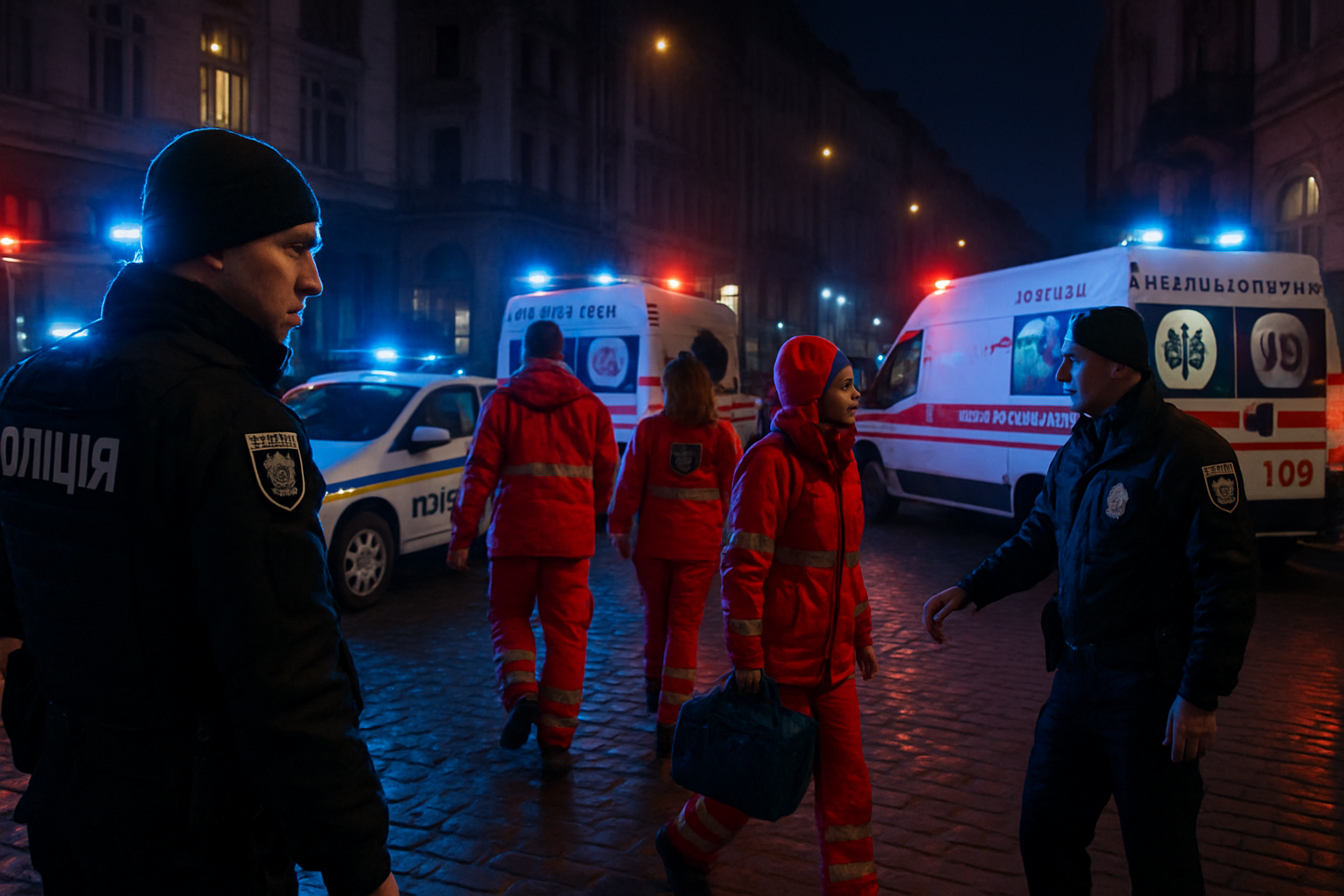
A sophisticated terrorist attack in Lviv, western Ukraine, killed a 23-year-old policewoman and wounded 24 others on February 22, 2026, as the Ukraine-Russia conflict intensifies along multiple fronts with Ukrainian Defense Forces reporting 112 clashes with Russian forces in a single day.
The deadly incident occurred at midnight when homemade explosive devices detonated during a police response to a reported break-in at a shop on Danylyshyna Street near the Magnus shopping center. Ukrainian authorities have confirmed the arrest of a 33-year-old resident from Kostopil in the Rivne region in connection with the attack.
Sophisticated Attack Targets First Responders
The bombing employed a classic secondary device tactic designed to maximize casualties among responding officers. The first explosion targeted the initial patrol unit responding to the fake emergency call, while the second blast hit backup officers arriving at the scene - demonstrating advanced knowledge of police response protocols.
Lviv Mayor Andriy Sadovyi described the incident as a terrorist act, confirming the death of the young policewoman and injuries to 24 others. The attack represents a significant escalation in targeting civilian law enforcement infrastructure in western Ukraine, approximately 70 kilometers from the Polish border.
"It has been preliminarily established that home-made explosive devices detonated," the National Police stated via Telegram, while President Volodymyr Zelensky blamed Russia for organizing the attack.
— Ukrainian National Police
Strategic Significance of Targeting Lviv
The attack on Lviv holds particular strategic importance due to the city's role as a crucial logistics hub for Western aid deliveries and its function as a safe haven for hundreds of thousands of internally displaced persons. The proximity to NATO and EU territory raises significant international security concerns.
Zelensky accused Russia of organizing the attack through social media recruitment, stating that Ukrainian intelligence has information indicating Russia intends to continue carrying out terrorist attacks throughout Ukraine. This assessment has led to renewed discussions about potentially blocking anonymous platforms like Telegram, which occupying forces systematically use for terrorist recruitment and coordination.
Frontline Military Operations Intensify
The terrorist attack in Lviv coincided with a dramatic escalation in military operations along the frontline. Ukrainian Defense Forces engaged in 112 clashes with Russian forces on February 22, with the highest activity - 24 attacks - occurring in the Huliaipole sector of the Zaporizhzhia region.
Military analysts report that Ukrainian air assault troops from the 80th Separate Air Assault Galician Brigade successfully destroyed a major Russian depot containing UAVs, related equipment, ammunition, and vehicles in Russia's Kursk region. This operation demonstrates Ukraine's continued capability to conduct deep strikes against Russian military infrastructure.
Evolving Russian Tactics Prompt Defense Adjustments
In response to changing Russian strike tactics, President Zelensky has instructed air defense forces, the Ministry of Defense, and government agencies to strengthen protection against Russian drones. Military experts note that Russia has adapted its approach, utilizing new combinations of drones and missiles to overwhelm Ukrainian air defense systems.
The Russian military also struck residential areas in the Sumy region with two guided aerial bombs, leaving several people wounded. This continues the pattern of systematic targeting of civilian infrastructure that has characterized Russia's approach throughout the conflict.
International Context and Diplomatic Implications
The escalation comes amid ongoing diplomatic efforts, including the recent Geneva peace talks that achieved progress on ceasefire monitoring mechanisms while territorial disputes remain unresolved. The terrorist attack in Lviv, occurring hours after major Russian missile and drone assaults, highlights the challenge of maintaining effective diplomatic engagement while military pressure continues.
International observers note that targeting civilian law enforcement represents a shift from conventional military targets to broader civilian infrastructure, potentially complicating international aid operations that use Lviv as a primary transit point from NATO countries.
Security Response and Investigation
Ukrainian security services have launched a comprehensive investigation under the supervision of the Lviv Regional Prosecutor's Office, treating the incident as terrorism rather than conventional crime. The sophisticated nature of the operation, requiring extensive planning and surveillance of police protocols, suggests state-level capabilities rather than an individual operation.
The attack demonstrates the emergence of domestic terrorist threats beyond conventional military conflict zones, challenging Ukrainian authorities to maintain effective policing while protecting personnel from targeted attacks. Security experts emphasize the need for enhanced intelligence gathering and counter-terrorism responses to prevent similar incidents.
Humanitarian and Strategic Implications
The targeting of a young policewoman in a relatively safe western Ukrainian city has profound psychological implications for the civilian population seeking refuge from the conflict. The incident exposes vulnerabilities in civilian spaces and standard police procedures that terrorists have learned to exploit.
As Ukraine continues to serve as a critical transit point for international assistance, attacks like the one in Lviv could complicate humanitarian operations and potentially influence the flow of Western aid. The incident also tests Ukrainian society's resilience beyond battlefield boundaries, representing a potential geographic expansion of internal security threats.
Looking Forward
The simultaneous escalation in both terrorist activities in western Ukraine and conventional military operations along the frontline indicates a broadening of the conflict's scope. Ukrainian security forces face the dual challenge of defending against conventional military threats while adapting to evolving terrorist tactics targeting civilian infrastructure and personnel.
The international community's response to these developments will likely influence both military support mechanisms and diplomatic initiatives. As the conflict approaches its fourth anniversary in February 2024, the integration of terrorist tactics with conventional military operations represents a concerning evolution that may require enhanced international cooperation for effective countermeasures.