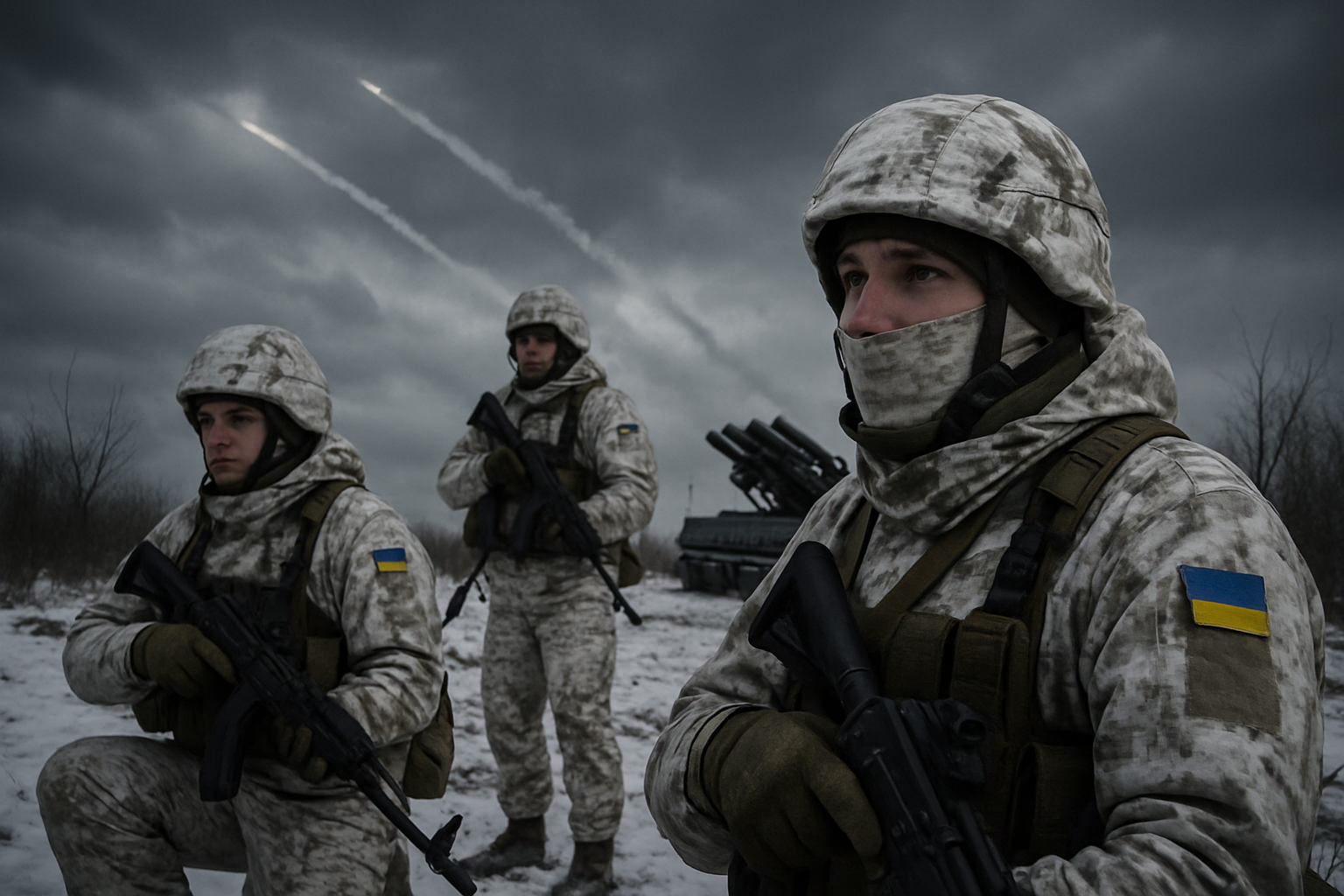
Russia launched one of its largest coordinated attacks of 2026 against Ukrainian territory, deploying 447 missiles and drones in a massive overnight assault that targeted critical infrastructure across eight regions, while Ukrainian President Volodymyr Zelensky announced comprehensive new sanctions against foreign companies supplying components for Russian weapons systems.
According to Ukraine's air force, the assault began at 7 p.m. local time Saturday and involved a combination of air-, ground- and sea-launched missiles, along with strike unmanned aerial vehicles. Ukrainian air defense forces successfully intercepted or electronically suppressed 406 aerial targets, including 24 missiles and 382 drones of various types.
The main directions of the attack targeted western Ukrainian regions, including Lviv, Ivano-Frankivsk, Rivne and Vinnytsia, according to air force statements. Preliminary reports indicate 13 missiles and 21 strike drones successfully hit 19 locations across the country, while debris from intercepted drones fell at three additional sites.
Casualties and Infrastructure Damage
The attacks resulted in multiple civilian casualties and widespread infrastructure damage. In eastern Ukraine's Kramatorsk, journalists from the Inter television channel came under Russian airstrike, highlighting the continued targeting of media personnel covering the conflict.
In Kherson, nighttime shelling damaged a church and a hospital, with victim toll increasing to ten wounded. The systematic targeting of civilian infrastructure, including religious and medical facilities, represents a continuation of Russia's strategy to impact civilian morale through infrastructure destruction.
Ukrainian officials reported that one person was killed in eastern Ukraine during Russian air strikes on residential areas. Regional authorities confirmed that two additional people were wounded in the same attacks, demonstrating the continued civilian cost of the prolonged conflict.
Ukrainian Air Defense Response
Despite the massive scale of the attack, Ukrainian air defenses demonstrated remarkable effectiveness. Of the 447 weapons deployed by Russian forces, air defense systems destroyed 42 fixed-wing unmanned aerial vehicles and successfully intercepted the vast majority of incoming threats.
The Ukrainian air force credited the success to coordinated efforts between multiple air defense units and international support systems. Recent deliveries of advanced air defense capabilities, including the €246 million Sweden-Denmark package featuring Tridon Mk2 systems, have significantly enhanced Ukraine's defensive capabilities.
"The production of these weapons would be impossible without essential foreign components, which the Russians continue to obtain by circumventing sanctions,"
— President Volodymyr Zelensky
New Sanctions Target Supply Chains
Following the massive attack, President Zelensky announced Ukraine's most comprehensive sanctions package yet against the international supply chain supporting Russian military production. The sanctions specifically target companies from China, the United Arab Emirates, and Panama identified as providing crucial components for Russian drone and missile systems.
Ukrainian intelligence analysis revealed that Russian weapons production relies heavily on foreign-manufactured components, particularly advanced electronics and precision guidance systems. The new sanctions framework aims to disrupt these critical supply chains by blacklisting specific companies and individuals involved in the procurement network.
The sanctions package represents Ukraine's most ambitious attempt to leverage its economic tools against the broader international network supporting Russian military capabilities. European partners have indicated support for coordinating similar measures through EU sanctions mechanisms.
Military Operations and Territorial Dynamics
Beyond the air attacks, ground fighting continued across multiple fronts. Russian invaders are attempting to concentrate forces in the southern part of Pokrovsk, with Ukrainian Defense Forces systematically targeting these concentrations with artillery fire.
Ukrainian military sources confirmed strikes on Russian territory, including damage to technical facilities for servicing medium-range ballistic missiles at the Kapustin Yar training ground in Russia's Astrakhan region. The strikes reportedly damaged an assembly building and logistics warehouse, demonstrating Ukraine's continued capability for long-range operations.
In border regions, pro-Ukrainian partisans claimed responsibility for sabotaging Russian communications infrastructure in Belgorod Oblast. The Atesh resistance movement reported knocking out surveillance, radio and electronic warfare systems, further weakening Russian coordination capabilities near the Ukrainian border.
Energy Infrastructure Under Siege
The latest attacks represent a continuation of Russia's systematic targeting of Ukrainian energy infrastructure during winter months. Power shortages and damage continue to prevent the cancellation of emergency power cuts in most regions of Ukraine, though restrictions have been reduced in some areas.
Naftogaz facilities in the Poltava region came under direct attack during the overnight drone assault, highlighting Russia's focus on energy sector targets. The state energy company Ukrenergo reported ongoing challenges in maintaining grid stability amid repeated infrastructure strikes.
Energy Minister Herman Halushchenko previously described the energy situation as "critical" following systematic attacks on power generation and distribution facilities. Emergency warming centers remain activated across multiple regions as Ukrainian civilians face ongoing power disruptions during harsh winter conditions.
International Response and Diplomatic Context
The massive attack occurs against the backdrop of recent diplomatic developments, including the historic prisoner exchange achieved during trilateral talks in Abu Dhabi. The February 5 breakthrough saw 314 prisoners of war exchanged between Ukraine and Russia - the first such swap in five months.
NATO Secretary-General Mark Rutte recently visited Kyiv and addressed the Ukrainian Parliament, condemning Russian attacks as sending a "bad signal" during ongoing diplomatic efforts. The alliance has increased support for Ukrainian air defenses while maintaining pressure for continued negotiations.
European responses remain divided, with Germany maintaining opposition to direct talks with Putin while France and Italy continue advocating for diplomatic engagement. The European Union approved a historic €90 billion loan package for Ukrainian defense and reconstruction, representing the largest EU aid commitment to date.
Humanitarian Crisis Deepens
The sustained attacks on civilian infrastructure create mounting humanitarian challenges for Ukrainian civilians. Over 17.8 million Ukrainians are currently accessing winter support programs as authorities struggle to maintain essential services amid continued infrastructure targeting.
Medical facilities report increased strain from both combat-related casualties and civilians affected by power outages and heating disruptions. International humanitarian organizations warn of deteriorating conditions in areas repeatedly targeted by Russian forces.
Ukrainian authorities confirmed that emergency services personnel continue facing direct targeting while responding to attack aftermath. The systematic nature of infrastructure attacks demonstrates a calculated strategy to maximize civilian impact through essential service disruption.
Military Assessment and Future Outlook
This week alone, Russian forces attacked Ukraine with more than 2,000 combat drones, 1,200 guided aerial bombs, and 116 missiles of various types, according to Ukrainian military assessments. The sustained intensity of attacks indicates continued Russian commitment to pressure through military means despite diplomatic engagement.
Russian forces also fired on the Chernihiv region 38 times in the past 24 hours, with 68 explosions reported, demonstrating the geographic scope of ongoing military operations. The use of Geran UAVs, FPV drones, and conventional artillery reflects Russia's multi-layered approach to sustained pressure.
Ukrainian military analysts emphasize that defensive capabilities continue improving through international support, but the scale and intensity of Russian attacks pose ongoing challenges for civilian protection. The coordination between sanctions targeting military supply chains and defensive operations represents Ukraine's comprehensive approach to reducing Russian military effectiveness over time.
As diplomatic efforts continue through multiple channels, the military dimension remains active with both sides demonstrating capability for sustained operations. The intersection of diplomatic progress and continued military escalation highlights the complex dynamics shaping the conflict's trajectory as it enters its fifth year.