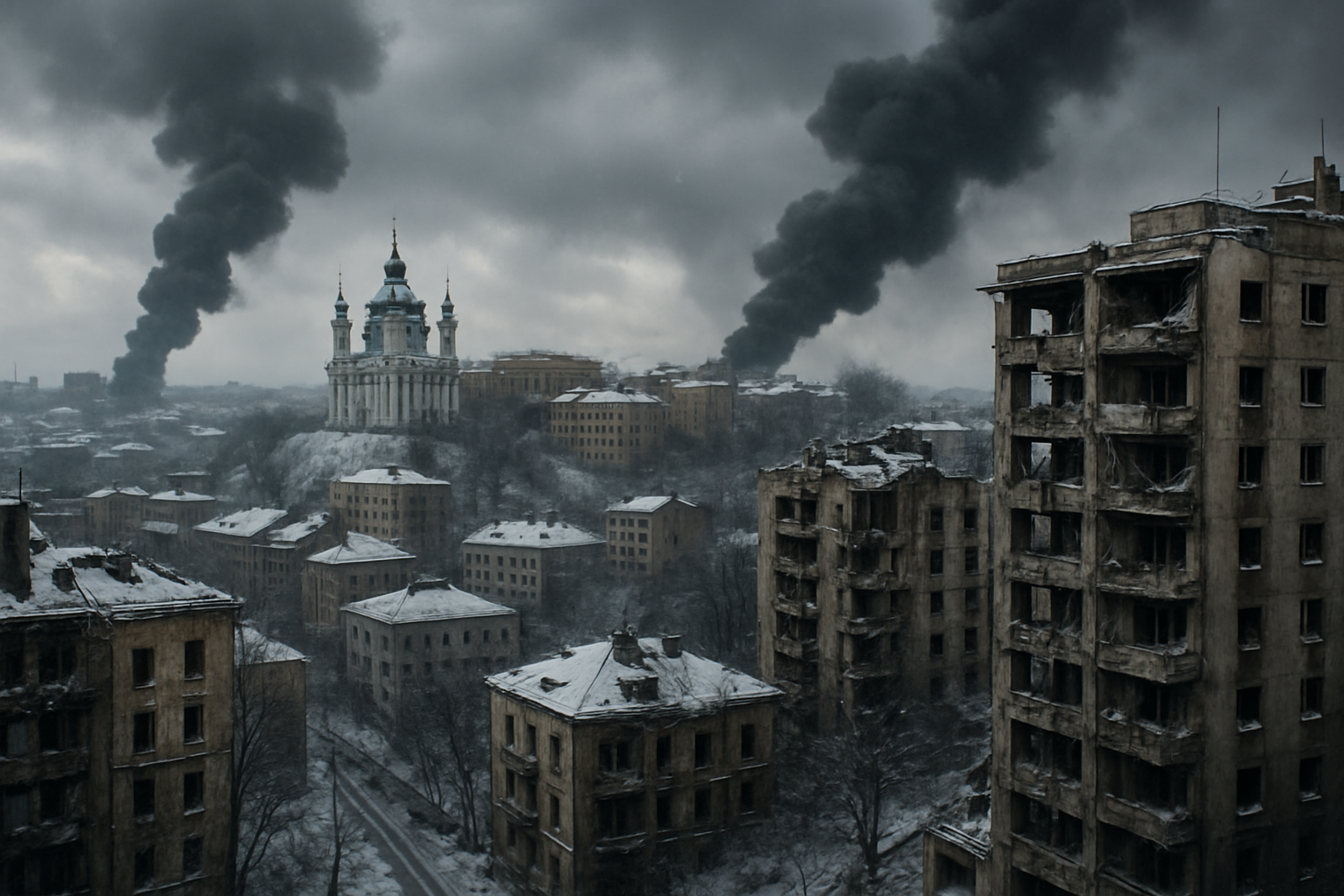
Russia launched one of its largest drone attacks of 2026 against Ukrainian cities on March 16, deploying over 200 unmanned aerial vehicles targeting Kiev and multiple regions, while peace negotiations between Russia, Ukraine, and the United States remain indefinitely suspended due to the ongoing Iran crisis.
Ukrainian air defense forces successfully neutralized 194 of the 211 drones used in the overnight assault, according to official military reports. However, the sheer scale of the attack - with air raid sirens sounding at 7:20 AM local time followed by explosions 20 minutes later - demonstrated Russia's continued capability to launch massive coordinated strikes despite ongoing diplomatic efforts.
Peace Talks Derailed by Middle East Crisis
The drone offensive comes as President Volodymyr Zelensky confirmed that trilateral peace negotiations involving Ukraine, Russia, and the United States have been postponed indefinitely due to the escalating Iran situation. "Due to the situation around Iran, there are still no necessary signals for a trilateral meeting," Zelensky stated, adding that talks would resume "as soon as the security situation allows."
The suspension represents a major setback to unprecedented diplomatic momentum achieved in February 2026. The Abu Dhabi breakthrough had yielded historic results, including a 314-prisoner exchange - the first in five months - and the restoration of US-Russia military communications after a four-year suspension. Geneva talks in February achieved what US Special Envoy Steve Witkoff described as "significant progress" on ceasefire monitoring mechanisms.
"We were ready to travel to Turkey. They postponed this meeting. It was specifically the American side that postponed it, saying: 'Let's do it next week,'"
— Volodymyr Zelensky, President of Ukraine
Systematic Targeting of Civilian Infrastructure
The latest Russian offensive targeted multiple Ukrainian oblasts including Odesa, Zaporizhzhia, and Kiev regions. Italian media reported that fragments of Russian drones fell on Kiev's iconic Maidan Square, near the Independence Monument, highlighting the precision with which Russia is targeting symbolic locations in the Ukrainian capital.
This attack continues Russia's documented pattern of "energy terrorism" - systematic targeting of civilian infrastructure during harsh winter conditions. Previous assaults have left over 1,170 buildings in Kiev without adequate heating during sub-zero temperatures, forcing Ukrainian nuclear plants to halt electricity production for the first time since the conflict began.
The Kremlin has dismissed reports that Ukraine peace processes are losing momentum. Spokesman Dmitry Peskov argued that President Trump's "frequent references to Ukraine in his recent statements suggest the opposite," claiming Trump is "strongly urging President Zelensky to strike a deal."
Ukraine's Strategic Pivot to Security Provider
As diplomatic channels remain frozen, Ukraine has pivoted to become a security provider in the Middle East. Ukrainian military experts are now deploying to the UAE, Qatar, Jordan, Bahrain, and Kuwait to help combat Iranian Shahed drone attacks - the same weapons systems Russia has been using against Ukrainian infrastructure.
This evolution from aid recipient to security provider demonstrates Ukraine's growing international partnerships. The UK has revealed four operational Maintenance, Repair, and Operations (MRO) facilities in Ukraine servicing Western-supplied equipment, with a fifth facility planned - marking the first public acknowledgment of extensive military infrastructure supporting the conflict.
Mounting Human Cost and International Response
The conflict's toll continues to mount, with President Zelensky having disclosed that 55,000 Ukrainian soldiers have been officially confirmed killed, with a "large number" still classified as missing. International estimates suggest actual military casualties could be two to three times higher when including undocumented deaths.
Recent attacks have demonstrated Russia's systematic targeting of civilian populations. A drone strike in Sumy injured three civilians, while fierce battles continue for control of settlements including Myrne, Bilohiria, and Luhivske on the Huliaipole axis, where Russian forces have failed to establish control despite repeated assault attempts.
Meanwhile, Ukrainian forces have maintained their own operational capabilities, with successful strikes reported on a Russian oil depot in Krasnodar region following a drone attack, highlighting the conflict's continued cross-border dynamics.
Nuclear Crisis Backdrop
The suspension of peace talks occurs against an unprecedented nuclear governance crisis. The New START Treaty between the US and Russia expired on February 5, 2026 - marking the first time in over 50 years that the two nuclear superpowers operate without bilateral nuclear constraints. Both nations control approximately 80% of the world's nuclear weapons, with Russia possessing 4,380 warheads and the US maintaining 3,708.
UN Secretary-General António Guterres has described this as a "grave turning point," warning that nuclear risks are at their "highest in decades." The restored military communications achieved through the Abu Dhabi process now represent the only remaining formal diplomatic channel between the superpowers.
International Support Despite Divisions
Despite the diplomatic setback, international support for Ukraine continues at historic levels. The European Union's €90 billion loan package represents the largest single-nation assistance effort in history, though Slovakia, Czech Republic, and Hungary refused participation, exposing divisions within the bloc.
Sweden and Denmark have committed €246 million for air defense systems, while Germany has provided 35 Patriot missiles. Over 17.8 million Ukrainians continue to access winter support programs as the humanitarian crisis deepens.
In Kharkiv, Ukraine's second-largest city, the devastating impact on education has forced 20,000 children underground to study in subway schools, as Russian assaults have killed dozens of children in the city, according to Al Jazeera reports.
Framework Preservation for Future Talks
Despite the indefinite postponement, diplomatic achievements from the February breakthrough remain intact. The prisoner exchange mechanisms, structured negotiation format, and Pentagon-Moscow deconfliction protocols covering Syria, Arctic, and Africa operations can be reactivated when the Iranian crisis permits.
The UAE methodology - working groups by topic with joint position synchronization - proved effective for achieving concrete humanitarian results. This framework represents the most substantial US-Russia agreement since the conflict began and provides a foundation for future engagement.
Territorial Disputes Remain Unchanged
The fundamental sticking point persists: eastern Ukrainian territories under Russian control remain the core disagreement. Russia demands territorial recognition and insists that any Putin-Zelensky talks must occur in Moscow. Ukraine maintains its territorial integrity position, with Zelensky having previously categorically rejected Donbas territorial concessions, stating that the Ukrainian people would reject "handing over territories" as a "failure story."
Russian territorial gains have accelerated dramatically, with forces capturing 481 square kilometers in January 2026 compared to 260 square kilometers in December 2025 - an 85% increase representing the fastest territorial expansion in months.
Stakes for Global Security Architecture
The suspension of what many considered the most significant diplomatic opportunity since the invasion began carries global implications for 21st-century territorial dispute resolution. Success in eventual resumed talks could provide a template for ending Europe's deadliest war since World War II. Failure may intensify military operations globally and undermine diplomatic credibility in territorial disputes worldwide.
The stakes extend beyond Ukraine-Russia relations to encompass European security architecture redefinition, international law enforcement credibility, and territorial sovereignty principles that will influence global power competition for decades to come.
As the Iran crisis continues to divert international attention and resources, Ukraine faces the challenge of maintaining defensive capabilities while the diplomatic window remains closed. The interconnected nature of regional conflicts in today's multipolar security environment has demonstrated how Middle East crises can derail promising European diplomatic initiatives.
With the June 2026 Washington venue deadline now uncertain due to competing priorities, the international community must grapple with managing multiple simultaneous crises while preserving diplomatic momentum for what remains Europe's most significant security challenge since the Cold War.