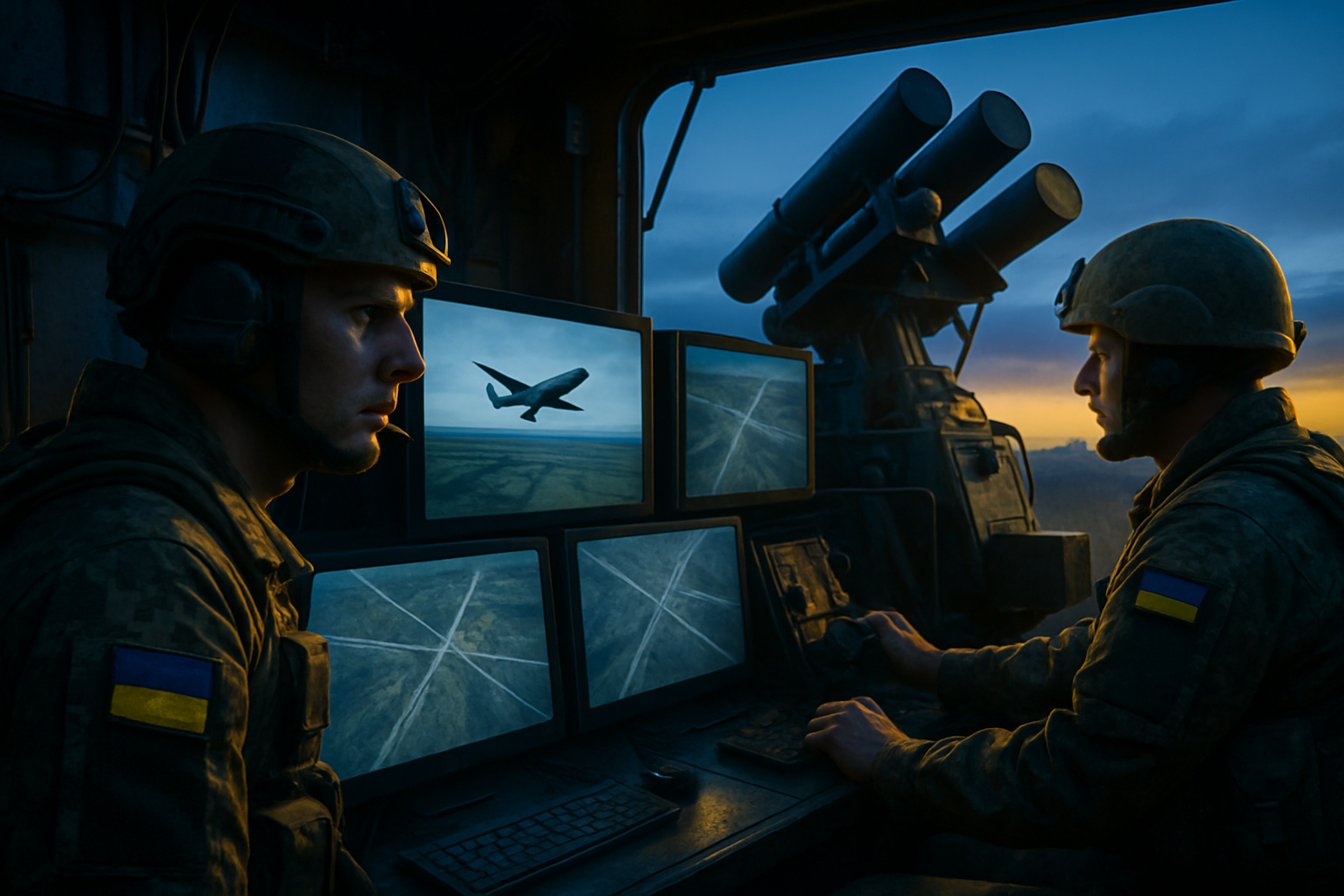
Ukrainian Defense Forces reported successful strikes on key Russian military facilities, including the strategic Atlant Aero defense enterprise in Taganrog, while defending against one of the largest coordinated drone attacks in recent months, with Russia deploying over 236 unmanned aircraft in a single night.
The Ukrainian military confirmed overnight operations targeting the Russian defense-industrial enterprise Atlant Aero and several strategic facilities in temporarily occupied territories. General Staff sources indicated the strikes were part of ongoing efforts to degrade Russian military production capabilities supporting the war effort.
Unprecedented Drone Defense Operations
Ukrainian air defense forces demonstrated remarkable effectiveness in countering massive Russian aerial assaults, with the Air Force reporting the interception of 203 out of 236 Russian drones launched overnight on April 18-19. The scale of the attack represents one of the most intensive drone campaigns witnessed in recent weeks.
In a historic first for modern warfare, operators of the 412th Nemesis Brigade achieved a groundbreaking tactical milestone by shooting down a Russian Shahed-type UAV using an interceptor drone launched from an unmanned surface platform. This marks the first time in military history that an aerial target has been neutralized using a drone launched from a completely autonomous surface vessel.
"This achievement represents a fundamental shift in naval air defense capabilities and autonomous warfare,"
— Ukrainian Defense Ministry Statement
Strategic Strikes on Military Infrastructure
The confirmed strike on the Atlant Aero enterprise in Taganrog represents a significant blow to Russian defense manufacturing capabilities. The facility is known to produce components for various military systems, making it a strategic target in Ukraine's campaign to disrupt Russian war production.
Additional Ukrainian operations targeted multiple facilities across temporarily occupied territories, with the General Staff reporting successful strikes on ammunition depots, command posts, and logistics centers. These operations demonstrate Ukraine's enhanced long-range strike capabilities and sophisticated intelligence gathering.
Ground Operations and Defensive Actions
Ukrainian ground forces continue to maintain defensive positions across multiple sectors. In the Zaporizhzhia region, soldiers of the 225th Separate Assault Regiment successfully repelled a Russian motorcycle-led assault, highlighting the adaptability of Ukrainian defensive strategies against unconventional attack methods.
The Defense Forces also reported successful operations near Chasiv Yar in the Donetsk region, where Ukrainian troops thwarted large-scale Russian breakthrough attempts for the second consecutive day. These actions demonstrate the sustained intensity of combat operations across the eastern front.
International Support and Zelensky's Oil Revenue Warning
Ukrainian President Volodymyr Zelensky issued stark warnings about continued purchases of Russian oil, stating that "every dollar paid for Russian oil is money for the war." This criticism comes as the U.S. Treasury Department extended until May 16 the suspension of most sanctions targeting Russian petroleum and oil products.
Zelensky emphasized that billions of dollars spent on Russian crude oil "are being directly converted into new strikes" against Ukraine, calling the suspension of sanctions counterproductive to peace efforts.
"Such decisions fuel the illusions of Russian leaders that they can continue the war,"
— President Volodymyr Zelensky
Humanitarian Impact and Civilian Casualties
The ongoing conflict continues to exact a heavy toll on civilian populations. In Chernihiv, a Russian drone attack resulted in one fatality and four injuries, including a 16-year-old boy who was killed. The attack also caused significant damage to residential buildings and an educational institution.
Over the past week, Russia has deployed nearly 2,360 strike drones, more than 1,320 guided aerial bombs, and approximately 60 missiles against Ukrainian targets, according to official reports. This intensive bombardment pattern reflects the systematic nature of attacks on both military and civilian infrastructure.
Military Law Enforcement and Personnel Management
Ukrainian military authorities report positive developments in addressing personnel challenges. The Military Law Enforcement Service (MLES) announced that recent legislative initiatives have had a positive impact on the return of service members who left their units without authorization.
The implementation of the "Army+" mobile application has streamlined communication channels between military personnel and command structures, contributing to improved unit cohesion and administrative efficiency during active operations.
Russian Military Movements and Intelligence
Ukrainian intelligence services continue monitoring significant Russian troop movements. Reports indicate Russian forces spent nearly three days transferring troops from the Rostov region through the temporarily occupied city of Mariupol toward the Berdiansk-Melitopol direction, suggesting ongoing efforts to reinforce positions in southern Ukraine.
These movements reflect continued Russian attempts to consolidate control over occupied territories while maintaining pressure on multiple fronts throughout the conflict zone.
Technological Innovation in Warfare
The conflict continues to serve as a proving ground for advanced military technologies. The successful interception of aerial threats using unmanned surface platforms represents a significant advancement in autonomous defense systems.
Ukrainian forces have demonstrated increasing sophistication in coordinating multi-domain operations, combining traditional ground forces with advanced drone technology and precision strike capabilities. This integration of conventional and emerging technologies has become a hallmark of Ukrainian military adaptation.
International Context and Diplomatic Developments
The military operations occur against a backdrop of ongoing international discussions about support for Ukraine. The criticism of sanctions relief on Russian oil reflects broader concerns about the effectiveness of economic measures in pressuring Moscow to end its military operations.
Various international partners continue to provide military assistance, including advanced air defense systems and training programs designed to enhance Ukrainian defensive capabilities against increasingly sophisticated aerial threats.
Strategic Implications
The current military operations demonstrate several key trends in the ongoing conflict. Ukrainian forces have shown remarkable adaptability in developing new defensive and offensive capabilities, while Russian forces continue to rely heavily on overwhelming aerial bombardment as a primary tactical approach.
The success of Ukrainian air defense systems against large-scale drone attacks indicates significant improvements in defensive capabilities, while confirmed strikes on Russian military infrastructure suggest enhanced offensive reach and intelligence capabilities.
As the conflict continues to evolve, both sides appear to be refining their approaches to modern warfare, with increasing emphasis on unmanned systems, precision strikes, and technological innovation as key components of military strategy.
The international community continues to monitor developments closely, with ongoing debates about the most effective approaches to supporting Ukraine while working toward sustainable resolution of the broader conflict.