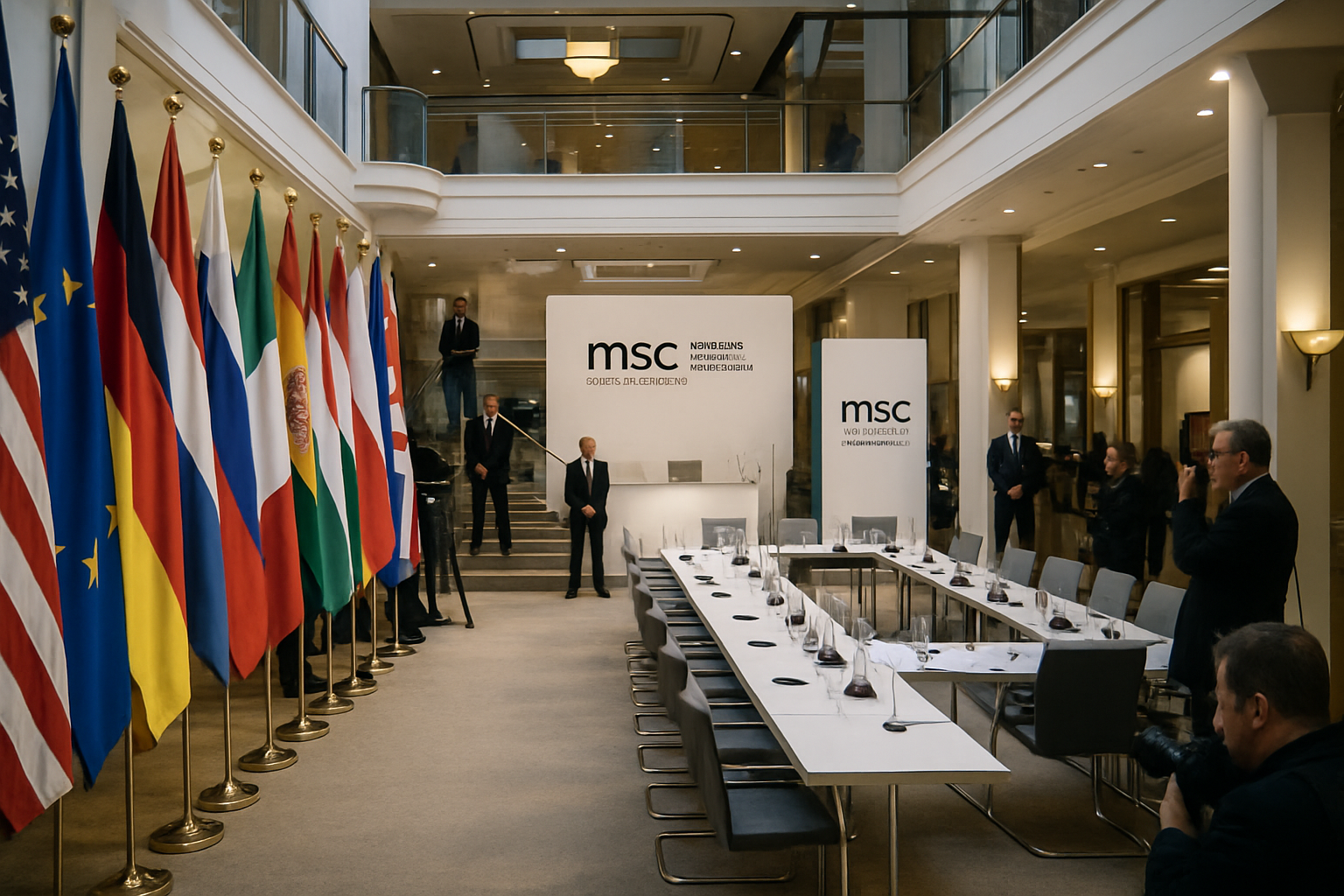
Russian drone strikes killed more civilians across Ukraine on February 13 as international leaders prepared for the Munich Security Conference, highlighting the urgent need for enhanced military support while diplomatic efforts continue following recent breakthrough prisoner exchanges and restored US-Russia military communications.
The latest attacks underscored the ongoing humanitarian crisis as Ukrainian officials reported widespread casualties and infrastructure damage across multiple regions, occurring just days before the annual Munich Security Conference where Ukraine's defense needs and peace prospects will dominate discussions.
Civilian Casualties Mount in Latest Russian Attacks
Ukrainian authorities confirmed multiple civilian deaths from Russian drone and missile strikes targeting energy infrastructure and residential areas. The attacks follow a devastating pattern that has characterized Russia's winter campaign, systematically targeting civilian infrastructure to create humanitarian pressure during extreme cold weather conditions.
Russian forces conducted coordinated assaults across several oblasts, with Ukrainian air defenses working to intercept incoming threats. The strikes damaged critical energy facilities, leaving thousands without power and heating during sub-zero temperatures that have plagued the region in recent weeks.
International Military Aid Commitments Expand
Ahead of the Munich Security Conference, several European nations announced significant new military assistance packages for Ukraine. German Defense Minister Boris Pistorius confirmed that Kiev would soon receive 35 Patriot missiles, with 30 provided by Ramstein contact group members and five additional missiles delivered directly by Germany.
The aid announcement represents a crucial escalation in air defense support as Ukraine faces continued attacks on its energy infrastructure. Sweden and Denmark have committed €246 million for advanced air defense systems including Tridon Mk2 technology, while multiple allies continue coordinating through established defense cooperation frameworks.
"Kiev will receive 35 missiles for its Patriot air defense systems, with 30 provided by Ramstein group members and five additional from Germany."
— German Defense Ministry Statement
The European Union's historic €90 billion loan package for Ukraine, approved in recent weeks, continues providing long-term financial support for both defense procurement and post-war reconstruction planning. The funding represents the largest EU assistance package ever provided to a single nation.
Munich Security Conference Strategic Implications
The upcoming Munich Security Conference will serve as a critical forum for international coordination on Ukraine policy, with US Secretary of State Marco Rubio emphasizing strong transatlantic ties despite previous diplomatic tensions. Chancellor Friedrich Merz is scheduled to deliver a major foreign policy address outlining Germany's strategic approach to European security challenges.
Ukrainian President Volodymyr Zelensky's advisor Alexander Kamyshin, responsible for Ukrainian defense joint ventures in Europe, expressed confidence that Ukraine and Europe can mutually benefit from enhanced cooperation. Speaking ahead of the conference, he emphasized Ukraine's willingness to share battlefield experience with European partners to strengthen collective defense capabilities.
The conference occurs against the backdrop of significant diplomatic progress, including recent prisoner exchanges and restored military communications between the United States and Russia following Abu Dhabi trilateral talks. These developments provide cautious optimism for sustainable peace negotiations while highlighting the need for continued military support.
Energy Infrastructure Under Systematic Attack
Russia's targeting of Ukrainian energy infrastructure has intensified during the winter months, creating severe humanitarian challenges for millions of civilians. Recent attacks forced Ukrainian nuclear power plants to temporarily halt electricity production for the first time since the conflict began, raising concerns about nuclear safety and regional security implications.
Kiev has faced particularly severe challenges, with over 1,170 buildings losing heating during temperatures reaching minus-30°C. Emergency warming centers have been activated across eight regions, while international partners provide energy restoration funding through World Bank programs and bilateral assistance.
The systematic targeting of civilian infrastructure during extreme weather conditions represents what Ukrainian and international officials have characterized as "energy terrorism," violating Geneva Convention protections for essential services during armed conflict.
Diplomatic Breakthrough Momentum Continues
Recent diplomatic progress achieved through Abu Dhabi trilateral negotiations between Ukraine, Russia, and the United States has created new possibilities for sustained engagement. The talks resulted in the first prisoner exchange in five months, with 314 personnel swapped, and the restoration of US-Russia military communications after a four-year suspension.
Ukrainian Defense Minister Rustem Umerov described the discussions as "substantial and productive," focusing on practical ceasefire implementation mechanisms and monitoring procedures. The talks represent the most significant diplomatic engagement since the conflict began, though fundamental territorial disputes remain unresolved.
The June 2026 peace deadline established by the Trump administration creates additional urgency for diplomatic innovation, with Washington potentially hosting future high-level negotiations. European responses remain divided, with Germany opposing direct Putin talks while France and Italy support broader engagement strategies.
Military Situation Analysis
Russian forces have accelerated territorial gains in recent months, capturing 481 square kilometers in January 2026 compared to 260 square kilometers in December 2025. Ukrainian officials report over 10,000 Russian drones and bombs launched in January alone, demonstrating continued military pressure despite diplomatic engagement.
The conflict has exacted a severe human toll, with President Zelensky previously disclosing that 55,000 Ukrainian soldiers have been officially confirmed killed, though actual casualties may be significantly higher when including missing personnel and undocumented deaths. Over 17.8 million Ukrainians are accessing winter support programs amid ongoing humanitarian challenges.
North Korean Military Involvement
Intelligence reports indicate significant casualties among North Korean forces deployed to support Russian operations. South Korean intelligence services disclosed that three out of five North Korean soldiers sent to Ukraine have been wounded or killed, with approximately 1,000 returning home and preparations underway for additional deployments.
The international dimension of the conflict continues expanding with reports of foreign fighters from various countries, highlighting the global implications of the war and the need for comprehensive international responses through forums like the Munich Security Conference.
Looking Forward: Security Conference Priorities
As international leaders gather in Munich, key priorities will include coordinating sustained military assistance, addressing energy security vulnerabilities, and exploring diplomatic pathways for sustainable peace. The conference serves as a crucial platform for maintaining allied unity while adapting strategies to evolving battlefield conditions.
The restoration of US-Russia military communications provides a foundation for preventing escalation while military operations continue, though significant challenges remain in bridging fundamental territorial and security disagreements. Success in Munich will be measured by concrete commitments to Ukraine's defense needs and progress toward sustainable peace frameworks.
The coming weeks will test whether diplomatic momentum can be sustained while providing Ukraine with necessary military capabilities to defend against continued Russian aggression. The Munich Security Conference represents a critical opportunity for international coordination at a pivotal moment in Europe's most significant conflict since World War II.