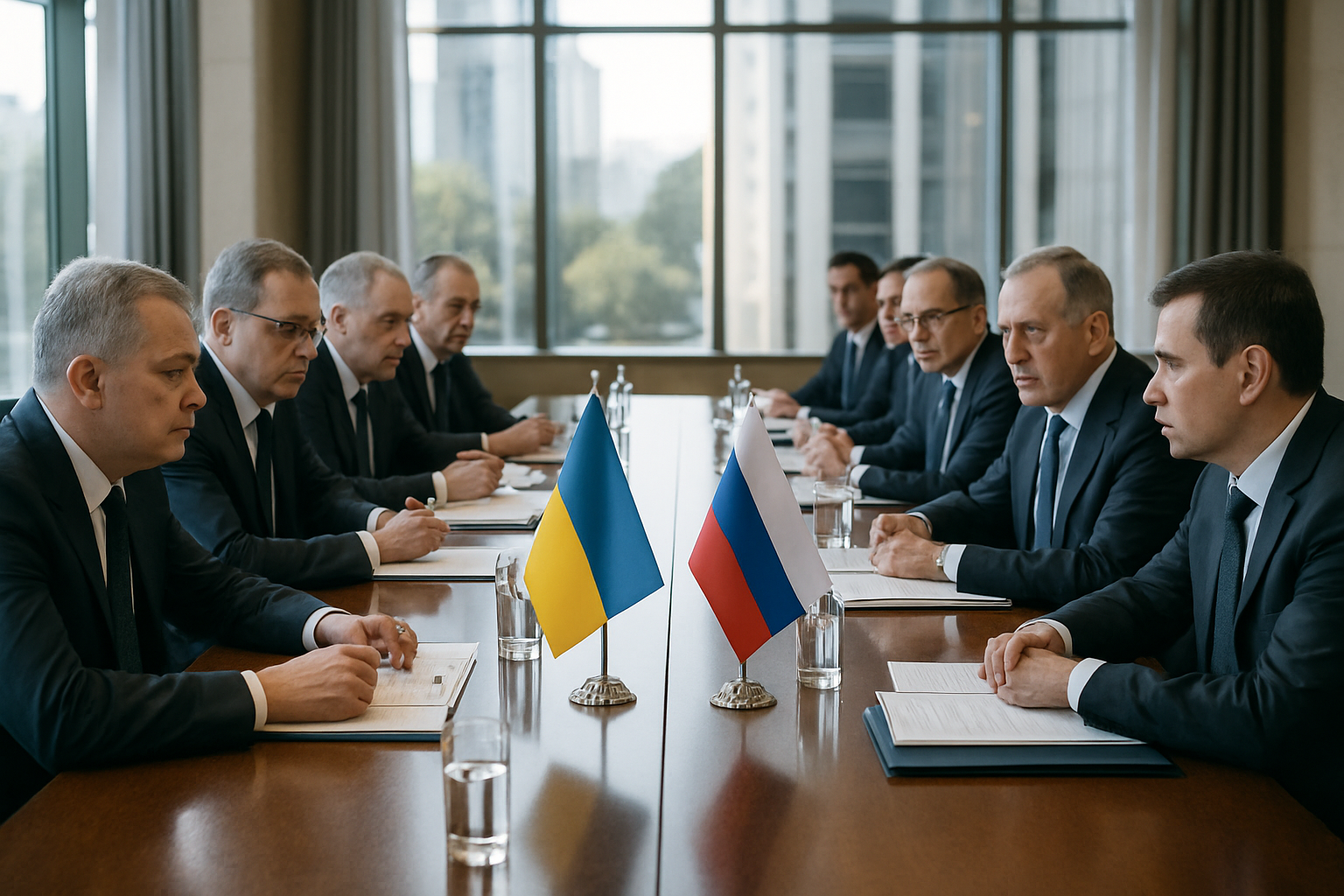
Ukrainian intelligence chief Kyrylo Budanov has expressed optimistic projections about ending the war with Russia, suggesting that a peace agreement may be within reach despite ongoing military escalation and suspended trilateral negotiations.
Speaking to Bloomberg, the head of Ukraine's presidential office indicated that both parties are moving closer to finding compromise solutions, stating "I don't think it will take a long time." This optimism comes as the conflict approaches its fourth anniversary, with diplomatic efforts facing significant obstacles while military operations continue intensifying across multiple fronts.
Diplomatic Framework Under Strain
The most promising diplomatic initiative since the invasion began – trilateral Ukraine-Russia-US negotiations – remains indefinitely suspended due to the Iran crisis consuming American foreign policy attention. The suspension represents a major setback to unprecedented breakthroughs achieved in February 2026, including a historic 314-prisoner exchange (the largest in five months) and the restoration of US-Russia military communications after a four-year suspension.
The Geneva talks in February demonstrated "significant progress" on ceasefire monitoring mechanisms with European "Big 5" observers (Germany, France, Italy, UK, Poland) participating for the first time. However, fundamental territorial disputes remain unresolved, with Russia demanding recognition of occupied eastern Ukrainian territories and Moscow as the venue for any Putin-Zelensky talks, while Ukraine maintains its territorial integrity position.
Military Operations Intensify
Despite diplomatic optimism, military escalation continues unabated. Recent attacks have targeted civilian infrastructure across Ukraine, with Russian forces launching over 700 drones in 24-hour periods and systematic energy terrorism leaving more than 1,170 Kyiv buildings with inadequate heating during harsh winter conditions.
Ukrainian forces have demonstrated significant long-range strike capabilities, recently attacking Russian oil drilling platforms in the Caspian Sea approximately 1,000 kilometers from the front lines. These platforms were reportedly supplying fuel to Russian military operations, marking a notable expansion of Ukraine's operational reach.
"All of them [Russians] understand that the war must end. That's why they are negotiating. I don't think it will take a long time."
— Kyrylo Budanov, Head of Ukraine's Presidential Office
Nuclear Governance Crisis
The diplomatic landscape is complicated by an unprecedented nuclear governance crisis following the expiration of the New START treaty on February 5, 2026 – marking the first time in over 50 years without US-Russia nuclear constraints. Both superpowers control 80% of global nuclear weapons, with Russia possessing 4,380 warheads and the US maintaining 3,708. UN Secretary-General António Guterres has described this as a "grave turning point" with nuclear risks at their highest in decades.
The restored military communications between Pentagon and Russian General Staff represent the only remaining formal diplomatic channel between the nuclear superpowers, making the preservation of this framework critical for global security.
Ukraine's Strategic Evolution
Ukraine has undergone a significant strategic transformation, evolving from aid recipient to security provider. Over 200 military specialists have been deployed to Middle Eastern nations including the UAE, Qatar, Jordan, Bahrain, and Kuwait, sharing expertise in combating Iranian Shahed drones – the same weapons being used against Ukrainian infrastructure.
This pivot demonstrates Ukraine's growing role in regional security partnerships, potentially creating new negotiating leverage when diplomatic conditions improve. The UK has revealed four operational military repair and overhaul (MRO) facilities in Ukraine servicing Western equipment, with a fifth facility planned, marking the first public acknowledgment of extensive military infrastructure on Ukrainian soil.
International Support and Divisions
International backing for Ukraine remains substantial but reveals growing divisions. The EU has approved a historic €90 billion loan package – the largest single-nation assistance ever – though Slovakia, Czech Republic, and Hungary refused participation. Additional support includes Sweden-Denmark's €246 million air defense package and Germany's provision of 35 Patriot missiles.
Over 17.8 million Ukrainians are currently accessing winter support programs, highlighting the humanitarian scope of the crisis. The systematic targeting of civilian infrastructure, including energy workers (15 DTEK employees have been killed while restoring power), represents documented violations of Geneva Conventions.
Territorial Disputes at the Heart of Deadlock
The fundamental sticking point remains unchanged: eastern Ukrainian territories under Russian control. Russian territorial gains have accelerated dramatically, with forces capturing 481 square kilometers in January 2026 compared to 260 square kilometers in December 2025 – an 85% increase representing the fastest monthly expansion in recent periods.
President Zelensky has categorically rejected territorial concessions, stating that the Ukrainian people would reject any referendum "handing over territories" as a "failure story." The acceleration of Russian gains potentially strengthens Moscow's bargaining position, while historic international support maintains Ukrainian leverage.
The Human Cost
The human toll continues mounting, with Zelensky having disclosed that 55,000 Ukrainian soldiers have been officially killed, with a "large number" still missing. International estimates suggest actual casualties could be 2-3 times higher. Systematic civilian targeting has resulted in numerous casualties, including recent attacks that killed children as young as one year old.
The energy infrastructure attacks during extreme winter conditions represent what Ukrainian officials term "energy terrorism," forcing nuclear plants to halt electricity production for the first time in the conflict and creating life-threatening conditions for millions.
Framework Preservation for Future Talks
Despite the suspension of formal negotiations, diplomatic achievements remain intact. The prisoner exchange mechanisms, Pentagon-Moscow deconfliction protocols covering operations in Syria, the Arctic, and Africa, and the proven UAE methodology using working groups by topic can be reactivated when the Iranian crisis permits.
The Trump administration's June 2026 deadline for comprehensive peace talks with a Washington venue potentially involving presidential-level engagement remains uncertain due to competing Middle East priorities. The evolution from Abu Dhabi to Geneva to potentially Washington had suggested a deliberate diplomatic escalation that has now been interrupted.
Looking Ahead
The timeline for resumed negotiations depends entirely on resolution of the Iran situation and broader Middle East stability. Military escalation continues with systematic civilian targeting while Ukraine expands its international partnerships and maintains operational capabilities.
The stakes could not be higher – success could end Europe's deadliest war since World War II and provide a template for 21st-century territorial dispute resolution. Failure may allow continued escalation with global implications for territorial sovereignty enforcement and diplomatic credibility in resolving international conflicts.
Budanov's optimism, while noteworthy coming from a key Ukrainian negotiator, must be weighed against the complex realities of suspended talks, accelerating military operations, and fundamental disagreements that have persisted throughout nearly four years of conflict. The path to peace remains fraught with unprecedented challenges requiring innovative diplomatic solutions when conditions allow for renewed engagement.