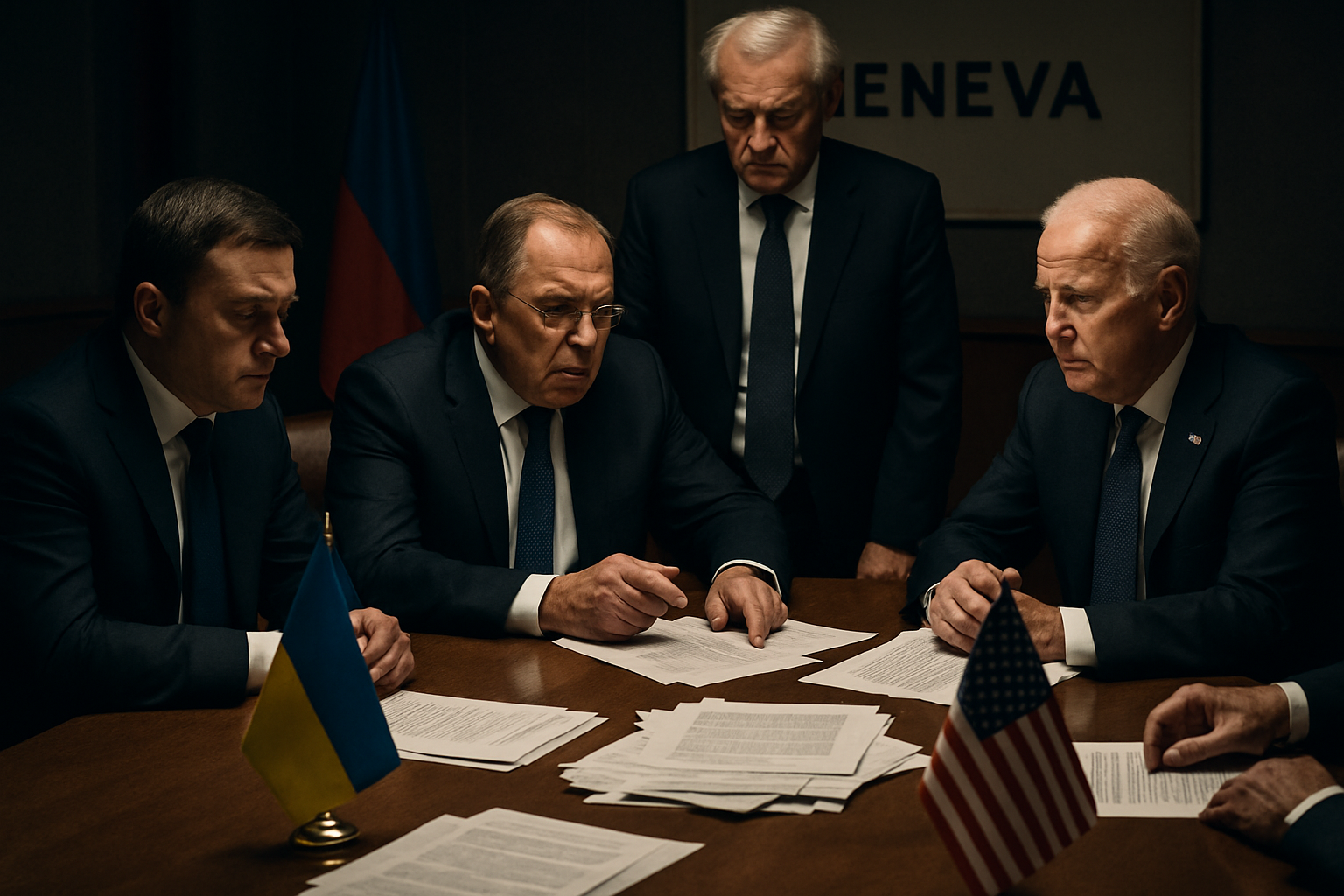
As Ukraine marks the fourth anniversary of Russia's full-scale invasion on February 19, 2026, the conflict stands at a critical juncture between diplomatic breakthrough and continued military escalation, with recent Geneva peace talks achieving progress on technical issues while fundamental territorial disputes remain unresolved.
The latest round of trilateral negotiations between Ukraine, Russia, and the United States in Geneva concluded on February 18 with mixed results. US Special Envoy Steve Witkoff reported "significant progress" on ceasefire monitoring mechanisms, while Ukrainian President Volodymyr Zelensky described the talks as "difficult," accusing Russia of deliberately stalling negotiations that "could already have reached the final stage."
Geneva Talks: Progress Amid Persistent Divisions
The February 17-18 Geneva negotiations represented an evolution from the successful Abu Dhabi framework to European neutral territory, with European "Big 5" observers (Germany, France, Italy, UK, Poland) participating for the first time in the trilateral format. Ukrainian Defense Minister Rustem Umerov led the Ukrainian delegation, while Russian advisor Vladimir Medinsky headed Moscow's team under continued US mediation by Steve Witkoff.
Building on February's historic Abu Dhabi breakthrough—which achieved a 314-prisoner exchange (the first in five months) and restored US-Russia military communications after a four-year suspension—the Geneva talks made concrete progress on military technical issues. Pentagon officials confirmed the establishment of deconfliction protocols covering global operations in Syria, the Arctic, and Africa.
"We've achieved significant progress on ceasefire monitoring mechanisms, but Russia is trying to drag out negotiations that could already have reached the final stage."
— President Volodymyr Zelensky, Ukraine
However, the fundamental sticking point remains unchanged: eastern Ukrainian territories currently under Russian control. Russia continues to demand territorial recognition and insists that any Putin-Zelensky summit must occur in Moscow, while Ukraine maintains its territorial integrity position and seeks 20-30 year security guarantees versus the reported US proposal of 15 years.
Military Escalation Overshadows Diplomacy
The diplomatic efforts unfolded against a backdrop of intensifying military operations. Hours before the Geneva talks began, Russia launched one of its largest attacks of 2026—29 ballistic missiles and 396 drones targeting Ukrainian cities and energy infrastructure. Ukrainian air defenses intercepted 25 missiles and 367 drones, but significant damage occurred in Odesa and central Ukraine, continuing a pattern of major escalations before diplomatic meetings.
Russian territorial gains have accelerated dramatically, capturing 481 square kilometers in January 2026 compared to 260 square kilometers in December 2025. Over 10,000 Russian drones and bombs were launched in January alone, demonstrating the sustained intensity of military operations despite ongoing peace efforts.
The human cost continues to mount. President Zelensky disclosed that 55,000 Ukrainian soldiers have been officially confirmed killed since February 2022, with a "large number" still classified as missing in action. International research estimates suggest actual military casualties could be 2-3 times higher when including missing personnel and undocumented deaths.
Systematic Targeting of Civilian Infrastructure
One of the most concerning developments has been Russia's systematic targeting of civilian energy infrastructure during extreme winter conditions. The February 11 Bohodukhiv drone strike exemplified this strategy, killing four civilians including three children—two one-year-old boys and a two-year-old girl—along with their 34-year-old father. This marked the second deadly attack on the same town within three days.
The so-called "winter weapon" strategy has left over 1,170 buildings in Kyiv without heating during temperatures as low as minus-30°C. Ukrainian nuclear plants were forced to halt electricity production for the first time in the conflict, prompting warnings from Ukraine's Foreign Minister that the attacks put "Europe at risk of a nuclear incident."
These systematic attacks on civilian infrastructure during life-threatening winter conditions represent clear violations of the Geneva Conventions' provisions protecting civilian populations during armed conflict.
International Support and Nuclear Crisis Context
The diplomatic efforts occur against the backdrop of unprecedented international support for Ukraine. The European Union approved a historic €90 billion loan package—the largest EU assistance package ever for a single nation—though Slovakia, the Czech Republic, and Hungary refused to participate, highlighting persistent European divisions.
Sweden and Denmark announced a €246 million air defense package including Tridon Mk2 systems, while Germany committed 35 Patriot missiles. Over 17.8 million Ukrainians are currently accessing winter support programs due to infrastructure damage from attacks.
The negotiations also unfold during an unprecedented nuclear governance crisis. The New START Treaty between the US and Russia expired on February 5, 2026—the first time in over 50 years without nuclear arms control between the superpowers controlling 80% of the world's nuclear weapons. UN Secretary-General António Guterres called it a "grave turning point" with nuclear risks at their "highest in decades."
Zelensky's Firm Position on Territorial Integrity
In a recent interview with British journalist Piers Morgan, President Zelensky categorically rejected any peace agreement requiring unilateral withdrawal from eastern Donbas region. "I don't need that historical shit," he stated bluntly, describing Russian historical justifications for territorial claims while defending Donbas as "non-negotiable."
Zelensky criticized what he perceives as unbalanced pressure from the Trump administration, stating it's "not fair that Trump keeps publicly calling on Ukraine, not Russia, to make concessions." He emphasized that the Ukrainian people would reject any referendum "handing over" territories, viewing such an outcome as a "failure story."
Despite his firm stance on territorial integrity, Zelensky has expressed hope that the next round of peace negotiations will also take place in Europe, preferably Switzerland, indicating a preference for neutral European venues over Moscow's demands for talks on Russian soil.
Internal Ukrainian Dynamics and International Pressure
The peace process faces additional complexity from internal Ukrainian dynamics and international pressures. Multiple sources report that the Trump administration is pressuring Ukraine to announce presidential elections by May 15, 2026, which would end the martial law period in effect since February 2022.
The Ukrainian Presidential Office has emphasized that elections can only occur "when there are all appropriate security guarantees" and a ceasefire is achieved. Such elections would represent an unprecedented democratic transition during an active conflict, requiring coordination with security arrangements and international oversight.
Former Ukrainian military commander Valerii Zaluzhnyi, dismissed by Zelensky in 2024, has publicly criticized the president's military management of the war in an Associated Press interview, potentially complicating domestic unity during crucial peace negotiations.
European Intelligence Assessment
Senior European intelligence officials have expressed skepticism about the prospects for a comprehensive peace agreement in 2026. According to sources familiar with intelligence assessments, Russia does not appear to want a rapid end to the war and may be using talks with Washington to push for sanctions relief and business deals rather than genuine peace.
These officials believe Russia's communications struggles, particularly regarding Starlink and Telegram restrictions, have had a significant impact on military operations, but question whether Moscow is negotiating in good faith or simply engaging in what some analysts term "negotiation theatre."
The Path Forward: June Deadline Looms
The Trump administration has established a June 2026 deadline for comprehensive peace negotiations, with talks potentially moving to Washington and possibly involving presidential-level engagement. This evolution from Abu Dhabi to Geneva to potentially Washington suggests a deliberate diplomatic escalation designed to create unprecedented pressure for territorial compromise solutions.
The success or failure of these efforts will have implications far beyond Ukraine's borders. A successful resolution could end Europe's deadliest conflict since World War II and provide a template for 21st-century conflict resolution. Failure could intensify military operations globally and undermine diplomatic credibility for territorial disputes worldwide.
The stakes extend to European security architecture, international law enforcement, and territorial sovereignty principles that will shape power competition for decades to come. As Latvia's parliament noted in marking four years since Russia's invasion, the conflict represents a fundamental test of the international order established after World War II.
Military and Technical Developments
Beyond the diplomatic front, significant military developments continue to shape the conflict. Ukraine has begun freezing soldiers' sperm cells to address concerns about the country's demographic development—a stark reminder of the war's long-term societal impacts. The legislation also allows for posthumous use of frozen genetic material.
Ukrainian forces have demonstrated continued long-range strike capabilities, with Security Service drones successfully hitting the Velikie Luki oil depot in Russia's Pskov region, approximately 500 kilometers from the Ukrainian border. Such operations indicate Ukraine's ability to project force deep into Russian territory despite defensive pressures.
On the ground, fierce fighting continues across multiple fronts. Ukrainian forces are conducting counterattacks in the Oleksandrivka sector to prevent Russian advances toward the Dnipropetrovsk region, while maintaining control of key positions despite Russian claims of territorial gains.
International Implications and Historical Context
The current negotiations represent the most significant diplomatic opportunity since the conflict began. The restoration of US-Russia military communications and successful prisoner exchanges demonstrate that structured diplomatic engagement can produce concrete humanitarian results even amid active military operations.
However, the fundamental positions of the parties remain far apart. The territorial compromise innovations required to bridge the gap between Ukraine's insistence on territorial integrity and Russia's demands for territorial recognition represent unprecedented challenges in modern conflict resolution.
The broader implications extend beyond Europe, potentially affecting conflict prevention mechanisms, international law enforcement credibility, and territorial sovereignty principles that define the 21st-century international order. The template established by these negotiations—successful or failed—will likely influence how the international community approaches similar territorial disputes for generations to come.
As Ukraine enters its fifth year of conflict, the coming months will be decisive in determining whether diplomatic innovation can overcome the momentum of military escalation, or whether Europe's deadliest war since World War II will continue to exact its devastating toll on both Ukrainian and Russian societies while reshaping the global security architecture.