Russian forces launched renewed drone attacks across Ukraine on February 14, 2026, killing civilians in multiple regions as the conflict continues despite recent diplomatic breakthroughs that restored US-Russia military communications and achieved the largest prisoner exchange in five months.
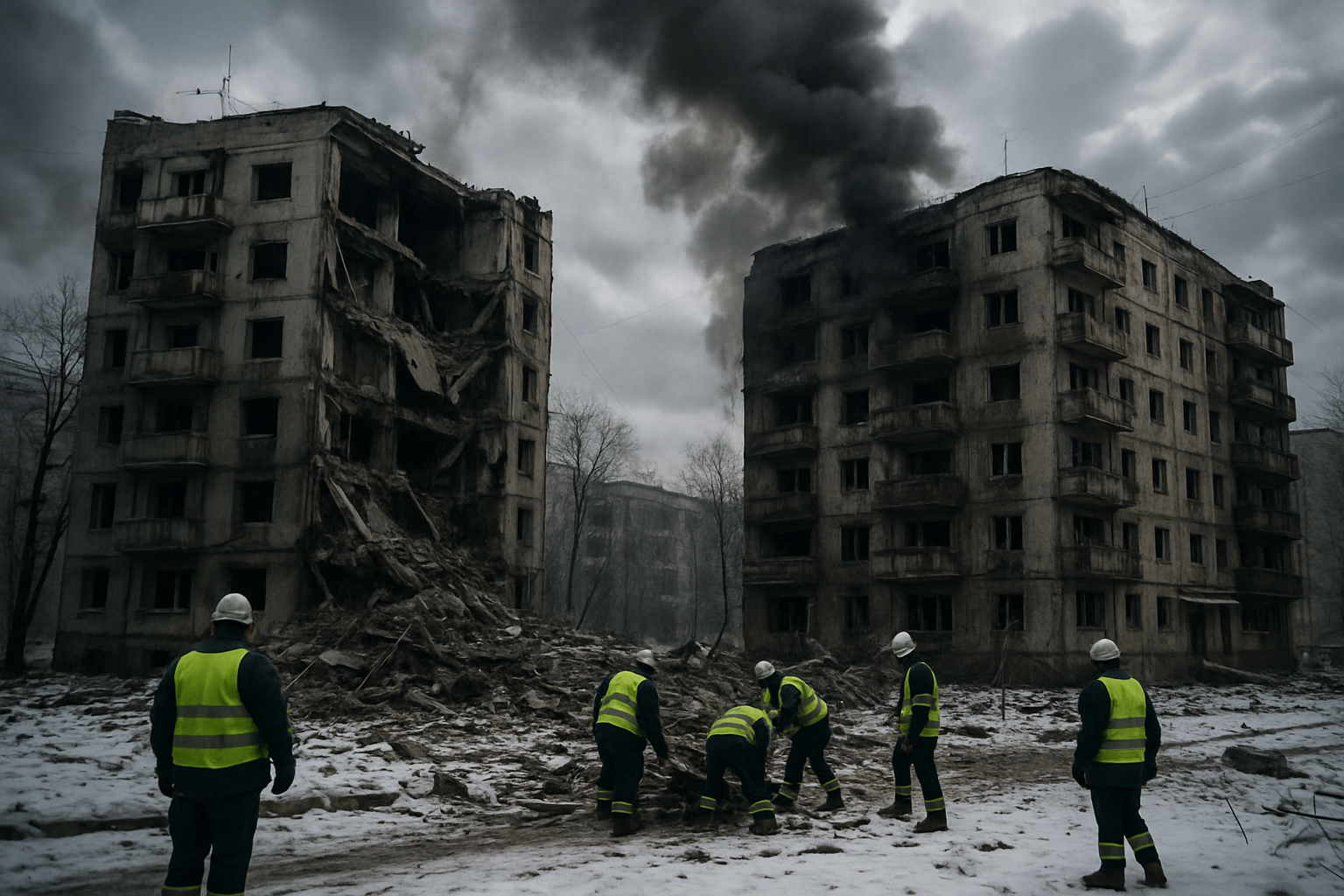
The overnight attacks targeted civilian infrastructure in Odesa, Zaporizhzhia, and other regions, highlighting the ongoing humanitarian crisis as Ukraine approaches the fourth anniversary of Russia's full-scale invasion. A woman was killed in Odesa when Russian drones struck a residential building, causing a fire that trapped victims under debris.
In Zaporizhzhia region, one person died and three others were wounded in attacks during the past 24 hours, according to regional military administration chief reports. The attacks come as the Munich Security Conference brings together international leaders to address the escalating global security crisis.
Systematic Targeting Continues Amid Diplomatic Progress
The latest strikes follow a devastating pattern of civilian infrastructure targeting that has intensified during winter months. Over 1,170 buildings in Kyiv have been left without heating during temperatures reaching minus-30°C, following what energy company DTEK described as the "most powerful blow" of 2026 against Ukrainian energy infrastructure.
Despite ongoing diplomatic efforts, Russian forces have maintained their systematic approach to attacking civilian targets. The strategy, described by Ukrainian officials as "energy terrorism," aims to inflict maximum suffering during extreme weather conditions.
"This is a continuation of Russia's deliberate strategy to break civilian morale through infrastructure destruction during the harshest winter conditions."
— Ukrainian Energy Minister
Abu Dhabi Breakthrough Provides Hope
The attacks occurred despite significant diplomatic progress achieved through trilateral peace talks in Abu Dhabi involving Ukraine, Russia, and the United States. The negotiations, described as "substantial and productive" by Ukrainian Defense Minister Rustem Umerov, resulted in the largest prisoner exchange in five months.
A total of 314 prisoners were exchanged - 157 military personnel from each side plus 3 Russian civilians from the Kursk region. This marked the 71st prisoner exchange since Russia's February 2022 invasion and represented a concrete humanitarian breakthrough amid continued military operations.
Perhaps most significantly, the talks achieved the restoration of US-Russia military communications after a four-year suspension since autumn 2021. The Pentagon confirmed the framework includes deconfliction measures, incident prevention protocols, and advance notification systems designed to prevent unintended escalation.
Military Escalation Despite Diplomatic Momentum
The paradox of simultaneous diplomatic progress and military escalation has defined recent weeks. Russian forces have accelerated territorial gains, capturing 481 square kilometers in January 2026 compared to 260 square kilometers in December 2025, according to military analysis.
Over 10,000 Russian drones and bombs were launched against Ukrainian targets in January alone, demonstrating the massive scale of the ongoing assault. The attacks have targeted not just military objectives but systematically hit civilian infrastructure, energy facilities, and residential areas housing families with children.
In one particularly tragic incident, a Russian drone strike on Bohodukhiv in Kharkiv region killed four civilians, including three young children - two one-year-old boys and a two-year-old girl - along with their 34-year-old father. This represented the second deadly attack on the same town within three days, highlighting the deliberate targeting of border communities.
International Response and Military Support
The international community has responded with unprecedented support for Ukraine while condemning the systematic targeting of civilians. The European Union approved a historic €90 billion loan package for Ukrainian defense and reconstruction - the largest EU aid package ever provided to a single nation.
NATO Secretary-General Mark Rutte made a surprise visit to Kyiv, addressing parliament and condemning the attacks as sending a "bad signal" during diplomatic negotiations. His visit underscored the alliance's continued commitment to Ukraine's defense.
Military support continues to flow from allies, with Sweden and Denmark providing a €246 million air defense package including advanced Triton Mk2 systems. Germany confirmed Ukraine would receive 35 Patriot missiles, while Poland has maintained heightened alert status and deployed fighter jets along the Ukrainian border.
Nuclear Context Adds Urgency
The escalation occurs against the backdrop of a critical nuclear governance crisis. The New START treaty between the United States and Russia expired on February 5, 2026, marking the first time in over 50 years that the world's two largest nuclear powers operate without bilateral nuclear constraints.
UN Secretary-General António Guterres warned this represents a "grave turning point" with nuclear risks now "higher than in decades." The restoration of military communications between Washington and Moscow provides the only remaining major diplomatic channel between the nuclear superpowers.
Ukrainian nuclear power plants were forced to halt electricity production for the first time during the conflict following Russian attacks on electrical distribution networks. The International Atomic Energy Agency confirmed this unprecedented shutdown, while Ukrainian officials warned that such attacks put "all of Europe at risk of nuclear incident."
Humanitarian Crisis Deepens
The human cost of the conflict continues to mount as Ukraine disclosed that 55,000 Ukrainian soldiers have been officially confirmed killed since the February 2022 invasion, with a "large number" still classified as missing in action. International researchers estimate actual military casualties could be 2-3 times higher.
The civilian toll is equally devastating, with over 17.8 million Ukrainians now accessing winter support programs as systematic attacks on energy infrastructure create life-threatening conditions across the country. Emergency warming centers have been activated in multiple regions where power and heating systems have been destroyed.
Peace Talks Framework Evolves
Despite the ongoing violence, diplomatic efforts continue to advance. The Trump administration has established a June 2026 deadline for comprehensive peace negotiations, with future talks potentially moving from Abu Dhabi to Washington venue, suggesting possible presidential-level involvement.
The main sticking point remains the fate of eastern Ukrainian territories currently under Russian control. Russia has demanded recognition of territorial gains and insists that any Putin-Zelensky summit must occur in Moscow, while Ukraine maintains its position on territorial integrity.
European leaders remain divided on engagement strategy, with Germany opposing direct talks with Putin while France and Italy support broader diplomatic engagement. The UAE's neutral hosting of the Abu Dhabi talks proved crucial for achieving concrete humanitarian results.
Munich Security Conference Addresses Crisis
As world leaders gather at the Munich Security Conference, the Ukraine crisis dominates discussions about international order and security architecture. The conference, themed "The Era of Disruptive Politics: Challenges to International Order," reflects the most sobering assessment in its 62-year history.
The gathering brings together over 60 nations to address not only the Ukraine conflict but broader challenges including nuclear governance, transatlantic relations, and the future of democratic institutions under unprecedented strain.
Looking Ahead: Critical Diplomatic Test
The coming weeks will prove decisive for determining whether the diplomatic momentum from Abu Dhabi can translate into a broader framework for ending Europe's deadliest conflict since World War II. The June 2026 peace deadline creates unprecedented pressure for innovative solutions to territorial disputes that have persisted for nearly four years.
Success could provide a template for international conflict resolution and restore faith in diplomatic solutions to complex territorial disputes. However, continued military escalation amid negotiations raises questions about genuine commitment to peace versus the use of diplomatic engagement as cover for military pressure tactics.
As civilian casualties continue to mount and winter conditions create additional humanitarian pressures, the international community faces the urgent challenge of bridging the gap between diplomatic progress and the grim reality of ongoing attacks on Ukrainian cities and infrastructure.
The restoration of US-Russia military communications and successful prisoner exchanges demonstrate that sustained diplomatic engagement can produce concrete humanitarian results even amid active military operations. Whether this foundation can support broader territorial and political resolution remains the critical test for international diplomacy in 2026.