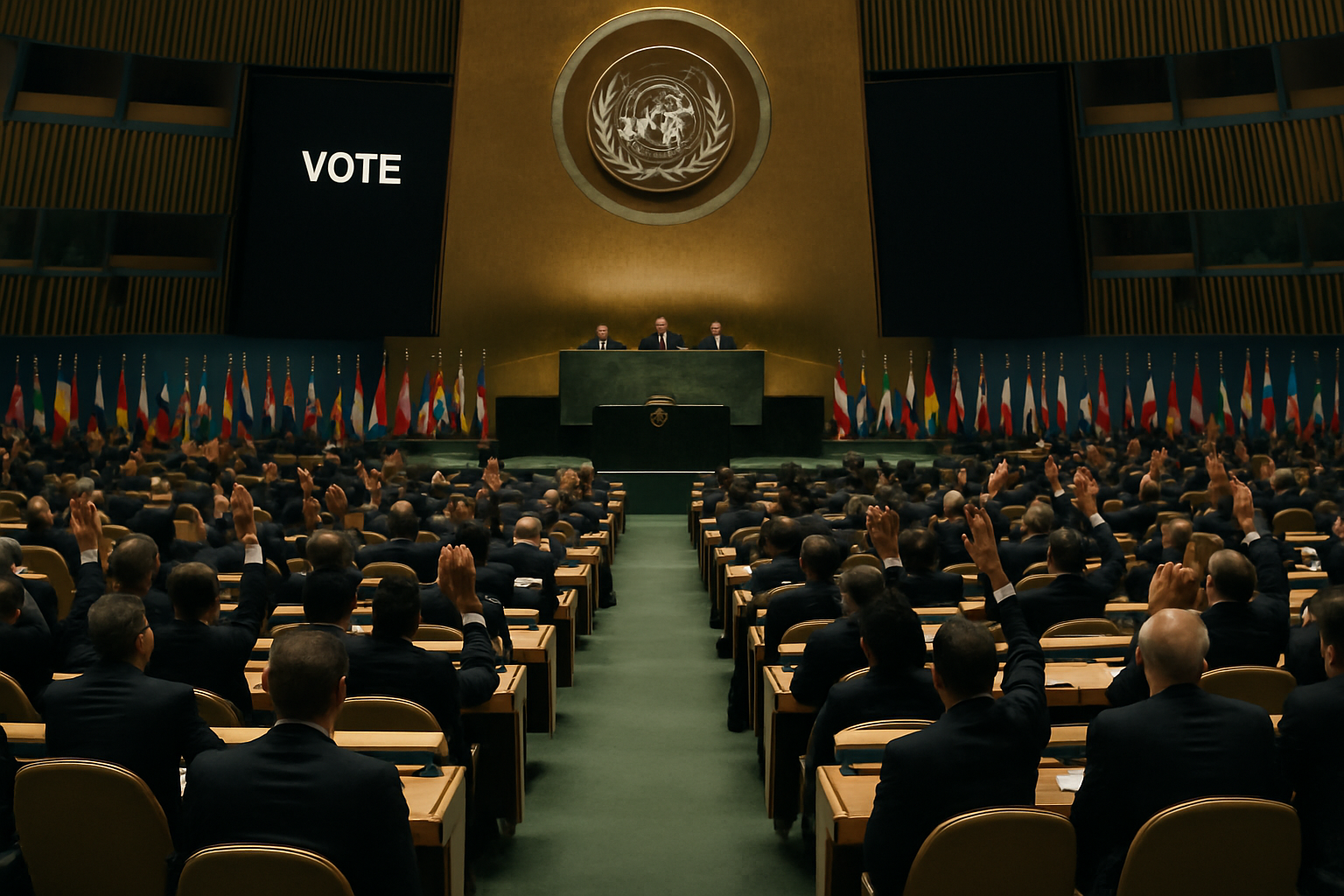
The United Nations General Assembly has reaffirmed international support for Ukraine as the war enters its fifth year, with a resolution passing despite a notable US abstention under the Trump administration, marking a significant shift in American diplomatic positioning on the conflict.
As Ukraine approaches the fourth anniversary of Russia's full-scale invasion on February 24, 2022, the international community finds itself navigating unprecedented diplomatic complexities. President Volodymyr Zelensky has declared that World War III has already begun, stating in a BBC interview that Putin "has already started it," reflecting the global implications of a conflict that has fundamentally reshaped European security architecture.
Diplomatic Breakthrough Amid Military Escalation
Despite continued military operations, significant diplomatic progress has emerged through trilateral peace talks. The Abu Dhabi framework achieved a historic 314-prisoner exchange—the first in five months—alongside the restoration of US-Russia military communications after a four-year suspension. Ukrainian Defense Minister Rustem Umerov described these talks as "substantial and productive," establishing concrete foundations for potential ceasefire monitoring.
The diplomatic momentum evolved through Geneva peace talks on February 17-18, where US Special Envoy Steve Witkoff reported "significant progress" on ceasefire monitoring mechanisms. For the first time, European "Big Five" observers from Germany, France, Italy, the UK, and Poland participated in the trilateral format, adding institutional weight to the negotiations while maintaining the proven structure.
"Russia is trying to drag out negotiations that could already have reached the final stage."
— Volodymyr Zelensky, President of Ukraine
Nuclear Governance Crisis
The diplomatic efforts unfold against an unprecedented nuclear crisis. The New START treaty expired on February 5, 2026, marking the first time in over 50 years without US-Russia nuclear constraints. Both superpowers control approximately 80% of global nuclear weapons—Russia with 4,380 warheads and the US with 3,708—creating what UN Secretary-General António Guterres described as a "grave turning point" with nuclear risks at their "highest in decades."
The restoration of military communications between Pentagon European Command and the Russian General Staff represents the only remaining formal diplomatic channel between the nuclear superpowers, establishing deconfliction protocols that extend globally to Syria, Arctic, and African operations.
Systematic Civilian Targeting
Russian forces have maintained what Ukrainian officials characterize as "energy terrorism," systematically targeting civilian infrastructure during extreme winter conditions. Over 1,170 Kyiv buildings remain without heating during temperatures reaching minus-30°C, with Ukrainian nuclear plants forced to halt electricity production for the first time during the conflict.
The humanitarian toll continues mounting with documented civilian casualties including a tragic Bohodukhiv drone strike that killed four civilians, including three children aged two years and under, along with their father. This represented the second deadly attack on the same town within three days, demonstrating what appears to be systematic targeting of families in violation of Geneva Conventions civilian protections.
President Zelensky disclosed that 55,000 Ukrainian soldiers have been officially killed, with a "large number" still missing. International estimates suggest actual casualties could be two to three times higher when including undocumented deaths and missing personnel.
International Support and Divisions
Despite the challenges, international support for Ukraine has reached historic levels. The European Union approved a €90 billion loan package—the largest single-nation assistance package in EU history—though Slovakia, Czech Republic, and Hungary refused participation, exposing significant divisions within the bloc.
Additional support includes Sweden and Denmark's €246 million air defense package featuring Tridon Mk2 systems, Germany's provision of 35 Patriot missiles, and World Bank energy restoration funding. Over 17.8 million Ukrainians are currently accessing winter support programs, demonstrating the massive humanitarian response required.
Military Situation Acceleration
Russian territorial gains have accelerated significantly, with forces capturing 481 square kilometers in January 2026 compared to 260 square kilometers in December 2025—an 85% increase representing the fastest gains in months. Over 10,000 Russian drones and bombs were launched in January 2026 alone, while Ukrainian forces continue maintaining key positions including Huliaipole and Krynychne in Zaporizhzhia.
The pattern of major Russian attacks before diplomatic meetings continues, with Russia launching 29 missiles and 396 drones hours before the Geneva talks, targeting cities and energy infrastructure. Ukrainian air defenses intercepted 25 missiles and 367 drones, but significant damage occurred in Odesa and central Ukraine.
Territorial Sticking Points
The fundamental challenge remains unchanged: eastern Ukrainian territories under Russian control represent the core disagreement preventing comprehensive peace. Russia demands territorial recognition and insists any Putin-Zelensky talks must occur in Moscow. Ukraine maintains its territorial integrity position while seeking 20-30 year security guarantees from the United States, compared to reported US proposals of 15 years.
President Zelensky has categorically rejected territorial concessions in Donbas, stating the Ukrainian people would reject any referendum "handing over territories" as a "failure story." He has criticized what he sees as disproportionate pressure on Ukraine compared to Russia in peace negotiations.
June 2026 Deadline
The Trump administration has established a June 2026 deadline for a comprehensive peace agreement, with potential Washington venue talks suggesting presidential-level involvement. This evolution from Abu Dhabi to Geneva to Washington represents deliberate diplomatic escalation, creating unprecedented pressure for territorial compromise innovation.
The timeline coincides with reported pressure for Ukrainian presidential elections by May 15, 2026, which would end martial law in effect since February 2022 and mark the first national elections since 2019. Ukrainian officials emphasize elections can only occur "when appropriate security guarantees" are achieved.
European Unity Under Strain
The conflict has exposed deep European divisions, with Germany opposing direct Putin talks while France and Italy support broader engagement. Hungarian Prime Minister Viktor Orbán threatens to veto both the €90 billion loan and EU sanctions packages over the Druzhba oil pipeline dispute, creating the deepest EU divisions since the conflict began.
The crisis has accelerated discussions about enhanced cooperation mechanisms that would allow willing EU states to proceed without unanimity requirements, potentially fundamentally altering EU decision-making processes.
Global Security Architecture at Stake
The Munich Security Conference's theme of "Era of Disruptive Politics" reflects the most sobering assessment in the conference's 62-year history. German Chancellor Friedrich Merz declared that "the post-war order no longer exists," while European strategic autonomy discussions include France exploring nuclear deterrent expansion beyond national scope for the first time since the Cold War's end.
The conflict's resolution will provide a template for 21st-century territorial dispute resolution with global implications. Success could end Europe's deadliest war since World War II while failure may intensify operations globally and undermine diplomatic credibility for resolving territorial disputes worldwide.
The Road Ahead
As the conflict enters its fifth year, the diplomatic-military paradox remains stark: concrete humanitarian breakthroughs through prisoner exchanges and communications restoration occur amid continued systematic civilian targeting, raising questions about genuine peace commitments versus humanitarian pressure tactics.
The coming months will determine whether diplomatic innovation can overcome military escalation through unprecedented territorial compromise solutions. The stakes extend far beyond Ukraine and Russia, affecting European security architecture, international law enforcement, territorial sovereignty principles, and conflict prevention mechanisms that will shape power competition for decades.
The UN resolution reaffirming support for Ukraine, despite US abstention, demonstrates continued international commitment while highlighting the complex diplomatic realignment occurring as the world's deadliest conflict since World War II approaches a critical juncture. Whether June 2026 represents a breakthrough or breakdown may well determine the trajectory of international relations in the 21st century.