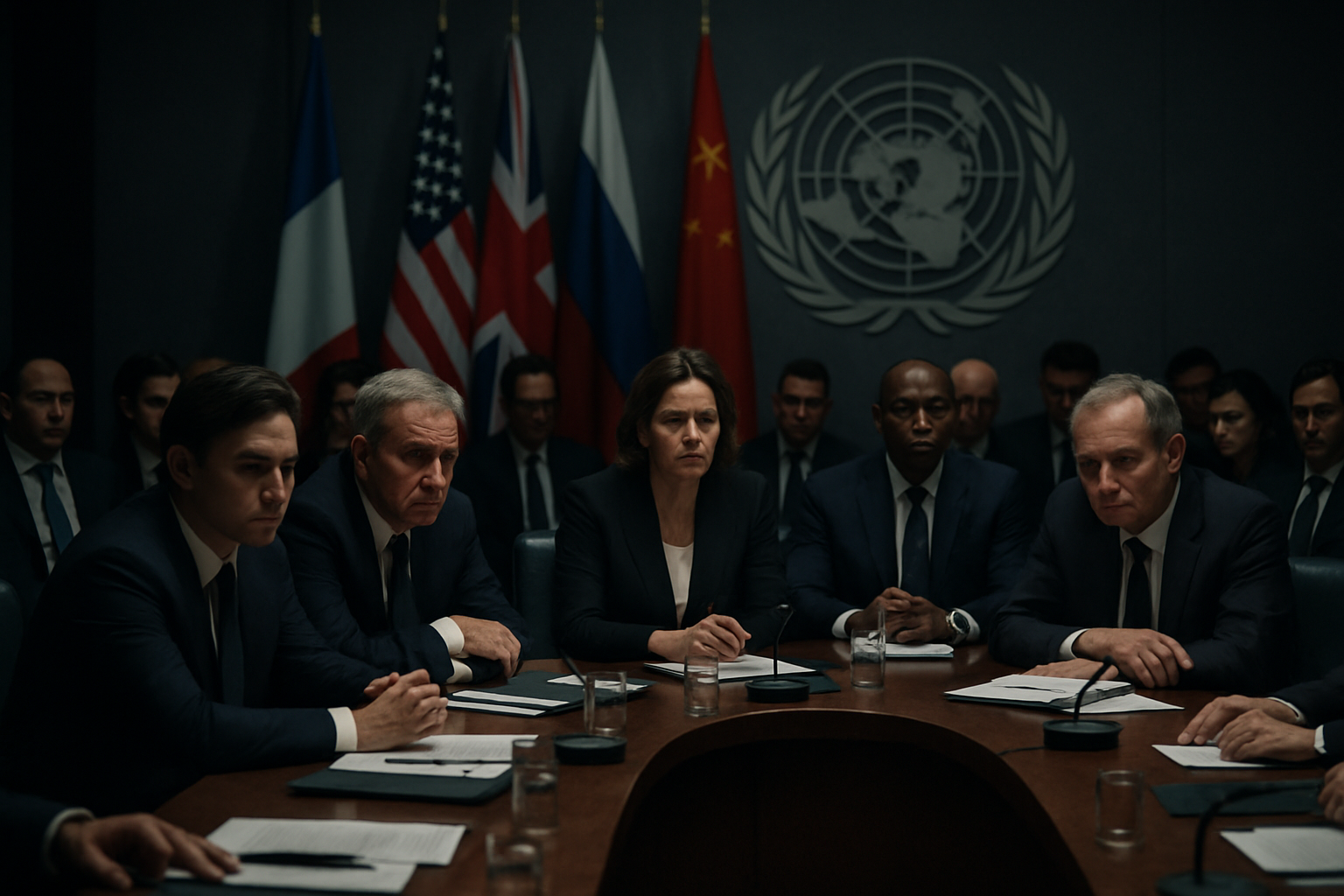
Ukraine faced massive Russian attacks across multiple regions on April 21, 2026, as diplomatic efforts remain stalled with trilateral peace talks indefinitely suspended due to the Iran crisis consuming international attention. Ukraine's Permanent Representative Andrii Melnyk made urgent appeals at the UN Security Council for enhanced sanctions and ceasefire resolutions.
The latest wave of strikes targeted the Dnipropetrovsk region with nearly 10 separate attacks overnight, leaving four civilians injured and highlighting the continued systematic targeting of civilian areas. Regional authorities reported significant infrastructure damage as Russian forces maintain their aggressive military campaign despite previous diplomatic breakthroughs earlier this year.
Diplomatic Crisis Deepens
Ukraine's permanent representative to the United Nations, Andrii Melnyk, delivered forceful remarks to the Security Council calling for intensified sanctions pressure on Russia, particularly targeting the energy sector. His appeals come as the most promising peace initiatives since the invasion began remain frozen due to competing international crises.
"The absence of new sanctions encourages Russia to pursue this war," Melnyk declared to the Security Council.
— Andrii Melnyk, Ukraine's UN Representative
The trilateral peace talks between Ukraine, Russia, and the United States, which showed historic progress in February 2026, have been indefinitely suspended as American diplomatic attention focuses on the Iran crisis. The February breakthrough had achieved a 314-prisoner exchange—the largest in five months—and restored US-Russia military communications after a four-year suspension.
Military Escalation Continues
Russian forces have dramatically accelerated their territorial gains, capturing 481 square kilometers in January compared to 260 square kilometers in December 2025—representing an 85% increase in the fastest monthly expansion since the conflict began. The systematic "energy terrorism" campaign has left over 1,170 Kyiv buildings without adequate heating, while nuclear plants have been forced to halt electricity production for the first time in the conflict.
Recent attacks struck multiple regions simultaneously. In Sumy, explosions damaged residential buildings and a medical facility, injuring four people. The systematic targeting of civilian infrastructure continues to violate Geneva Convention protections, with documented attacks on emergency services, repair personnel, and residential areas.
Staggering Human Cost
President Zelensky has disclosed that 55,000 Ukrainian soldiers have been officially killed, with a "large number" missing in action. International estimates suggest the actual casualty figures may be two to three times higher. The systematic civilian targeting has created a humanitarian crisis affecting over 17.8 million Ukrainians who are currently accessing winter support programs.
Ukraine's drone forces have maintained operational capabilities, recently striking a 50N6E radar belonging to a Russian S-350 air defense system and a Tor-M2KM surface-to-air missile system. These operations demonstrate Ukraine's continued ability to project force against Russian military assets despite the ongoing bombardment.
International Support Despite Divisions
The European Union has approved a historic €90 billion loan package—the largest single-nation assistance package in EU history. However, internal divisions persist as Slovakia, Czech Republic, and Hungary have refused participation, exposing fractures in European unity. Germany has delivered 35 Patriot missiles, while Sweden and Denmark have committed €246 million for air defense systems.
The support comes as Ukraine has strategically evolved from aid recipient to security provider, deploying over 200 military specialists to UAE, Qatar, Jordan, Bahrain, and Kuwait to share expertise in combating Iranian Shahed drones—the same weapons being used against Ukrainian civilians.
Nuclear Governance Crisis
The conflict occurs against an unprecedented backdrop of nuclear governance breakdown. The New START treaty expired on February 5, 2026, marking the first time in over 50 years without US-Russia nuclear constraints. Both nations control approximately 80% of global nuclear weapons, with Russia possessing 4,380 warheads and the United States 3,708.
UN Secretary-General António Guterres has warned of a "grave turning point" with nuclear risks at their "highest levels in decades." The restored military communications between Washington and Moscow remain the only formal superpower diplomatic channel following the February breakthrough.
Territorial Disputes Remain Unchanged
The fundamental sticking point in all diplomatic efforts remains the status of eastern Ukrainian territories under Russian control. Russia demands territorial recognition and insists that any Putin-Zelensky summit must occur in Moscow, while Ukraine maintains its territorial integrity position and seeks long-term security guarantees.
Zelensky has categorically rejected territorial concessions, stating that the Ukrainian people would reject "handing over territories as a failure story." The accelerating Russian territorial gains may be strengthening Moscow's bargaining position while Ukraine maintains that diplomatic solutions must preserve sovereignty principles.
Framework Preservation for Future Engagement
Despite the indefinite suspension of formal negotiations, diplomatic achievements from February remain intact. The prisoner exchange mechanisms, Pentagon-Moscow deconfliction protocols covering Syria, Arctic, and Africa operations, and the structured negotiation format developed through UAE methodology can be reactivated when conditions permit.
The Trump administration's June 2026 Washington venue deadline for comprehensive peace talks remains technically active but uncertain due to Middle East priorities. The evolution from Abu Dhabi to Geneva to potential Washington talks had suggested a deliberate diplomatic escalation that has now been interrupted by the Iran crisis.
Strategic Implications for Global Security
The suspension of the most significant diplomatic opportunity since the invasion began carries profound implications for 21st-century conflict resolution. The stakes extend far beyond Ukraine, affecting European security architecture redefinition, international law enforcement credibility, and territorial sovereignty principles that will shape power competition for decades.
Success in eventually resuming talks could end Europe's deadliest war since World War II and provide a template for territorial dispute resolution. Failure may intensify military operations globally and undermine diplomatic credibility for territorial disputes worldwide.
As military escalation continues with systematic civilian targeting, Ukraine expands its international partnerships while maintaining operational capabilities. The coming phase will test whether diplomatic innovation can ultimately overcome military approaches in determining European security redefinition and conflict resolution mechanisms for the 21st century.