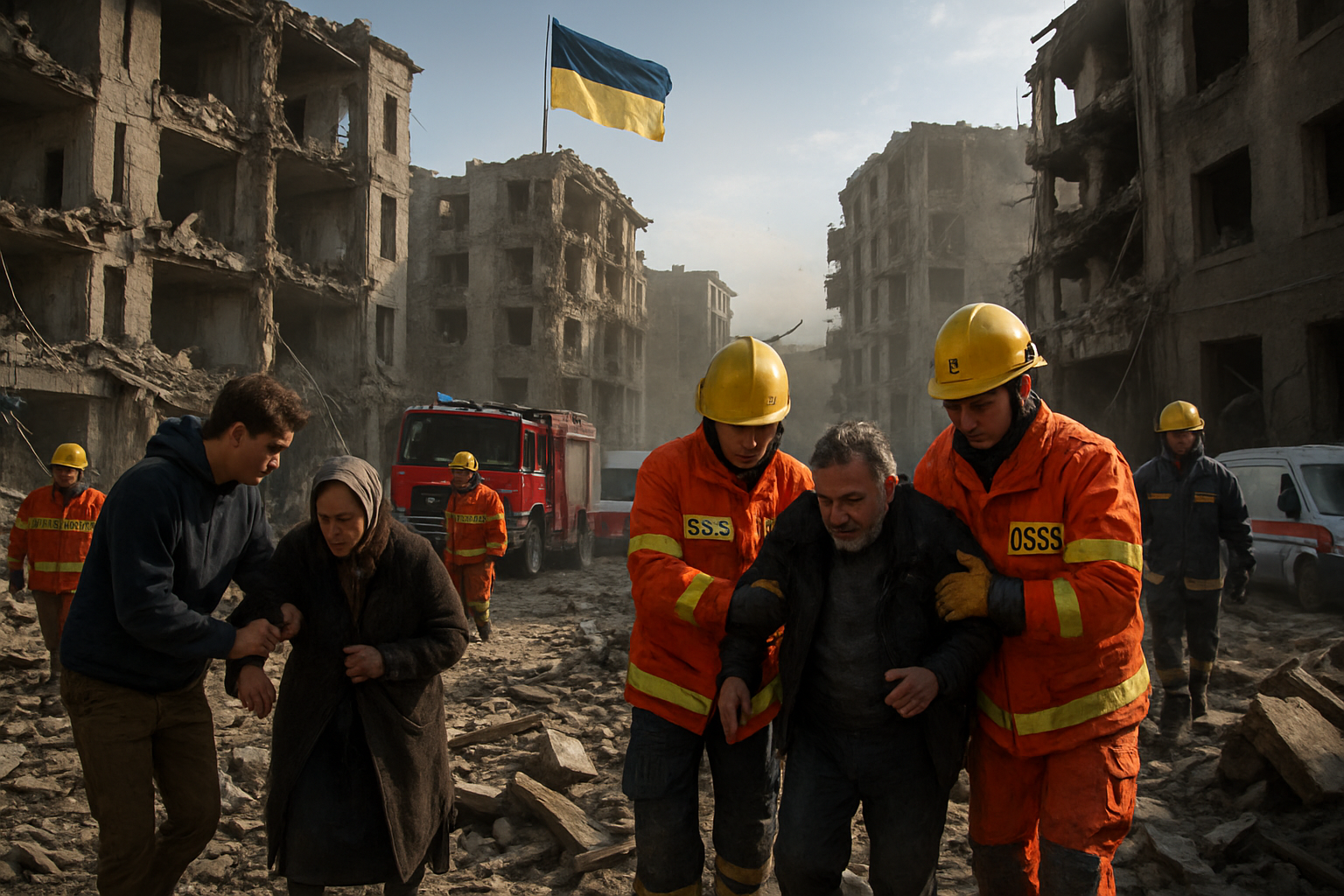
Russian forces continue their systematic targeting of Ukrainian cities with deadly strikes reported in Odesa and Chernihiv regions, while diplomatic efforts to end the nearly four-year conflict remain indefinitely suspended due to the Iranian crisis consuming American foreign policy attention.
According to multiple Ukrainian sources, the latest wave of Russian attacks has resulted in civilian casualties across several regions, highlighting the ongoing intensity of the conflict as it approaches its fourth anniversary in February 2026. The strikes come as peace negotiations between Ukraine, Russia, and the United States remain stalled despite historic diplomatic breakthroughs achieved earlier this year.
Latest Casualty Reports and Attack Patterns
Ukrainian officials report that Russian forces launched coordinated strikes across multiple regions, with Odesa bearing significant casualties. The attacks follow a well-documented pattern of systematic civilian infrastructure targeting that international observers have characterized as violations of the Geneva Conventions.
In the Chernihiv region, an energy facility in the Novhorod-Siverskyi district suffered damage from Russian attacks, leaving over 10,000 residents without power. Separately, a school in Semenivka was targeted by Russian FPV drones, marking another instance of attacks on civilian educational infrastructure.
"Cette attaque a également fait dix blessés, dont deux grièvement,"
— Serhi Lyssak, Military Administration Chief of Southern Ukraine
The strikes represent a continuation of what Ukrainian authorities and international observers have termed "energy terrorism" – the systematic targeting of civilian infrastructure during extreme weather conditions to maximize humanitarian pressure.
Diplomatic Stalemate Amid Iranian Crisis
Despite the ongoing violence, peace talks between Ukraine, Russia, and the United States remain indefinitely suspended due to the Iranian crisis that has consumed American foreign policy attention since March 2026. This suspension has derailed what many considered the most promising diplomatic opportunity since the conflict began in February 2022.
The diplomatic setback is particularly significant given the historic breakthroughs achieved in February 2026, including a 314-prisoner exchange – the largest in five months – and the restoration of US-Russia military communications after a four-year suspension. These achievements had created momentum toward what was planned to be a June 2026 summit in Washington with potential presidential-level involvement.
Ukrainian President Volodymyr Zelensky previously stated there were "no necessary signals for trilateral meetings" until the security situation around Iran allows American focus to return to European issues. This suspension has left the framework for negotiations preserved but with an uncertain timeline for reactivation.
Ongoing Military Escalation and Territorial Changes
Military analysts report that Russian territorial gains have accelerated significantly, with forces capturing 481 square kilometers in January 2026 compared to 260 square kilometers in December 2025 – an 85% increase representing the fastest monthly expansion in recent periods. This acceleration occurs alongside what Ukrainian forces describe as the deployment of over 101,000 Russian troops dedicated to drone operations by April 2026, creating the largest dedicated unmanned force in modern warfare.
The conflict has seen unprecedented technological evolution, with both sides deploying increasingly sophisticated drone systems. Recent reports indicate Ukraine has conducted some of its deepest strikes into Russian territory, while Russia has expanded its systematic targeting of civilian infrastructure across Ukrainian cities.
International Support and Nuclear Governance Crisis
International support for Ukraine continues at historic levels despite the diplomatic stalemate. The European Union's €90 billion loan package represents the largest single-nation assistance effort in EU history, though Slovakia, Czech Republic, and Hungary have refused participation, exposing divisions within the bloc.
The suspension of peace talks occurs against the backdrop of an unprecedented nuclear governance crisis. The New START treaty between the US and Russia expired on February 5, 2026, marking the first time in over 50 years without bilateral nuclear constraints between the superpowers who control 80% of the world's nuclear weapons.
Humanitarian Impact and War Crimes Documentation
Ukrainian officials have disclosed that 55,000 Ukrainian soldiers have been officially confirmed killed since the conflict began, with a "large number" still classified as missing in action. International estimates suggest actual military casualties could be 2-3 times higher when including undocumented deaths and missing personnel.
The systematic targeting of civilian infrastructure during extreme winter conditions has been documented as violations of international humanitarian law. The pattern includes attacks on energy workers, with 15 employees of Ukrainian energy company DTEK killed while attempting to restore power to affected areas.
"Over 1,170 Kyiv buildings remain without adequate heating following systematic Russian attacks on energy infrastructure during sub-zero temperatures."
— Ukrainian Energy Ministry Officials
Ukraine's Strategic Evolution as Security Provider
Despite the defensive challenges, Ukraine has undergone a remarkable strategic transformation from aid recipient to security provider. Military experts from Ukraine are now deployed in five Middle Eastern countries – UAE, Qatar, Jordan, Bahrain, and Kuwait – sharing expertise in defending against Iranian Shahed drones, the same weapons being used against Ukrainian cities.
This evolution represents a significant shift in Ukraine's international role, leveraging hard-won battlefield experience to build strategic partnerships that may provide new diplomatic leverage when peace negotiations eventually resume.
Framework Preservation and Future Prospects
While the suspension of trilateral talks represents a major diplomatic setback, the frameworks established during the February 2026 breakthroughs remain intact. The prisoner exchange mechanisms, Pentagon-Moscow deconfliction protocols covering operations in Syria, the Arctic, and Africa, and the structured negotiation format developed through UAE mediation can be reactivated when conditions permit.
The success or failure of eventual resumed negotiations carries implications far beyond Ukraine, serving as a potential template for 21st-century territorial dispute resolution. Stakes include European security architecture redefinition, international law enforcement credibility, and territorial sovereignty principles that will shape power competition for decades to come.
Critical Juncture for European Security
As the conflict continues without active diplomatic engagement, military escalation persists while Ukraine expands its international partnerships and maintains operational capabilities across multiple fronts. The coming phase remains uncertain, with timeline dependent on resolution of the Iranian crisis that has derailed the most promising European peace initiative since the Cold War.
The current situation represents a test of whether diplomatic innovation can ultimately overcome military escalation in determining European security trajectory, or whether continued conflict will reshape international relations frameworks for the coming decades.