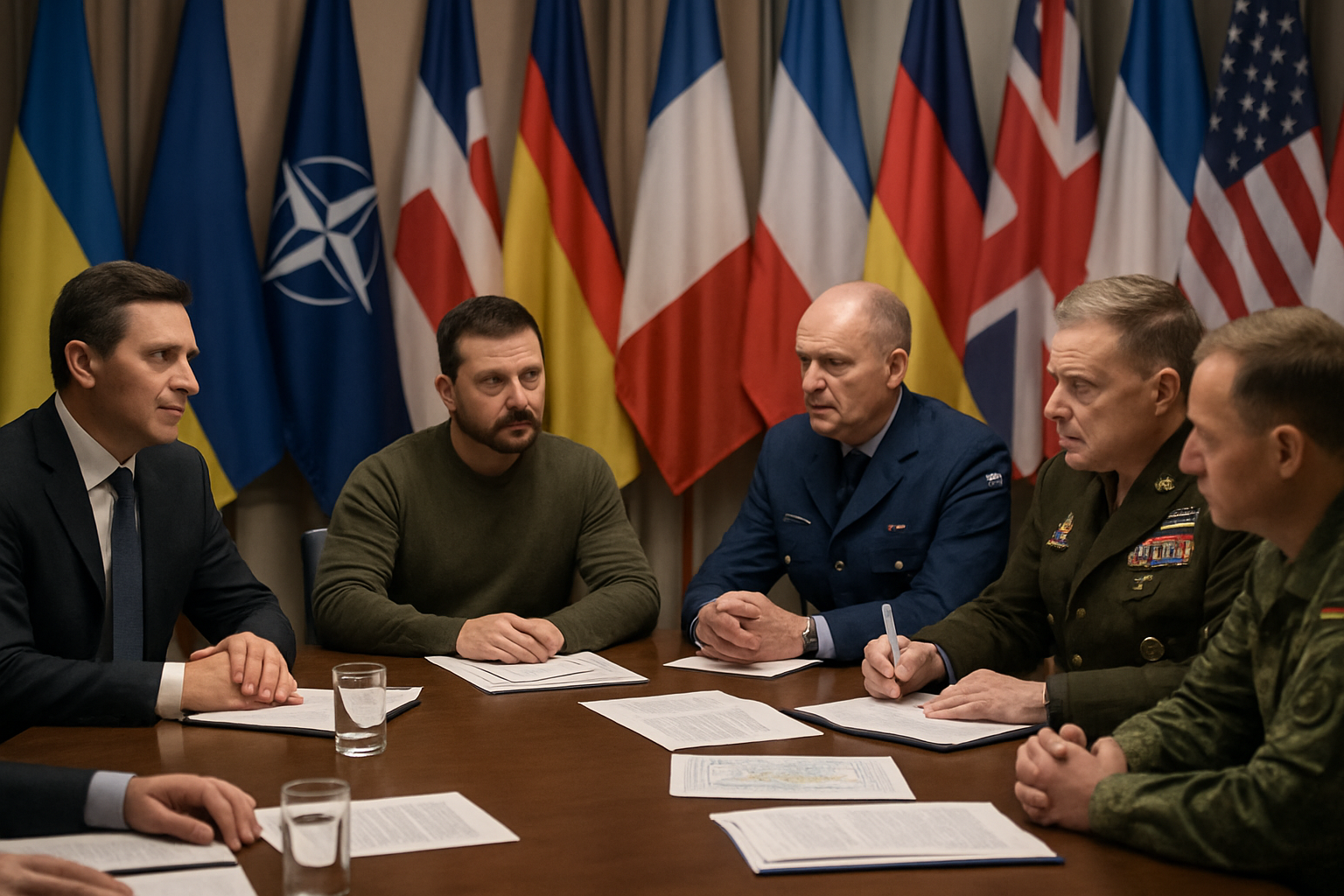
Ukrainian cities faced renewed Russian bombardment on February 10, 2026, as international allies accelerated military aid deliveries and diplomatic initiatives gained momentum, highlighting the complex dynamics of a conflict now approaching its fourth year.
The latest wave of Russian attacks targeted civilian infrastructure across multiple Ukrainian regions, with particular intensity in the eastern provinces. In Sloviansk, guided aerial bomb strikes killed at least two civilians and wounded 16 others, while attacks on Zaporizhzhia damaged a kindergarten during the time children were sheltering. These strikes underscore Russia's continued strategy of targeting civilian infrastructure to maximize psychological pressure on the Ukrainian population.
Military Developments and Combat Operations
Ukrainian Defense Forces reported repelling 33 combat clashes in a single day, with the most intense fighting concentrated in the Pokrovsk sector where Russian forces launched 13 separate assaults. The Ukrainian military's operational reports indicate sustained Russian efforts to advance along key eastern front lines, particularly around strategically important urban centers.
Ukrainian forces demonstrated their continued capability for offensive operations, striking Russian drone units, repair facilities, and fuel depots in occupied territories and within Russia itself. The strikes targeted facilities linked to unmanned aerial vehicle operations, logistics networks, and troop concentrations, with damage assessments still underway according to military officials.
In a significant tactical development, several small groups of Russian forces succeeded in crossing the frozen Siverskyi Donets River to infiltrate the settlement of Zakitne. This maneuver highlights how winter conditions can alter battlefield dynamics, potentially opening new avenues for military operations on both sides of the conflict.
International Military Support Expansion
International support for Ukraine's defense capabilities continued to expand through multiple channels. The Netherlands announced a substantial €35 million contribution through the Ukraine Energy Support Fund for the "Ray of Hope" initiative, specifically targeting the installation of solar panels for Ukrainian hospitals and critical medical facilities.
This energy infrastructure support comes as Ukraine begins implementing a long-term strategy to protect its electrical grid from Russian attacks. Kyiv has initiated an ambitious project to bury portions of its electrical network underground, though officials acknowledge the enormous cost—with each site representing investments of several tens of millions of dollars.
"This device, presented as a key element of long-term energy resilience, remains costly and slow to implement, but it's essential for protecting our critical infrastructure from ongoing attacks."
— Ukrainian Energy Official
European Union foreign affairs chief Kaja Kallas announced plans to circulate a comprehensive list of demands that should be presented to Moscow in any future diplomatic negotiations. This initiative reflects the EU's determination to maintain unified positions on territorial sovereignty and post-conflict arrangements, even as some member states pursue separate diplomatic channels.
Diplomatic Complexities and Peace Efforts
The diplomatic landscape surrounding the Ukraine conflict continues to evolve with multiple parallel initiatives. Recent developments in Abu Dhabi achieved a significant prisoner exchange involving 314 individuals—the largest such swap in five months. This humanitarian breakthrough occurred despite continued military operations, demonstrating that diplomatic engagement can yield concrete results even amid active conflict.
Dutch Foreign Minister David van Weel emphasized that sustained pressure on Russia and its partners will be crucial for forcing meaningful negotiations. His comments reflect a broader international consensus that diplomatic solutions must be backed by continued military and economic pressure to be effective.
European divisions on diplomatic strategy remain evident, with Germany maintaining opposition to direct high-level talks with Russian leadership while France and Italy continue advocating for broader engagement. These disagreements reflect different assessments of how best to achieve sustainable peace while maintaining unified support for Ukrainian sovereignty.
Humanitarian Crisis and Civilian Impact
The humanitarian dimension of the conflict continues to worsen, with Russian forces increasingly targeting civilian infrastructure during harsh winter conditions. Attacks on heating systems, electrical grids, and essential services create cascading effects that impact millions of Ukrainian civilians.
In Kharkiv region, a Russian drone attack on a gas station in the Bohodukhiv district caused a significant fire and injured one civilian. Such attacks on fuel infrastructure not only cause immediate casualties but also disrupt supply chains essential for civilian heating and transportation during winter months.
A tragic incident in the Rivne region highlighted the internal pressures within Ukraine's displaced population. A 72-year-old man killed five people at an internally displaced persons center using a hammer and axe, demonstrating how the prolonged conflict creates complex social tensions even within affected communities. The victims, three women and two men aged 56 to 81, were fellow displaced persons, illustrating the psychological toll of displacement and uncertainty.
Information Warfare and Technology
The technological dimensions of the conflict continue to evolve, with both sides adapting to new forms of electronic warfare. After Ukraine successfully disabled illegal Starlink systems being used by Russian forces, Moscow began coercing families of Ukrainian prisoners of war to register satellite terminals for military use. This development shows how civilian communications infrastructure becomes entangled in military operations.
International media coverage of the conflict faces ongoing challenges, as demonstrated by an incident where Latvian Public Media journalists—reporter Odita Krenberga and cameraman Aigars Kovaļevskis—were attacked by a Russian drone while working near front-line positions. Both journalists managed to escape unharmed, but the incident underscores the risks faced by international correspondents documenting the conflict.
Strategic Implications and Future Outlook
The disbanding of Ukraine's International Legion, which had served as a symbol of international solidarity since the early days of Russia's full-scale invasion, marks a significant organizational change. The structure, which attracted thousands of foreign volunteers, is being reorganized with foreign fighters reassigned to regular Ukrainian military units. This shift reflects the evolution from emergency response to more conventional military organization.
European Union consideration of an unprecedented "reverse enlargement" model for Ukraine represents a potentially significant diplomatic innovation. Brussels is examining whether Ukraine could receive partial EU membership before completing all traditional reforms, effectively locking Kyiv into European institutions while the conflict continues. Such an approach would represent a fundamental departure from established EU expansion procedures.
The international community faces the challenge of maintaining long-term support for Ukraine while managing various other global crises. The Netherlands' energy support initiative and similar programs from other allies demonstrate sustained commitment, but the scale of reconstruction needs will require coordinated international efforts lasting well beyond any potential ceasefire.
Regional and Global Context
The Ukraine conflict continues to influence broader international relations, with implications extending far beyond Eastern Europe. The prisoner exchange achievements suggest that diplomatic mechanisms can function even during active hostilities, potentially providing models for addressing other international conflicts.
NATO defense ministers are scheduled to meet in Brussels on February 12 to discuss continued support for Ukraine, indicating that alliance-level coordination remains active. These discussions will likely address both immediate military assistance and longer-term security arrangements for the region.
The conflict's impact on global energy markets and supply chains continues to drive policy decisions across Europe and beyond. Ukraine's initiative to underground electrical infrastructure reflects broader concerns about protecting critical systems from both military attacks and potential cyber warfare.
As the conflict approaches its fourth year, the combination of continued military pressure, expanding international support, and evolving diplomatic initiatives creates a complex dynamic. The ability of Ukrainian forces to maintain defensive operations while conducting strikes against Russian targets demonstrates sustained military capabilities, while growing international coordination suggests continued long-term support for Ukrainian sovereignty.
The ongoing developments reflect the multifaceted nature of modern conflict, where military, diplomatic, humanitarian, and technological dimensions interact in unprecedented ways. The international community's response, combining immediate military aid with longer-term structural support, will likely influence how similar conflicts are addressed in the future.