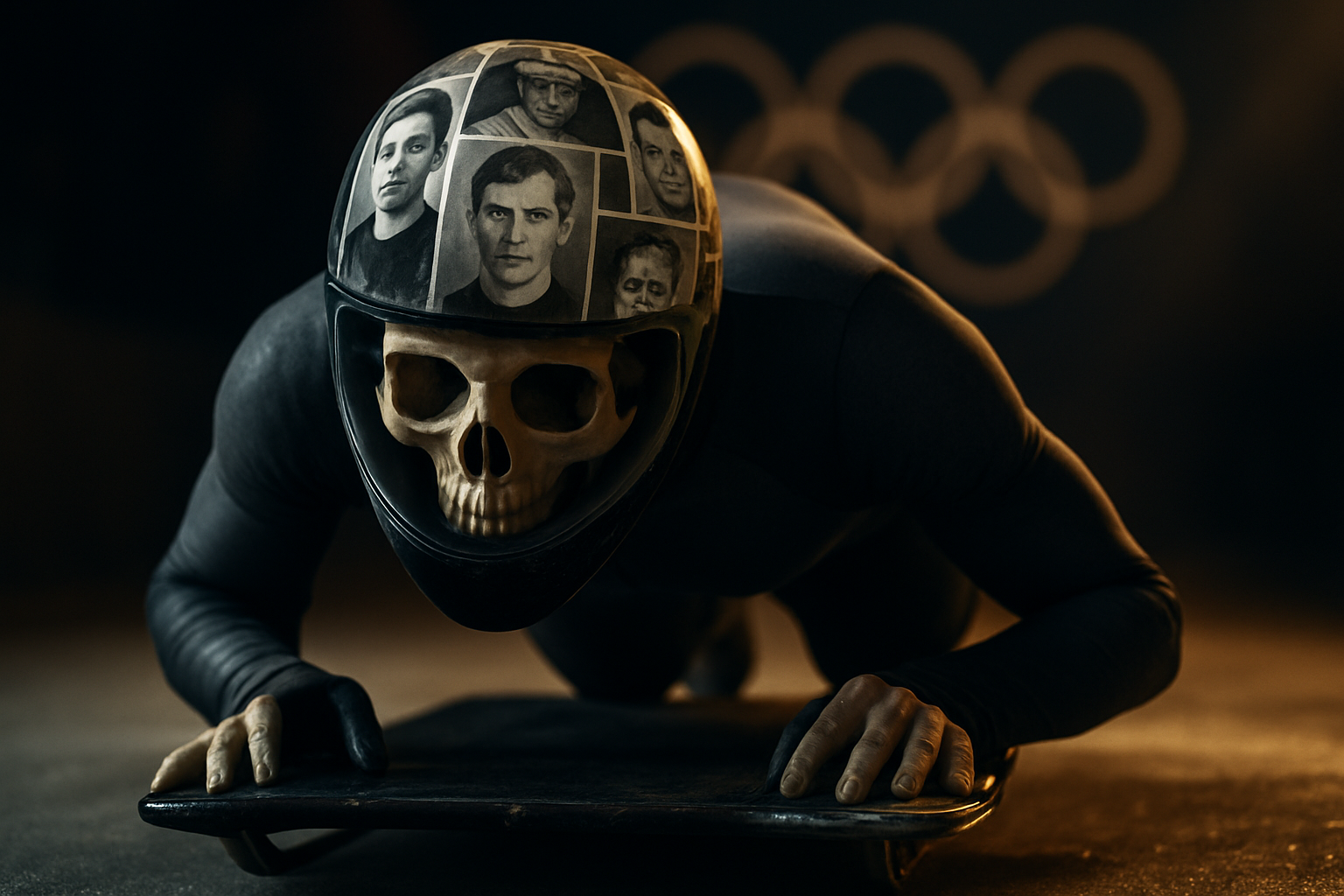
Ukrainian skeleton athlete Vladyslav Heraskevych was disqualified from the Milano-Cortina 2026 Winter Olympics after refusing to remove a helmet commemorating more than 20 Ukrainian athletes and coaches killed in the war with Russia, sparking international controversy over the International Olympic Committee's neutrality rules.
The 28-year-old athlete's expulsion on February 12 came just hours before his scheduled competition, after the IOC made a last-minute plea for him to use a regulation helmet instead of one displaying photographs of deceased Ukrainian sporting figures. Heraskevych's steadfast refusal led to his immediate disqualification from the skeleton event.
The Memorial That Divided Olympic Officials
Heraskevych's helmet bore the faces of Ukrainian athletes and coaches who have been killed since Russia's full-scale invasion began in February 2022. The memorial design had been worn during training sessions without incident, but IOC officials deemed it a violation of Rule 50, which prohibits political demonstrations during Olympic competition.
According to multiple sources, the IOC offered a compromise solution of allowing Heraskevych to wear a black armband in remembrance instead. However, the athlete firmly rejected this alternative.
"Even if the IOC wants to betray the memory of these athletes, I will not betray them. This is the price of our dignity."
— Vladyslav Heraskevych, Ukrainian skeleton athlete
Presidential Response and National Support
The controversy quickly escalated to the highest levels of Ukrainian government. President Volodymyr Zelensky awarded Heraskevych the Order of Freedom, describing the honor as recognition for his "selfless service to the Ukrainian people" and "civic courage and patriotism in defense of the ideals of freedom and democratic values."
Ukrainian Sports Minister Matvii Bidnyi defended the athlete's stance, calling the IOC's decision "unjust" while confirming that the Ukrainian team would continue competing at the Games. Speaking from Milano, Bidnyi emphasized that the memorial represented remembrance of those who died defending their country.
"He is our hero, the IOC made a mistake. These athletes were killed, and we are here thanks to those who defend us at the front."
— Matvii Bidnyi, Ukrainian Sports Minister
International Reactions and Criticism
The decision triggered widespread international criticism, with many viewing it as the IOC prioritizing neutrality over human dignity. Ukrainian officials and supporters argued that remembering war victims should not be considered a political act.
President Zelensky criticized the Olympic movement's stance, stating that "sport should not mean amnesia" and that "the Olympic movement should help stop wars, not work in the interests of aggressors." His comments highlighted the tension between Olympic ideals of peace and the reality of ongoing conflict.
International media coverage was largely sympathetic to Heraskevych's position, with many outlets questioning whether the IOC's strict interpretation of neutrality rules was appropriate given the circumstances of the war in Ukraine.
The Broader Context of Olympic Neutrality
The incident occurred within the larger context of how international sporting bodies have handled the Russia-Ukraine conflict. While Russian athletes compete as neutrals without national symbols, the IOC has maintained strict rules about any displays that could be interpreted as political statements.
This case has reignited debates about the relevance and application of Olympic neutrality rules in an era where global conflicts directly impact athletes and sporting communities. Critics argue that preventing athletes from honoring fallen compatriots goes beyond the intended scope of political neutrality.
The controversy also highlighted the challenge facing the IOC in maintaining its stated mission of promoting peace while enforcing rules that some view as inadvertently supporting aggressor nations by silencing victims' voices.
Impact on Milano-Cortina 2026
The Heraskevych case became one of the most significant political controversies at the Milano-Cortina 2026 Winter Olympics, overshadowing much of the sporting action. It demonstrated how the ongoing war in Ukraine continues to affect international sporting events, even those designed to promote unity and peace.
The incident has raised questions about whether current IOC guidelines are adequate for addressing similar situations in future Olympic Games, particularly as global conflicts increasingly impact the international sporting community.
A Stand for Memory and Dignity
Despite his disqualification, Heraskevych received overwhelming support from the Ukrainian public and international observers who viewed his stance as a principled defense of memory and human dignity. His refusal to compete without honoring his fallen colleagues resonated far beyond the sporting world.
The Ukrainian National Olympic Committee supported their athlete's decision, emphasizing that some values transcend competitive success. This backing reinforced the message that remembering war victims should not be subject to sporting regulations.
"They stole my Olympic moment, but I will not betray the memory of these athletes."
— Vladyslav Heraskevych
As the Milano-Cortina Games continue, the Heraskevych controversy serves as a stark reminder of how global conflicts can challenge the traditional boundaries between sport and politics, forcing international organizations to grapple with questions of neutrality, memory, and human dignity in an increasingly complex world.
The case has already prompted discussions within the Olympic movement about potential reforms to rules governing athlete expression, particularly in situations involving the commemoration of war victims and other humanitarian concerns.