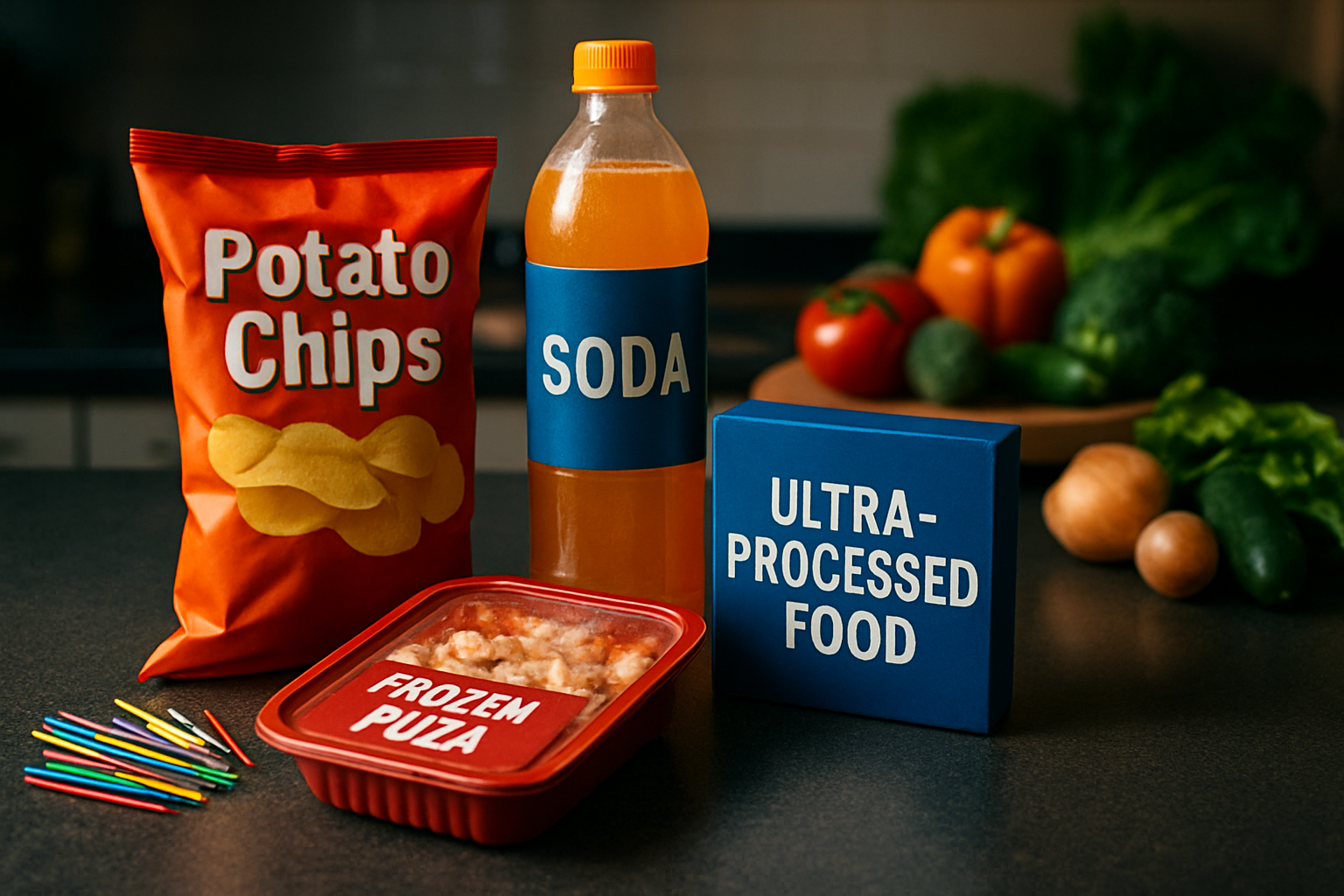
Health experts across Europe are raising urgent warnings about the hidden dangers lurking in everyday food choices, from ultra-processed foods that damage muscle tissue to the viral spread of flavored toothpicks containing nicotine on social media platforms.
Two major health alerts emerged this week that underscore the complex challenges facing modern nutrition and food safety. In Cyprus, researchers have discovered that ultra-processed foods are causing previously unknown muscle damage, while German health authorities are warning about the dangerous rise of flavored toothpicks marketed as lifestyle products on TikTok.
Ultra-Processed Foods Linked to Muscle Deterioration
A groundbreaking study from Cyprus has revealed that frequent consumption of ultra-processed foods appears to be connected to muscle deterioration, adding another serious health concern to an already extensive list of risks associated with these industrial food products.
The research, published by Cypriot health authorities, specifically examined foods like ready-to-eat snacks, instant drinks, and processed seafood products. These items, which undergo extensive industrial modification, have been previously linked to cardiovascular disease, cancer, and metabolic disorders through Romanian studies that compared their addictive properties to tobacco.
"What we're seeing is a pattern of systemic damage that extends beyond the cardiovascular and metabolic effects we already know about," explains nutrition researcher Dr. Andreas Michalsen from Berlin. "The muscle deterioration represents another layer of how these products fundamentally disrupt human physiology."
The Cyprus findings build on mounting international evidence against ultra-processed foods. Recent research has shown that manufacturers design these products to bypass natural satiety signals, creating addiction-like consumption patterns while stripping away nutrients and adding preservatives, artificial flavors, and chemical stabilizers.
Dangerous Toothpick Trend Spreads on Social Media
Meanwhile, German health experts are sounding alarms about a concerning trend spreading rapidly across TikTok: flavored toothpicks marketed as lifestyle products, some containing nicotine. The phenomenon represents what experts call a "trend with addiction potential" that specifically targets young users.
According to German broadcaster Tagesschau, these products are being promoted on social media platforms with some varieties containing added flavors and others infused with nicotine. The trend has caught the attention of health authorities who view these toothpicks critically for multiple reasons.
"What appears to be a harmless lifestyle product can quickly become a gateway to nicotine addiction, especially among young people who are particularly vulnerable to social media marketing,"
— Joanna Thurow, Health Reporter
The toothpick trend exemplifies how social media platforms can rapidly amplify potentially harmful behaviors. With 96% of children aged 10-15 using social media and 70% experiencing exposure to harmful content, platforms often prioritize engagement over health outcomes through algorithmic promotion.
Global Food Safety Crisis Context
These warnings emerge during what experts are calling a "Therapeutic Revolution of 2026," a global shift toward prevention-first healthcare approaches. However, the developments also highlight ongoing challenges in an interconnected world where food safety violations and health trends can spread rapidly across borders.
The current concerns come amid a broader pattern of food safety crises affecting multiple countries. European authorities continue dealing with infant formula contamination that has affected over 36 children across the UK, France, Luxembourg, and Greece. The cereulide toxin crisis, involving Nestlé and Danone products, has prompted enhanced molecular testing protocols for heat-stable toxins that survive standard pasteurization.
Consumer confidence in multinational food corporations has been declining significantly, with a measurable shift toward local sourcing and simplified supply chains that offer greater transparency and traceability.
The Climate and Health Intersection
These health warnings occur during unprecedented environmental stress, with January 2026 marking the hottest recorded month and extending a streak of 19 consecutive months exceeding 1.5°C above pre-industrial temperatures. Climate change is functioning as a "threat multiplier," creating optimal pathogen growth conditions and disrupting traditional food preservation methods.
The sustained warming is fundamentally altering farming cycles, water availability, and pest management, while enabling pathogens that typically peak in different seasons to co-circulate simultaneously. This overwhelms healthcare systems designed to handle sequential rather than concurrent disease challenges.
Social Media as Health Enforcement Tool
Interestingly, while social media platforms contribute to the spread of dangerous trends like flavored toothpicks, they're also emerging as powerful tools for food safety enforcement. Viral videos exposing food safety violations have accelerated regulatory responses across multiple countries, representing a fundamental transformation in traditional oversight mechanisms.
This democratization of oversight enables community participation in food safety monitoring, though it also highlights the need for comprehensive digital literacy education to help users distinguish between legitimate health information and potentially harmful trends.
Prevention-First Healthcare Revolution
The "Therapeutic Revolution of 2026" emphasizes prevention-focused strategies that demonstrate superior cost-effectiveness compared to reactive treatment approaches. Countries implementing comprehensive prevention programs consistently report better population health outcomes, enhanced community resilience, and reduced healthcare service demands.
Economic analyses show that prevention-focused healthcare strategies generate substantial long-term savings through decreased crisis interventions, improved educational outcomes, and enhanced workforce productivity. This approach is particularly relevant when addressing the ultra-processed food crisis and social media-driven health trends.
Expert Recommendations for Consumers
Health experts are providing specific guidance for navigating these emerging risks:
- Prioritize whole, minimally processed foods over industrial alternatives
- Read ingredient labels carefully and avoid products with extensive chemical additives
- Be skeptical of health trends promoted primarily through social media
- Consult healthcare providers before trying viral products, especially those containing nicotine
- Support local food producers and transparent supply chains when possible
The muscle deterioration findings from ultra-processed foods add urgency to existing recommendations about limiting these products. Previous research has established links to cardiovascular disease, cancer, and metabolic disorders, but the muscle damage represents a new dimension of concern that affects physical function and quality of life.
International Cooperation and Future Outlook
Despite funding challenges facing traditional international health organizations, bilateral partnerships and peer-to-peer knowledge sharing networks continue driving innovation in food safety and health protection. The European Food Safety Authority (EFSA) is developing standardized international protocols and coordinated early warning systems to prevent cross-border contamination.
Industry experts identify 2026 as a critical transformation turning point requiring enhanced international coordination, climate-adaptive food processing technologies, and prevention-focused approaches that integrate traditional dietary wisdom with modern safety science.
The convergence of ultra-processed food dangers and social media health trends represents a complex challenge that requires sustained political commitment, adequate funding, comprehensive regulatory frameworks, and unprecedented international cooperation. Success will depend on recognizing food safety and public health as global public goods that demand collective protection during this critical period of environmental and social change.
As consumers navigate an increasingly complex food landscape, the emphasis on prevention-first approaches offers hope. By prioritizing whole foods, critical thinking about viral trends, and support for transparent food systems, individuals can contribute to building more resilient communities while protecting their own health in an uncertain world.