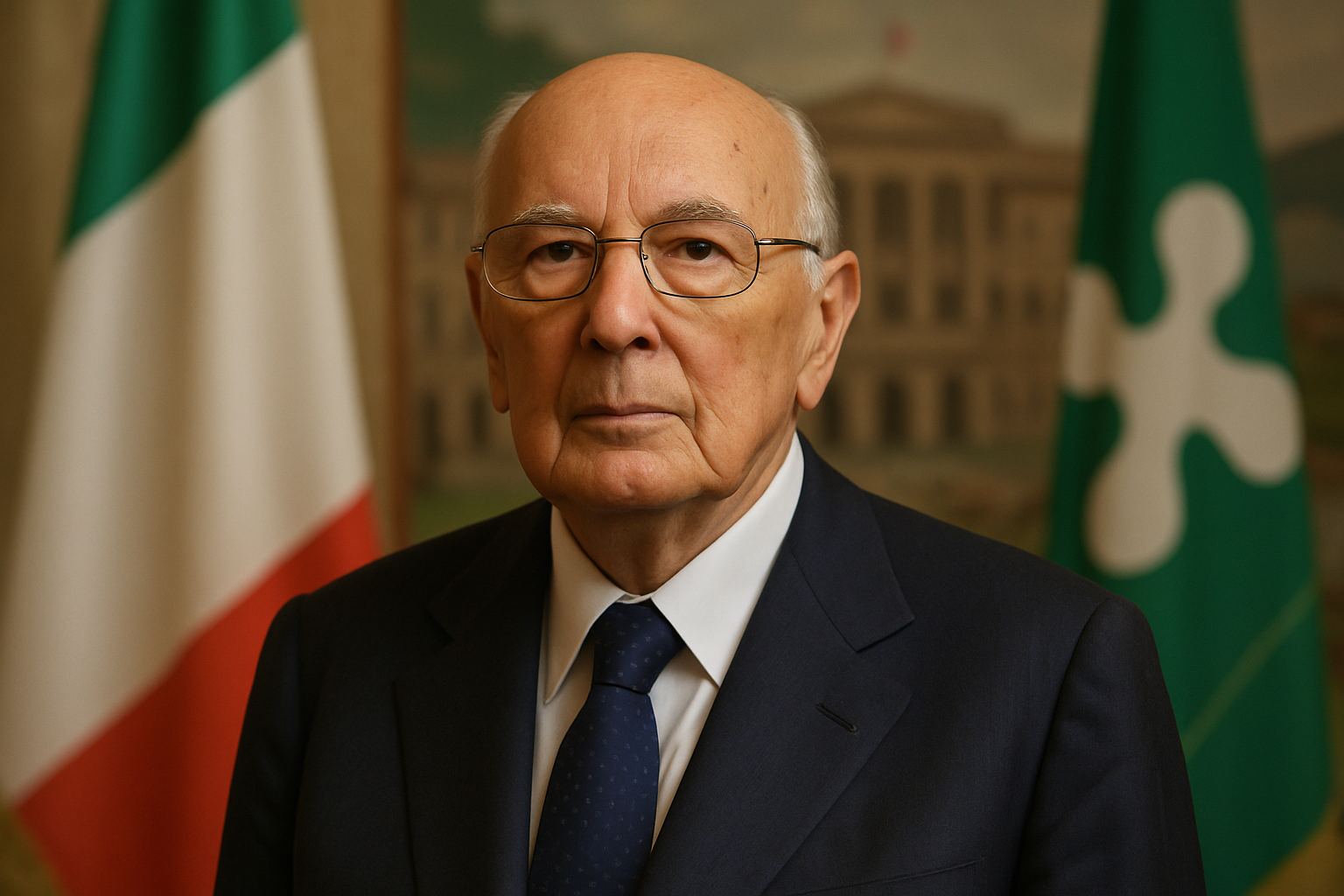
Umberto Bossi, the controversial founder of Italy's Lega party who pioneered European right-wing populism and championed northern Italian separatism, died Thursday at age 84 at Circolo Hospital in Varese, his family confirmed.
The man dubbed "Il Senatur" (The Senator) in the Lombard dialect passed away after years of declining health following a 2004 stroke that left him partially paralyzed. His death marks the end of an era for one of Europe's most influential far-right political movements, which evolved from a regional separatist party into a key player in contemporary Italian and European politics.
Bossi's political legacy is both profound and contentious. From the 1980s onwards, he transformed the Lega Nord (Northern League) from a fringe movement demanding independence for "Padania" – his name for northern Italy – into a major political force that would influence immigration policy, European integration, and the rise of populist movements across the continent.
The Rise of a Political Revolutionary
Born in 1941, Bossi founded the Lega Nord in 1991, building on earlier regional movements that protested against what they saw as Rome's exploitation of the prosperous north. His fiery rhetoric against southern Italian "parasitism" and calls for northern independence initially seemed like political theater, but proved to tap into genuine regional grievances about taxation and governance.
By the 1990s, Bossi had transformed his movement into a kingmaker in Italian politics. The Lega became an essential coalition partner for Silvio Berlusconi's center-right governments, providing Bossi with multiple ministerial positions and significant influence over national policy, particularly on immigration and federalism.
"Bossi was a pioneer of European populism who understood how to channel regional resentments into political power decades before it became fashionable across the continent."
— Roberto Vannacci, Former Lega General
Political Scandals and Decline
Bossi's career was marked by significant controversies that ultimately led to his downfall as party leader. In 2012, financial scandals involving the misuse of public funds forced him to resign from leadership of the party he had built. He was subsequently convicted in 2017 for embezzlement of public funds, receiving a suspended sentence.
The most damaging revelations centered on the use of party funds to purchase a Ferrari for his son and finance family luxuries, contradicting the austere, anti-establishment image Bossi had cultivated. These scandals provided an opening for Matteo Salvini to assume party leadership and transform the Lega from a regional separatist movement into a national anti-immigration party.
Under Salvini's leadership, the party dropped its separatist agenda and expanded beyond its northern base, becoming a major force in national politics. However, this transformation also created internal tensions, with figures like General Roberto Vannacci recently breaking away to form the "Futuro Nazionale" movement, claiming other Lega leaders would follow in departing from Salvini's approach.
European Influence and Legacy
Bossi's impact extended far beyond Italy's borders. He is widely credited as one of the pioneers of European right-wing populism, developing political strategies and messaging that would later be adopted by movements across the continent. His blend of anti-establishment rhetoric, regional identity politics, and immigration concerns became a template for similar parties from France's National Rally to Germany's Alternative for Germany.
The Austrian media described Bossi as "one of the pioneers of European right-wing populism," noting how his political innovations influenced movements that are now reshaping European politics. His approach to combining legitimate regional grievances with broader anti-establishment sentiment provided a model that has proven remarkably durable and transferable across different national contexts.
Personal Struggles and Final Years
Bossi's final decades were marked by health challenges and political marginalization. The 2004 stroke significantly impacted his ability to participate actively in politics, though he remained a symbolic figure within the Lega until his final years. His partial paralysis became a visible reminder of both his mortality and the changing nature of the movement he created.
Despite the controversies that marked his career's end, Bossi retained significant support among long-time Lega members who remembered his role in building the party from nothing into a major political force. His ability to mobilize northern Italian resentments and transform them into electoral success remains a case study in effective populist politics.
Tributes and Reactions
Political figures across Italy's spectrum offered condolences, reflecting Bossi's complex legacy. Current Lega leader Matteo Salvini stated that Bossi "changed my life" and credited him with transforming Italian politics. Prime Minister Giorgia Meloni, despite political differences, acknowledged his role as a significant figure in Italy's political transformation.
President Sergio Mattarella's office described Italy as having "lost a sincere democrat" despite the controversies, emphasizing Bossi's contribution to Italy's federal reforms and regional governance improvements. Even political opponents recognized his authentic commitment to addressing northern Italy's concerns, even when disagreeing with his methods.
"Whatever one thought of his politics, Bossi understood popular frustrations and transformed them into political action in ways that changed Italy forever."
— Pier Luigi Bersani, Former Democratic Party Leader
The Contemporary Context
Bossi's death comes at a moment when the political movements he inspired continue to reshape European politics. Sweden recently saw its Liberal Party formally cooperate with the far-right Sweden Democrats, breaking previous taboos about such collaboration. France's National Rally, led by Marine Le Pen, continues to advance in municipal elections using strategies reminiscent of Bossi's approach to mainstream far-right politics.
The 2026 European political landscape bears clear traces of innovations Bossi pioneered decades earlier. His combination of regional identity politics, anti-establishment messaging, and calculated coalition building has become standard practice for populist movements across the continent, even as these movements have evolved far beyond his original vision.
Historical Assessment
Historians and political scientists will likely debate Bossi's legacy for years to come. His supporters credit him with giving voice to legitimate concerns about centralized governance and regional autonomy that mainstream parties had ignored. His critics argue that his rhetoric contributed to political polarization and provided a template for movements that have undermined democratic norms across Europe.
What remains undisputable is Bossi's role in fundamentally altering Italian and European politics. His ability to transform regional grievances into national political power provided a model that continues to influence contemporary political movements, making him one of the most consequential, if controversial, political figures of late 20th and early 21st-century Europe.
Umberto Bossi's funeral arrangements have not yet been announced, but his death marks the end of an era in Italian politics and provides an opportunity to reflect on how regional movements can reshape national and continental political landscapes. His legacy remains as complex and contested as the man himself – a reminder that political innovation often comes from unexpected sources and can have consequences far beyond their original intentions.