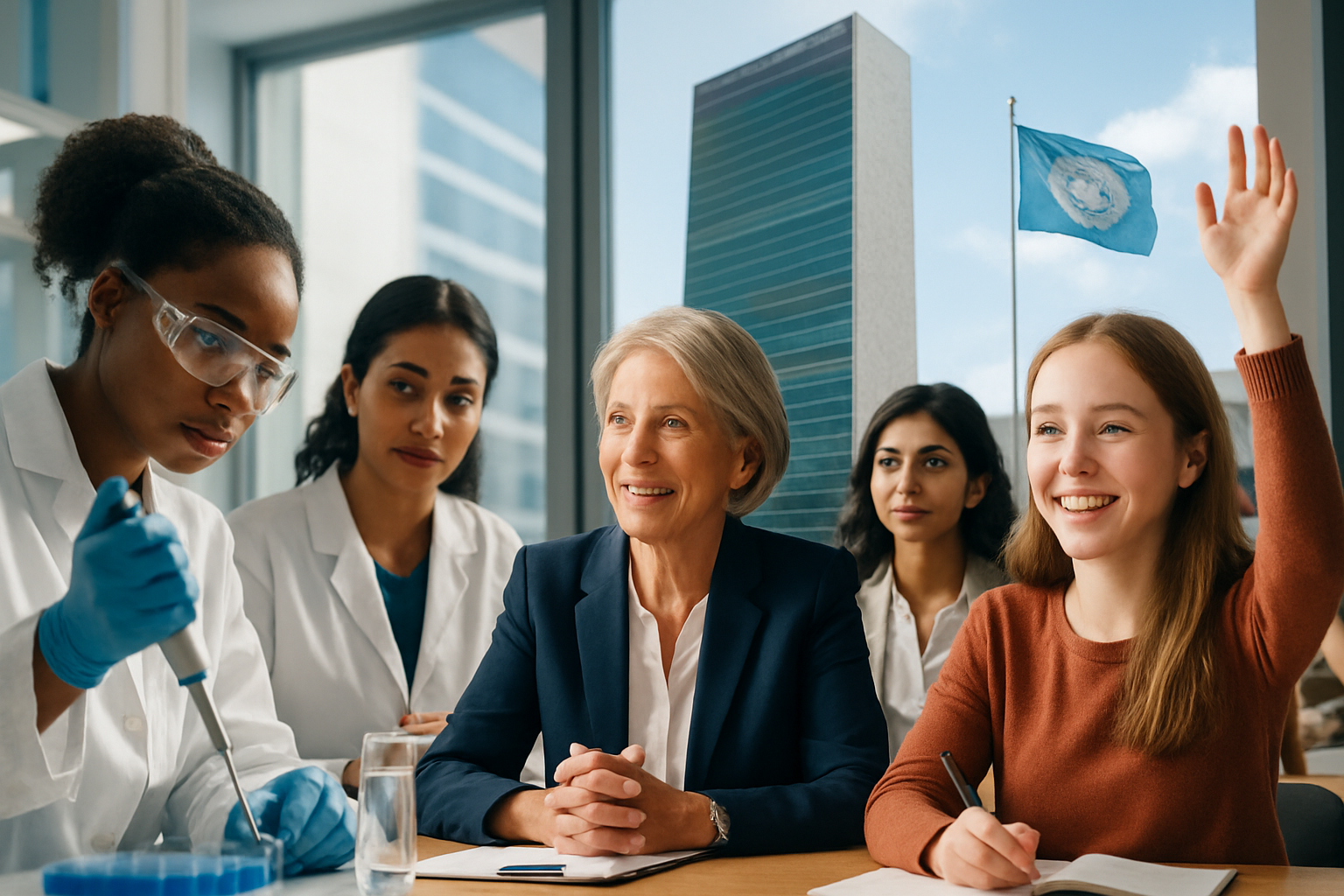
UN Secretary-General António Guterres has emphasized that global scientific progress and solutions to worldwide challenges depend on equal participation of both women and men in research and innovation, as countries across continents grapple with advancing gender equality in diverse contexts.
Speaking on Wednesday, Guterres stressed the critical importance of supporting girls' education worldwide and ensuring women have equal access to scientific careers and leadership positions. His call comes amid a complex global landscape where progress on women's rights varies dramatically across different regions and contexts.
The Global Scientific Gender Gap
Despite representing half the world's population, women continue to face significant barriers in scientific fields. Guterres noted that global scientific advancement and innovation require the full participation of all human talent, regardless of gender. The UN chief's emphasis on equal participation reflects growing recognition that excluding women from science and technology sectors represents not just a human rights issue, but an economic and developmental impediment.
The call for gender equality in science comes at a crucial time when breakthrough technologies and research are needed to address climate change, health crises, and sustainable development challenges. Countries that have invested in women's education and scientific participation have shown measurably better outcomes in innovation and economic development.
Constitutional Rights and Legal Advances
While Guterres focused on scientific participation, parallel developments in other countries demonstrate varying approaches to women's rights. In India, the Supreme Court has been addressing fundamental issues of women's dignity and constitutional rights, including recent considerations of menstrual hygiene as a constitutional right – reflecting broader efforts to remove systemic barriers that prevent women's full participation in society.
These legal advances represent part of a growing global recognition that women's rights are not merely social issues but fundamental human rights that require constitutional protection and active government support.
Regional Challenges and Progress
The global picture on women's rights remains mixed, with significant variations between regions and countries. Some nations have made substantial progress in women's education and professional participation, while others continue to restrict women's access to education and employment opportunities.
Recent data from Bangladesh has shown how gender-inclusive policies in areas like renewable energy can create opportunities for women while addressing climate challenges. Community activists there have called for gender-just renewable energy policies as part of fair energy transition, demonstrating how environmental and gender equality goals can be mutually reinforcing.
"Scientific progress and global problem-solving require equal participation of women and men in research and innovation."
— António Guterres, UN Secretary-General
Education as Foundation
Central to Guterres' message is the critical importance of girls' education as the foundation for women's participation in science. Educational access remains uneven globally, with some regions making dramatic progress while others face ongoing challenges in ensuring girls can complete their education.
Recent initiatives across multiple countries show diverse approaches to educational reform. Malaysia has achieved remarkable teacher placement rates approaching 98%, while countries like Austria are reassessing traditional curriculum approaches. The integration of technology in education, including AI-enhanced learning systems, offers new opportunities to expand access while maintaining educational quality.
Economic Empowerment and Systemic Change
The UN Secretary-General's emphasis on women in science connects to broader themes of economic empowerment and systemic change. Research consistently shows that countries with greater gender equality in education and employment demonstrate stronger economic growth, greater innovation, and more resilient societies.
Recent analysis from various regions indicates that when women participate equally in economic life, including scientific and technical fields, entire communities benefit through improved healthcare, better environmental management, and more sustainable development practices.
Global Cooperation and Future Challenges
The UN's emphasis on gender equality in science reflects broader challenges facing international cooperation. As global challenges like climate change, technological disruption, and health security become increasingly complex, the need for diverse perspectives and full human participation becomes more critical.
Contemporary developments, from AI governance discussions to space exploration initiatives, consistently benefit from diverse leadership and varied perspectives. The exclusion of women from these fields represents not just discrimination against individuals but a systematic weakening of global problem-solving capacity.
Implementation and Accountability
Moving forward, the challenge lies in translating these principles into concrete policies and measurable outcomes. Successful examples from various countries show that progress requires sustained political commitment, adequate funding, and systematic removal of both legal and cultural barriers.
Effective implementation also requires addressing interconnected challenges including healthcare access, legal protection, economic opportunity, and cultural change. Countries that have made significant progress typically combine legal reforms with public education, economic incentives, and strong enforcement mechanisms.
As the international community continues to grapple with complex global challenges, Guterres' call for equal participation in science represents both a moral imperative and a practical necessity. The full realization of human potential – including the scientific and innovative capacity of all women – remains essential for building a more prosperous, secure, and sustainable world for all.