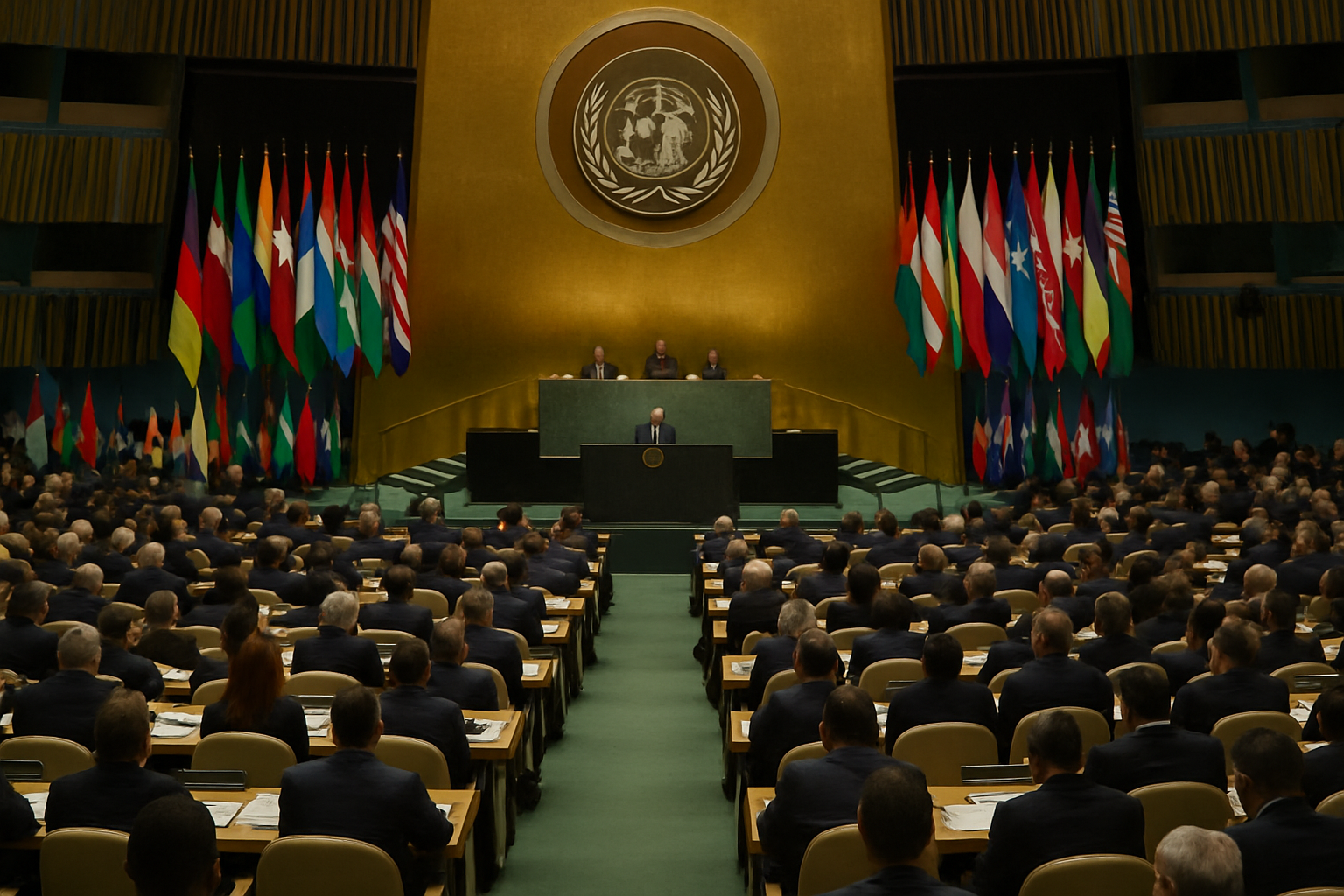
A coalition of 85 United Nations member states has issued a strong joint condemnation of Israel's plans to expand control and settlements in the occupied West Bank, with several nations warning that the measures could amount to "de facto annexation" in violation of international law.
The unprecedented diplomatic pushback came as Israeli authorities implemented a series of controversial policies designed to increase administrative control over Palestinian territories in the West Bank, drawing sharp criticism from nations spanning continents—from Algeria to Zimbabwe.
International Opposition Reaches Historic Scale
In a joint statement released Tuesday, UN missions from 85 member states condemned what they described as Israel's "expanding control" in the West Bank, calling the unilateral measures a violation of international law. The coalition urged Israel to "reverse them immediately."
The Arab League, the Organization of Islamic Cooperation (OIC), and the European Union were among the regional blocs that took issue with the Israeli decisions. European officials characterized the actions as a "step in the wrong direction," emphasizing that annexation remains illegal under international law.
Among the nations joining the condemnation were Saudi Arabia, Jordan, the UAE, Egypt, Turkey, Indonesia, Pakistan, and Qatar—representing an unusual diplomatic consensus that unified regional opposition across traditional divisions.
"These unilateral decisions aimed at expanding unlawful Israeli presence violate international law and undermine the viability of a two-state solution."
— Joint Statement from Eight Arab Nations
Israeli Policy Changes Draw Criticism
The international condemnation centers on recent Israeli cabinet decisions that significantly expand civilian authority in Areas A and B of the West Bank, which together constitute roughly 40% of the territory and were previously under Palestinian administrative control under the Oslo Accords.
The measures include the designation of lands in the occupied West Bank as "state land," a move that Israeli NGOs warn could mark the first expansion of Jerusalem's borders into the occupied West Bank since 1967. The policies also involve transferring various administrative functions from Palestinian Authority control to Israeli Civil Administration oversight.
Finance Minister Bezalel Smotrich, who spearheaded the policy changes, has been explicit about their intent, declaring that the policies will "continue to kill the idea of a Palestinian state" and describing them as a "dramatic policy transformation" removing "bureaucratic obstacles" to settlement expansion.
Growing Concerns Over Settlement Expansion
The timing of the international response has heightened concerns about Israel's long-term intentions in the West Bank. Energy Minister Eli Cohen publicly acknowledged that the measures constitute "factual sovereignty" implementation, stating the steps will "establish reality on the ground that there will be no Palestinian state."
Israeli NGOs have raised particular alarm over the government's settlement expansion plans, describing them as potentially marking the first significant territorial expansion since the 1967 occupation began. The policies are designed to streamline approval processes for settlement construction while reducing bureaucratic barriers that previously slowed development.
The measures have also included controversial steps such as enhanced Israeli authority over the Tomb of the Patriarchs compound in Hebron and the declassification of land ownership records to facilitate settler land acquisitions.
Palestinian Authority Responds
Palestinian Authority President Mahmoud Abbas strongly condemned what he termed "dangerous decisions" that systematically violate international law and undermine the possibility of a viable Palestinian state. Palestinian officials described the measures as the most comprehensive attempt to formalize Israeli control since the 1967 occupation began.
Palestinian Islamic Jihad went further, warning that the measures represent a "clear attempt to re-engineer the West Bank" by facilitating the displacement of Palestinian populations. The group characterized the policies as part of a systematic effort to make a two-state solution technically unfeasible through demographic and geographic landscape alteration.
Ground developments have intensified these concerns, with settlers seizing caves in the Masafer Yatta area south of Hebron to prepare for pastoral settlement establishment, threatening large Palestinian land areas with further restrictions.
United States Expresses Opposition
Despite the Trump administration's historically pro-Israel stance, White House officials have expressed opposition to the Israeli measures. Administration officials stated that a "stable West Bank keeps Israel secure" while emphasizing President Trump's opposition to formal annexation.
The U.S. position reflects the complex diplomatic challenges posed by the Israeli policies, which come at a time when the Trump administration is pursuing various Middle East peace initiatives, including the upcoming Board of Peace meeting scheduled for February 19.
European Union Takes Firm Stance
The European Union has been particularly vocal in its criticism, with officials characterizing the Israeli actions as "a step in the wrong direction." The EU emphasized that annexation remains illegal under international law, regardless of the methods used to implement territorial control.
More than 400 EU diplomats have called for increased pressure on Israeli authorities, while the European Left Coalition petition against EU-Israel partnerships has exceeded 400,000 signatures, demonstrating significant public opposition to the policies.
Britain has called on Tel Aviv to reverse the moves, warning that any "unilateral attempt to alter the geographic or demographic makeup of Palestine" would be "wholly unacceptable" under international law.
Regional Implications and Broader Context
The coordinated eight-nation Arab response represents an unusual diplomatic consensus, with countries that have normalized relations with Israel—including the UAE and Saudi Arabia—joining traditional critics like Pakistan and Turkey in condemning the measures.
The Arab League has announced an emergency meeting to address what it terms "illegal decisions" related to home demolitions, land seizures, and ownership transfers. The meeting, requested by Palestine and chaired by the UAE, underscores the regional concern about the implications of the Israeli policies.
The controversy comes amid ongoing tensions related to Gaza ceasefire violations, with over 1,520 documented violations since October 2025 resulting in more than 556 Palestinian deaths during what was supposed to be a truce period.
International Law Concerns
Legal experts have cited potential violations of UN Security Council resolutions and Geneva Conventions concerning occupied territories. The systematic extension of Israeli civilian law and administration into occupied territory meets international legal definitions of annexation, regardless of whether formal declarations are made.
UN Secretary-General António Guterres has expressed "grave concern" about the measures, warning that they threaten the viability of a two-state solution through what he termed a "dangerous escalation." The UN has warned that Israel's plans could lead to widespread dispossession of Palestinian land in the occupied West Bank.
"The measures would undoubtedly accelerate dispossession and forced displacement of Palestinians, and lead to the establishment of more illegal settlements."
— UN High Commissioner for Human Rights Volker Türk
Historical Context and Precedent
The current controversy builds on decades of international opposition to Israeli settlement expansion in the occupied territories. However, the scale and coordination of the current response—spanning 85 nations—represents the most comprehensive international opposition since the 1967 occupation began.
The policies effectively erode the Oslo Accords framework that has governed Israeli-Palestinian relations since the 1990s, moving away from diplomatic ambiguity toward aggressive sovereignty assertions that could establish precedents for territorial control in other occupied territories globally.
Impact on Peace Processes
The international condemnation comes at a critical time for Middle East diplomacy, with various peace initiatives underway. The controversy threatens to complicate the Trump administration's Board of Peace initiative, which aims to mobilize over $1 billion in Gaza reconstruction commitments from 27 nations.
Critics argue that the Israeli West Bank actions undermine broader regional stability and conflict resolution efforts at a time when multiple diplomatic tracks are attempting to address the complex web of Middle Eastern conflicts.
Looking Ahead
The success or failure of the international opposition will have significant implications for territorial sovereignty disputes, international law enforcement, and conflict resolution mechanisms in the 21st century. The response to these Israeli policies will influence how the international community addresses territorial control assertions in other occupied territories worldwide.
As the situation develops, the international community faces a critical test of its ability to enforce established principles of international law and territorial sovereignty when challenged by unilateral actions from member states.
The unprecedented nature of the coordinated response—spanning Arab nations, European powers, and international organizations—demonstrates the gravity with which the international community views these Israeli policies and their potential implications for regional stability and international law.