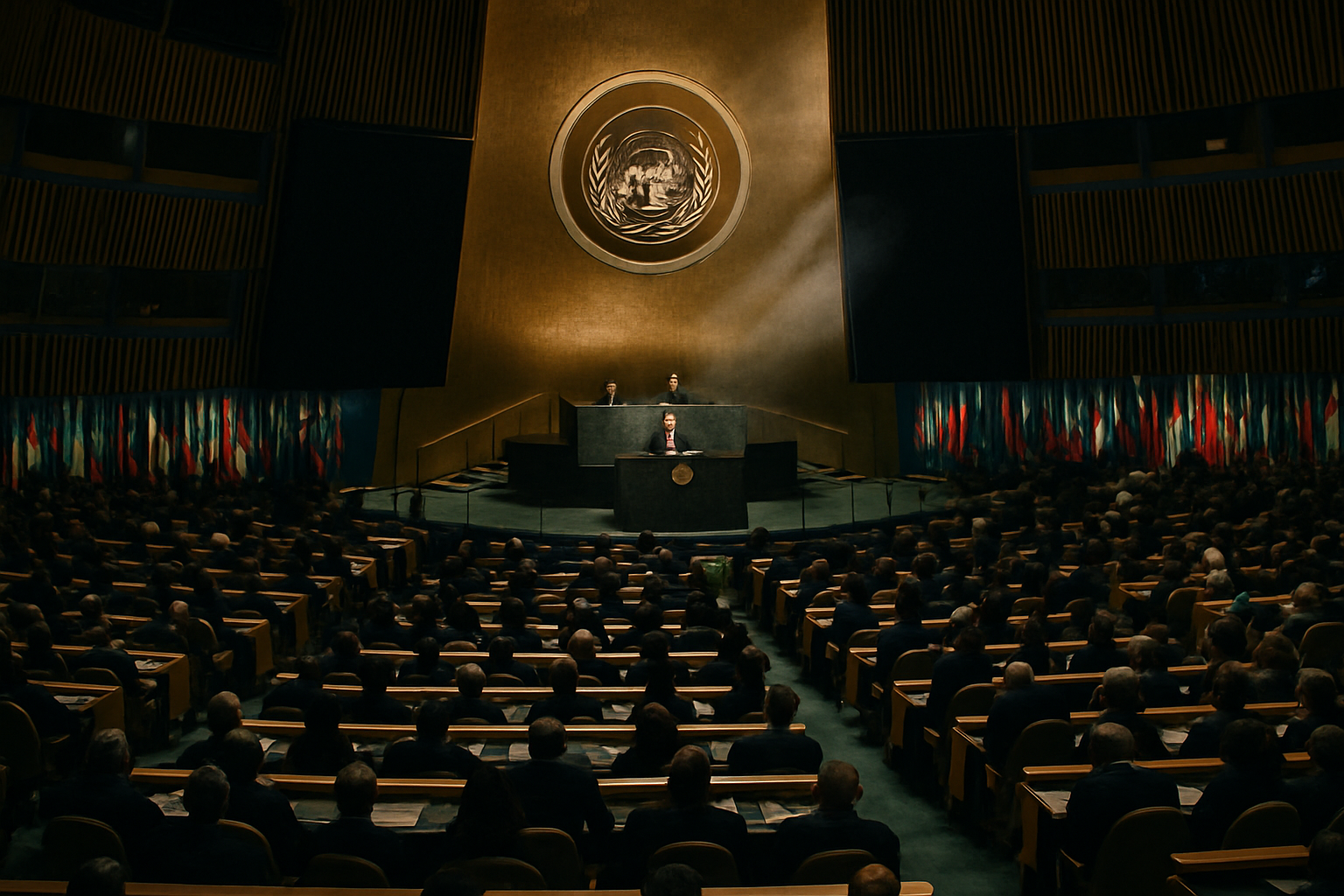
The United Nations General Assembly has made history by designating the transatlantic African slave trade as the "gravest crime against humanity," marking a watershed moment in international recognition of one of history's most devastating injustices and opening new pathways for reparations discussions worldwide.
The landmark resolution, passed with support from 123 member states during Wednesday's session, represents unprecedented international consensus on addressing the historical legacy of slavery. The measure was spearheaded by Ghana on behalf of the African Group, with strong backing from the Caribbean Community (Caricom), demonstrating remarkable coordination between nations most directly affected by the slave trade.
A Defining Moment for Historical Justice
Ghanaian President John Dramani Mahama, who championed the resolution, delivered a powerful statement to the assembly: "Let it be recorded that when history beckoned, we did what was right for the memory of millions who suffered the indignity of slavery." His words resonated throughout the UN hall as delegates recognized the profound significance of the moment.
The resolution explicitly calls for reparations as a "concrete step towards remedying historical wrongs," emphasizing the need for "political recognition at the highest level." This language represents a significant evolution from previous UN statements on slavery, moving beyond symbolic recognition toward concrete action.
International Divisions Emerge
While 123 nations supported the measure, three countries voted against it: the United States, Israel, and Argentina. Additionally, 52 nations abstained, including Britain and several European Union member states, highlighting the complex geopolitical tensions surrounding historical accountability for slavery and colonialism.
"This resolution provides moral authority and international legitimacy to reparations advocates worldwide, creating a new framework for pursuing historical justice."
— Caribbean diplomatic source
The U.S. opposition appears to reflect concerns about potential legal and financial implications for domestic reparations debates, particularly as discussions about compensation for African Americans continue to gain momentum in Congress through initiatives like HR 40 legislation studying reparations feasibility.
Britain's abstention is particularly significant given its central role in the transatlantic slave trade and growing domestic pressure for reparations to former colonies. The decision reflects ongoing tensions within the UK about confronting its colonial legacy while managing relationships with Caribbean nations and African partners.
Legal Pathways and Global Impact
Legal experts suggest the formal designation creates potential new pathways for reparations claims in international courts and strengthens diplomatic negotiations for compensation. The resolution could bolster existing movements worldwide, including ongoing cases in the European Court of Human Rights and various national reparations initiatives.
The designation as the "gravest crime against humanity" carries particular legal weight, potentially superseding other historical injustices in international law hierarchy. This ranking has drawn some criticism from groups representing other historical atrocities, who argue it could diminish attention to other crimes against humanity.
Caribbean-African Unity Achieves Diplomatic Victory
The resolution represents unprecedented coordination between the African Union and Caribbean Community, uniting regions separated by the Atlantic but bound by shared historical trauma. Representatives from Saint Lucia, São Tomé and Príncipe, and other small island states emphasized the historic significance of achieving this diplomatic victory despite their limited resources compared to major powers.
This coordination demonstrates how smaller nations can achieve significant diplomatic victories by building broad coalitions around shared historical experiences, providing a template for future international engagement with moral challenges that transcend traditional power structures.
Implementation Challenges and Future Trajectory
The practical implementation of meaningful reparations remains complex, involving difficult questions about which institutions and nations bear responsibility, how to identify descendants and determine appropriate compensation methods, and what forms reparations should take beyond financial transfers.
The African Union has announced plans to use the resolution as a foundation for negotiations with former colonial powers, while Caribbean nations view it as strengthening their position in ongoing discussions with European countries about slavery and colonialism reparations.
Opposition Concerns and Criticisms
Critics argue the resolution oversimplifies complex historical processes and could set problematic precedents for international law by ranking historical crimes. Some worry about the practical implications of designating one historical injustice as "gravest" among many competing claims for recognition and reparations.
U.S. officials privately expressed concerns that the resolution could strengthen legal arguments for domestic reparations claims, potentially creating new obligations under international law that could influence domestic policy debates.
A New Chapter in Reparative Justice
The March 25, 2026 resolution, passed on the International Day of Remembrance of the Victims of Slavery and the Transatlantic Slave Trade, represents what advocates call a watershed moment in international recognition of slavery's impact. Rather than an ending, many view this as the beginning of a new era in global efforts to address historical injustices.
The resolution's impact extends beyond its immediate diplomatic significance, creating new moral and legal frameworks that could influence how the international community addresses other historical injustices. Its success demonstrates that sustained advocacy, strategic coalition-building, and moral clarity can achieve breakthrough moments in global governance.
As the world moves forward from this historic declaration, the focus now shifts from recognition to implementation – transforming symbolic victory into meaningful reparative justice that honors the memory of millions who suffered and provides concrete benefits to their descendants worldwide.