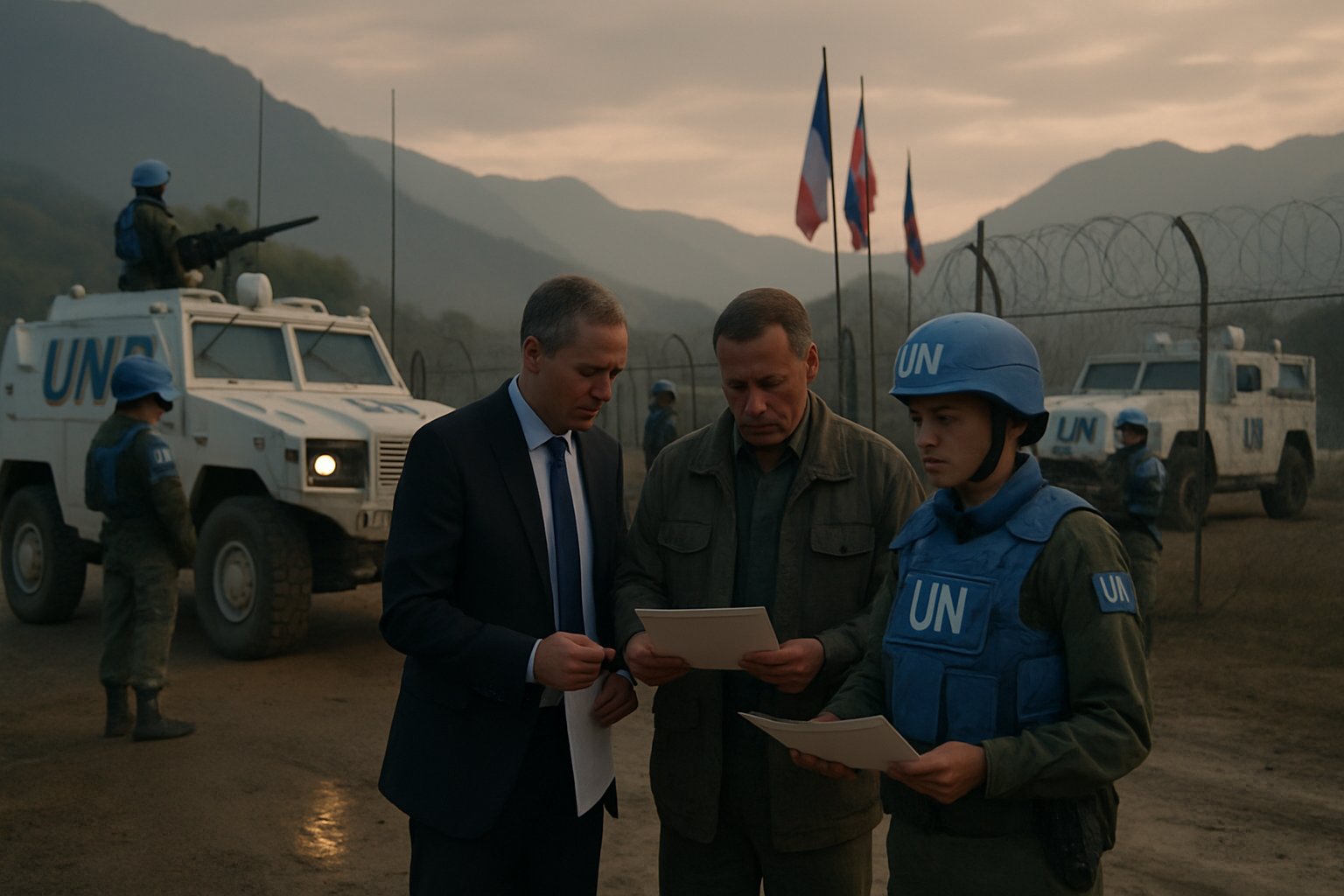
United Nations human rights experts have issued an urgent call for a lasting ceasefire between Afghanistan and Pakistan following a sharp escalation in cross-border violence that has resulted in at least 289 civilian casualties and displaced more than 115,000 people.
In a statement issued Tuesday, the UN experts warned that renewed hostilities since late February have devastated civilian populations along the disputed Durand Line, with extensive damage to homes, hospitals, markets, and displacement camps. The violence has also forced school closures and disrupted vital trade routes in affected regions.
Crisis Escalation and Ceasefire Collapse
The current crisis represents the most serious military confrontation between Afghanistan and Pakistan since the Taliban's return to power in 2021. The latest unrest follows the collapse of a ceasefire agreement reached in October 2025, with fighting reigniting after Pakistani airstrikes targeted positions linked to Tehreek-e-Taliban Pakistan (TTP) in response to cross-border attacks.
The escalation began on February 16, 2026, when a TTP vehicle-borne improvised explosive device attack in Bajaur killed 11 Pakistani soldiers. Pakistan responded on February 22 with airstrikes on seven alleged terrorist camps in Afghanistan's Nangarhar and Paktika provinces, claiming to have killed 80+ militants but also causing civilian casualties, including eight schoolchildren in the Behsud district.
"The situation has reached a critical point where innocent civilians are bearing the brunt of military operations designed to combat terrorism."
— UN Human Rights Expert
Devastating Humanitarian Impact
The UN Office for the Coordination of Humanitarian Affairs (OCHA) reports that 16,370 families have been newly displaced across 10 Afghan provinces, with Paktia accounting for 7,000 families, Kunar for 3,500, and Khost and Nangarhar each accounting for 2,500 families. The World Health Organization has been forced to deliver emergency medical oxygen to only 23 hospitals, while hundreds of health centers have closed due to security concerns.
The violence has particularly affected women and children, who constitute the majority of the documented casualties. The humanitarian crisis has been compounded by the collapse of bilateral trade, which has dropped by 59% over seven months, with Pakistani exports falling from $550 million to $228 million.
The Durand Line Dispute
At the heart of the conflict lies the disputed status of the 2,640-kilometer Durand Line, the colonial-era border established in 1893 that has never been formally recognized by any Afghan government. This porous mountainous frontier has long been viewed by Afghanistan as an artificial division of Pashtun tribal areas.
Pakistan maintains that the TTP operates "with impunity from Afghan soil," using the rugged terrain as sanctuaries for launching attacks across the border. The Taliban government categorically denies providing sanctuary to militant groups and insists that Afghanistan's territory is not being used to threaten neighboring countries.
International Mediation Efforts
Despite intensive diplomatic efforts by regional and international powers, mediation attempts have yielded limited success. Saudi Arabia facilitated a prisoner exchange in February 2026 that saw the release of three Pakistani soldiers, while Turkey, Iran, Russia, and China have all offered mediation services.
Chinese Foreign Minister Wang Yi has been particularly active, conducting telephone discussions with Pakistani officials and deploying special envoys to shuttle between Kabul and Islamabad. Iranian officials have warned of the regional destabilization risks, while Turkish Foreign Minister Hakan Fidan has launched comprehensive mediation initiatives involving Qatar and Saudi Arabia.
"We hope both sides maintain calm, conduct face-to-face talks as soon as possible, establish a ceasefire, and resolve disputes through dialogue."
— Chinese Foreign Minister Wang Yi
Religious and Cultural Diplomacy
A notable aspect of the mediation efforts has been the use of faith-based diplomacy, particularly during the Islamic holy month of Ramadan. Islamic scholars, including Ali al-Qaradaghi of the International Union of Muslim Scholars, issued fatwas calling for ceasefires between Muslim nations during the holy month.
This religious intervention culminated in a temporary ceasefire during Eid al-Fitr (March 18-23), achieved through Saudi-Qatar-Turkey coordination. However, the truce was immediately violated by continued artillery shelling, demonstrating the fragility of such arrangements without addressing underlying issues.
Nuclear Dimensions and Regional Security
The involvement of nuclear-armed Pakistan adds a dangerous dimension to the crisis, requiring careful international monitoring to prevent escalation beyond conventional operations. This represents the most serious confrontation involving a nuclear-armed state since the Taliban's return to power, testing the post-2021 South Asian security architecture.
The conflict has broader implications for regional stability, with China warning the UN about the presence of ISIS-K, al-Qaeda, and East Turkestan Islamic Movement (ETIM) militants in Afghanistan—claims that contradict Taliban assertions about defeating terrorism on their soil.
Economic Warfare and Trade Disruption
The crisis has had severe economic repercussions, with traditional trade routes through Chaman-Spin Boldak and Torkham facing repeated closures. This economic disruption compounds Afghanistan's existing humanitarian emergency, where 88% of female-headed households are unable to meet minimum living requirements.
Pakistan acknowledges that it has diminished influence in Afghanistan compared to wealthier powers such as Turkey, UAE, Qatar, Saudi Arabia, and China, which has pushed it toward military solutions rather than diplomatic engagement.
Civilian Protection Concerns
International human rights organizations have raised serious concerns about violations of international humanitarian law, particularly the targeting of civilian areas during Ramadan. The strikes on residential areas, educational institutions, and religious sites have drawn condemnation from multiple quarters.
Former Afghan President Hamid Karzai, who personally witnessed explosions in Kabul, described the attacks as creating "anarchy and weakness" in Afghanistan through destabilizing policies that harm both countries.
Path Forward and Diplomatic Solutions
Despite the military confrontation, Taliban officials have consistently maintained that "the path of talks remains open," seeking resolution through "mutual understanding and respect." Pakistan, however, indicates there is "no rush" to end its military campaign until concrete anti-militant measures are implemented.
The success or failure of diplomatic containment in this crisis will influence how the international community approaches similar challenges where territorial sovereignty intersects with transnational terrorism concerns. This conflict serves as a template for 21st-century conflict resolution mechanisms.
International Law and Accountability
The UN experts' call for a ceasefire comes amid growing concerns about potential violations of the Geneva Conventions, particularly regarding the protection of civilians during armed conflict. The targeting of medical facilities and civilian infrastructure during religious observances has heightened these concerns.
International observers emphasize that addressing the root causes of cross-border terrorism requires innovative diplomatic frameworks that balance legitimate security concerns with respect for territorial integrity and civilian protection.
Looking Ahead
The coming weeks will be critical in determining whether sustained international mediation can transform temporary truces into a durable peace framework. The crisis extends beyond bilateral relations, affecting global approaches to managing territorial disputes involving nuclear-armed neighbors and transnational terrorism.
Religious leaders from both countries have called for extending any temporary ceasefire until Eid al-Adha to foster "sustainable peace," providing a potential framework for continued dialogue. The effectiveness of this faith-based diplomacy approach could offer valuable lessons for conflict resolution in similar contexts worldwide.
The international community faces mounting pressure to develop effective conflict prevention mechanisms before this regional confrontation escalates further, with stakes that extend far beyond the immediate Afghanistan-Pakistan border to influence global security architecture and international conflict resolution approaches for decades to come.