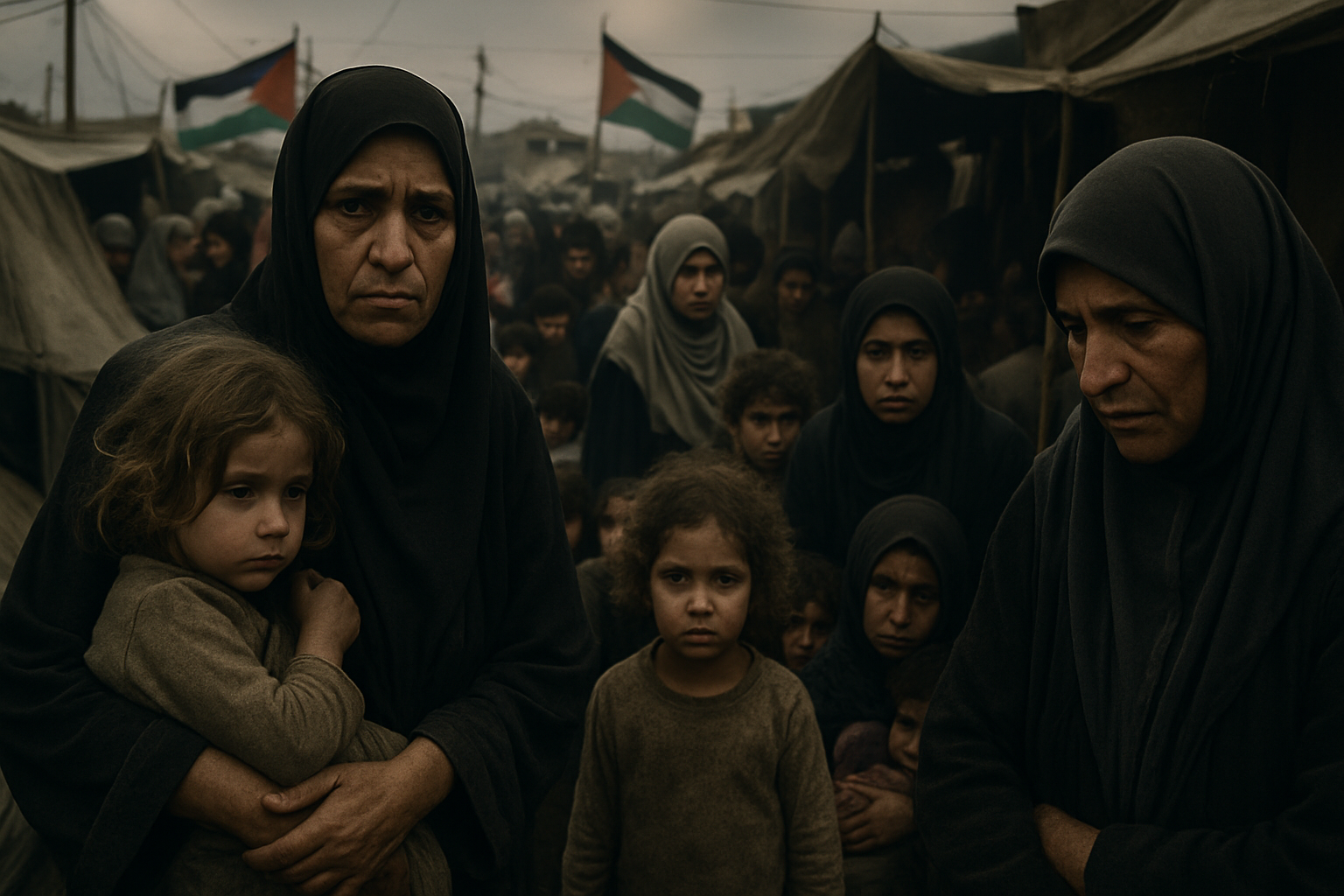
A devastating UN report published Friday revealed that Israeli attacks in Gaza have killed over 38,000 women and girls between October 2023 and the end of 2025, representing more than half of all conflict casualties and highlighting the catastrophic humanitarian toll of the ongoing war.
The analysis by UN Women showed that Palestinian health authorities estimate the total death toll by the end of 2025 reached just over 71,000, rising to more than 72,000 by mid-April 2026 as Israel continued sporadic attacks despite a ceasefire agreement with Hamas. The staggering figure means that women and girls accounted for over half of all victims during this period.
Speaking at a press briefing in Geneva, Sofia Kaltorpb, acting spokesperson for UN Women's humanitarian office, described the data as "the most horrifying ever recorded," emphasizing the unprecedented scale of female casualties in the conflict. The report calculated that an average of at least 47 women and girls were killed daily throughout the conflict period.
Systematic Pattern of Civilian Casualties
The UN findings align with broader documentation efforts that have tracked systematic violations since the October 2025 ceasefire agreement. International monitoring groups have documented over 1,600 ceasefire violations resulting in more than 680 Palestinian deaths during what was supposed to be a peace period.
According to medical sources in Gaza, the casualty figures represent a pattern that extends beyond isolated incidents. Dr. Mohamed Abu Selmiya, director of Al-Shifa Hospital, has repeatedly questioned "Where is the ceasefire?" as violations continue to mount.
"These figures represent the most horrifying data we have ever recorded. The systematic nature of casualties among women and girls reveals the devastating impact on Gaza's civilian population."
— Sofia Kaltorpb, UN Women Acting Spokesperson
Infrastructure Collapse Compounds Crisis
The humanitarian situation has been exacerbated by the complete collapse of Gaza's emergency services. The Gaza Civil Defense has been shut down due to fuel shortages, severely hampering rescue and emergency response operations. This has made accurate casualty counting even more challenging and likely contributed to underreporting of deaths.
The Rafah crossing, Gaza's primary access point for medical evacuations, has been severely restricted with only 27 people allowed to cross daily compared to the agreed quota of 200. Hamas officials have condemned what they describe as "systematic harassment" at the crossing, with 38 of 50 planned returnees denied passage in recent operations.
Health Ministry Director Zaher al-Wahidi reports that 6-10 critically ill patients die daily while awaiting medical evacuation, with over 20,000 Palestinians currently on waiting lists for treatment abroad. The ministry estimates that 1,400 patients out of 20,000 have died since Israeli forces occupied the Rafah crossing in May 2024.
International Response and Legal Implications
The UN Women report adds to mounting international concern over the conflict's civilian toll. A landmark study published in The Lancet Global Health in February 2026 found that the actual Gaza death toll was systematically undercounted by approximately 35%, suggesting that over 75,000 people may have been killed – representing 3-4% of Gaza's population.
The European Union, along with eight Arab nations including Saudi Arabia, Jordan, Egypt, and the UAE, has issued unprecedented joint condemnations of what they characterize as systematic violations of international law. Over 400 EU diplomats have petitioned for increased pressure on Israeli authorities, while European civil society groups have gathered over 400,000 signatures calling for suspension of EU-Israel partnerships.
International legal experts cite potential violations of UN Security Council resolutions and Geneva Conventions, particularly regarding the protection of civilians and the principle of distinction between combatants and non-combatants. The systematic nature of female casualties raises particular concerns under international humanitarian law.
Broader Regional Context
The Gaza casualties occur within a broader Middle Eastern crisis that has seen conflicts expand beyond Palestinian territories. The November 2024 US-French ceasefire between Israel and Hezbollah collapsed in March 2026, leading to over 1.2 million Lebanese displaced and systematic targeting of medical personnel, with 26 paramedics killed and 51 wounded since March.
The crisis has global implications, with over 18,000 flights cancelled worldwide – the most severe aviation disruption since COVID-19 – and oil prices rising above $100 per barrel for the first time since 2014. The International Energy Agency has implemented its largest strategic reserve release in 50 years to stabilize energy markets.
Humanitarian Aid and Reconstruction Efforts
Despite the ongoing violence, international reconstruction efforts continue. President Trump's Board of Peace initiative has secured $17 billion in pledges from 27 nations for Gaza reconstruction, representing the largest international commitment to Palestinian recovery in history. However, implementation faces severe obstacles due to continued violations and Hamas's rejection of disarmament demands.
The World Health Organization has launched a $30.3 million emergency appeal to support health systems across five Middle Eastern countries, warning that medical infrastructure is "under severe strain." The systematic targeting of healthcare facilities has prompted concerns about potential Geneva Convention violations.
Looking Forward
The UN Women report represents a watershed moment for international humanitarian law enforcement and civilian protection mechanisms in the 21st century. The scale of female casualties documented – over 38,000 women and girls – underscores the urgent need for enhanced international intervention to protect vulnerable populations.
UN Secretary-General António Guterres has characterized the current Middle Eastern crisis as "the greatest test of multilateral cooperation in the modern era," emphasizing the stakes for international governance credibility. The coming weeks are seen as crucial in determining whether diplomatic pressure can achieve meaningful ceasefire compliance or if military escalation will continue.
For the 2.3 million Palestinians in Gaza, the daily toll of casualties among women and girls represents not just statistics but the systematic destruction of families and communities. The international community faces a critical test of its commitment to protecting civilians and upholding humanitarian principles in an era of increasingly complex global conflicts.