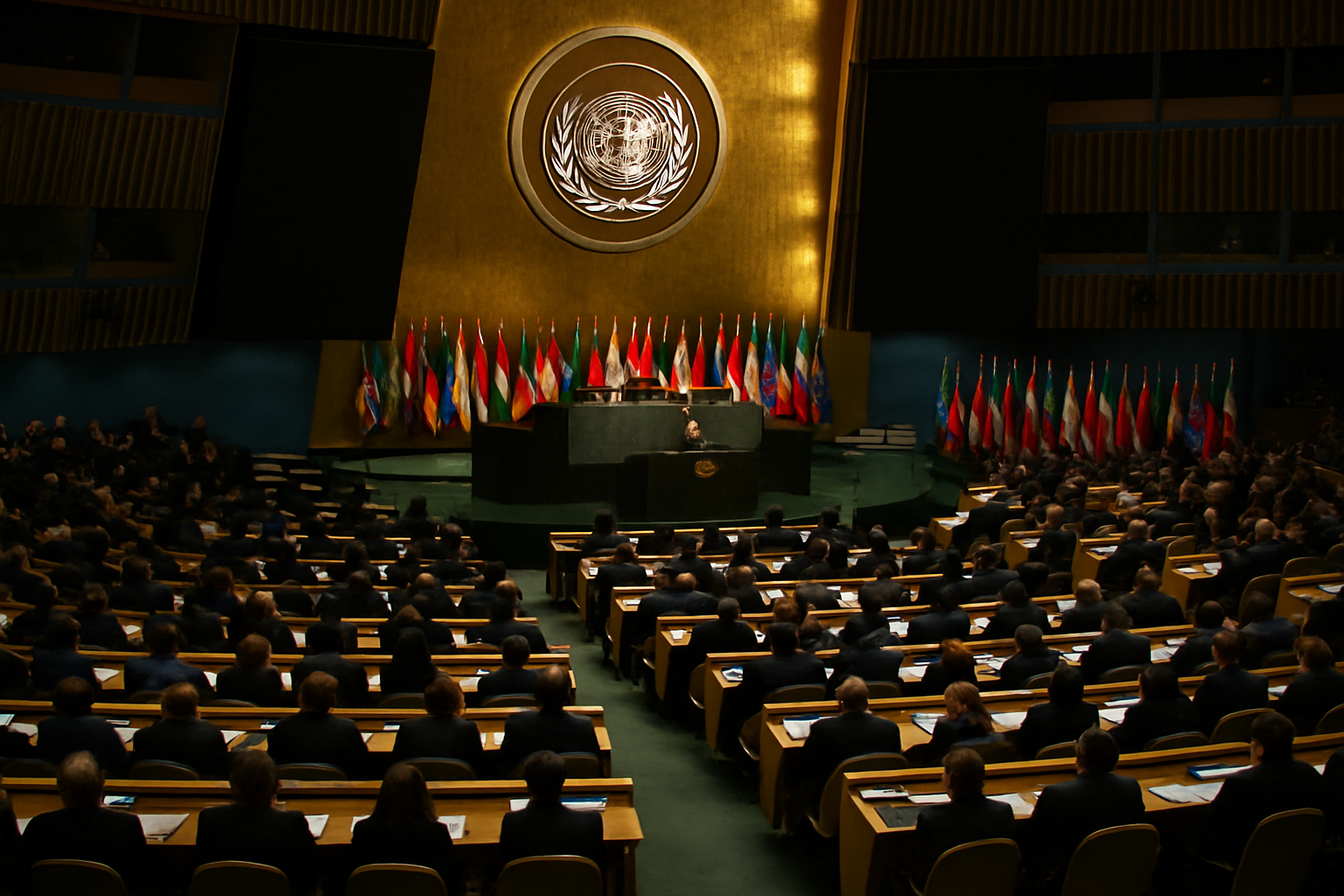
The United Nations General Assembly has adopted a significant resolution continuing organizational reforms while the international community faces unprecedented diplomatic challenges, including new leadership appointments and mounting global tensions that test multilateral cooperation at a critical juncture.
In a decisive move that signals the UN's commitment to evolution in an increasingly complex geopolitical landscape, member nations approved measures to improve implementation and review of organizational mandates, marking an important milestone within the UN80 Initiative framework. The resolution comes at a time when international diplomacy faces some of its most severe tests since the Cold War era.
UN Organizational Reform Advances
According to Portuguese news sources, the General Assembly resolution represents continuity in efforts to modernize the United Nations through enhanced implementation mechanisms and systematic mandate reviews. The UN80 Initiative, designed to position the organization for future challenges, has gained momentum as member states recognize the urgent need for institutional adaptation.
The reform measures focus on streamlining organizational processes while strengthening the UN's capacity to respond to contemporary global challenges. These changes come amid growing recognition that traditional diplomatic frameworks require updating to address 21st-century complexities including climate change, technological disruption, and evolving security threats.
Critical Leadership Transitions
Simultaneously, the international community is managing significant personnel changes within key UN agencies. Palestinian sources report that the United Nations has appointed Kristian Saunders as acting commissioner of UNRWA (United Nations Relief and Works Agency), replacing previous leadership during a critical period for Palestinian refugee services.
This appointment comes as UNRWA faces mounting challenges in delivering essential services to Palestinian refugees across the Middle East, particularly given ongoing regional tensions and funding pressures. The agency's role has become increasingly vital as humanitarian needs escalate across multiple conflict zones.
Caribbean Health Initiative Shows International Cooperation
Meanwhile, positive examples of international collaboration continue to emerge despite global tensions. The India UN Development Partnership Fund has achieved significant progress in supporting the Pan American Health Organization's efforts to eliminate mother-to-child transmission of HIV, syphilis, and hepatitis B across Caribbean nations.
One year after its launch, the initiative has facilitated the establishment of a Caribbean Community of Practice for Maternal and Child Health, enabling sustained knowledge exchange and technical collaboration. Three countries have applied for elimination certification, with one Caribbean nation already receiving preliminary approval, demonstrating the effectiveness of targeted multilateral health initiatives.
Diplomatic Tensions and International Law
However, the diplomatic landscape remains fraught with challenges that test international legal frameworks. Recent reports indicate the UN has firmly rejected any unilateral actions affecting Lebanese sovereignty, including the establishment of buffer zones, warning of serious consequences from continued military escalation in the region.
UN Deputy Spokesperson Farhan Haq emphasized the organization's position against unilateral measures that compromise state sovereignty, reflecting broader concerns about the erosion of international law principles. These warnings come amid a complex security situation that threatens both regional stability and global economic interests.
Testing Multilateral Cooperation
The current period represents what UN Secretary-General António Guterres has described as "the greatest test of multilateral cooperation in the modern era." The organization faces simultaneous challenges across multiple fronts: humanitarian crises requiring coordinated response, territorial sovereignty disputes demanding legal resolution, and economic disruptions affecting global supply chains.
These pressures have exposed both the strengths and limitations of current international frameworks. While initiatives like the Caribbean health program demonstrate successful multilateral action, broader geopolitical tensions reveal the fragility of diplomatic consensus-building in an increasingly polarized world.
Reform Implementation Challenges
The newly adopted UN reform resolution addresses these realities by strengthening implementation mechanisms and enhancing mandate review processes. However, the success of these reforms will depend on member states' willingness to embrace change while navigating their own domestic political pressures.
Experts note that organizational reform must balance efficiency improvements with inclusive representation, ensuring that smaller nations maintain meaningful participation while larger powers contribute proportionally to institutional capacity. This delicate balance becomes more complex as global power dynamics shift and new challenges emerge.
Future Diplomatic Architecture
As the UN80 Initiative progresses, its outcomes will significantly influence international relations for decades. The current reform efforts represent more than administrative adjustments; they constitute a fundamental reimagining of how the international community addresses shared challenges.
The test will be whether these institutional improvements can enhance the UN's effectiveness in preventing conflicts, coordinating humanitarian responses, and facilitating dialogue between adversarial nations. Early indicators, such as successful health initiatives and continued engagement with complex sovereignty issues, suggest cautious optimism for institutional evolution.
Looking Ahead
The convergence of organizational reform adoption, leadership transitions, and persistent diplomatic challenges creates both opportunity and uncertainty for international relations. The UN's ability to adapt its structures while maintaining core principles of sovereignty, cooperation, and peaceful conflict resolution will determine its relevance in addressing emerging global threats.
Success stories like the Caribbean health collaboration provide templates for effective multilateral action, while ongoing sovereignty disputes test the limits of international law enforcement. The balance between these dynamics will shape diplomatic practice for years to come.
As member nations implement the newly adopted reforms, the international community watches to see whether institutional innovation can strengthen multilateral cooperation at a time when such collaboration has never been more crucial to global stability and prosperity.