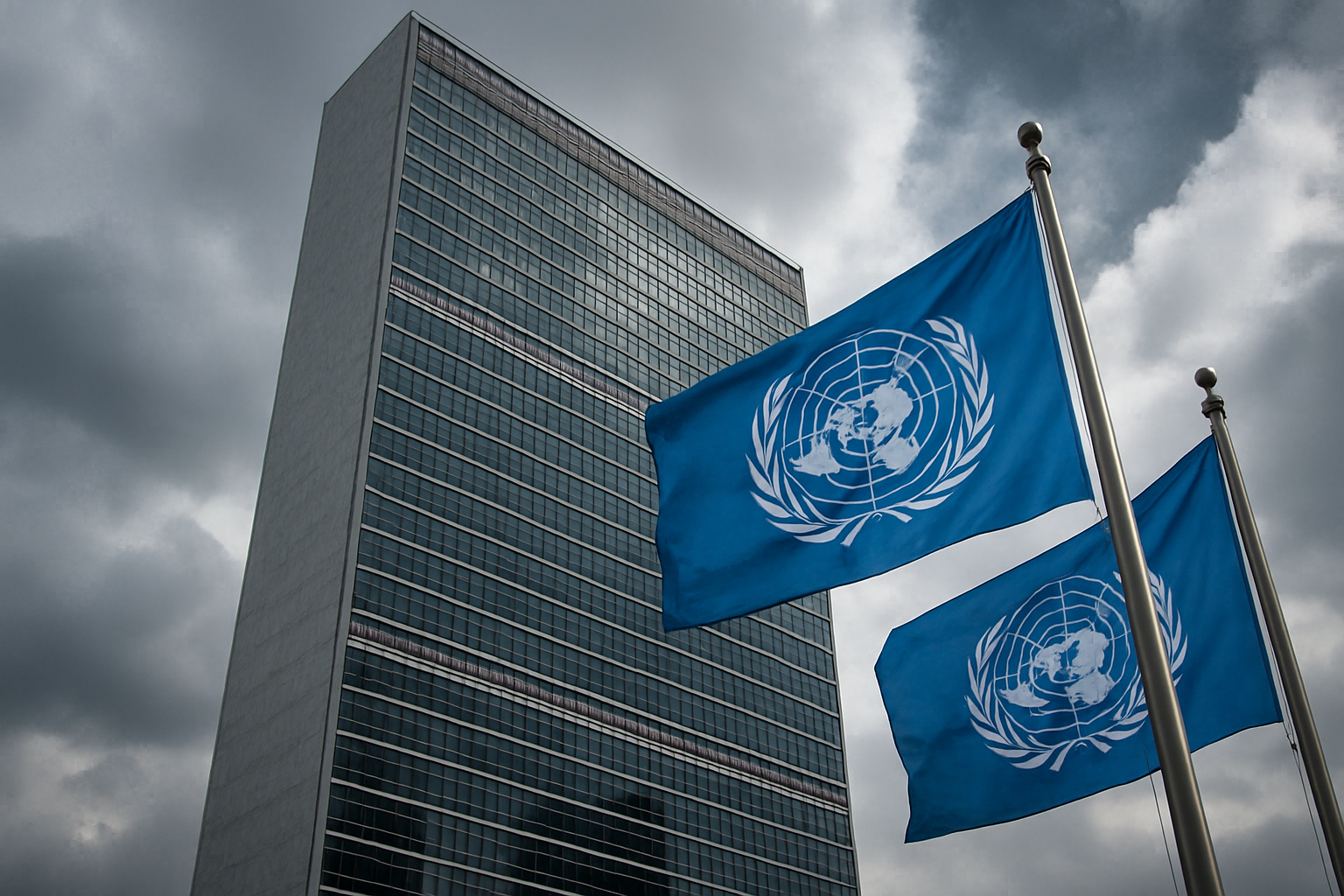
The United Nations has concluded that Russia's systematic deportation and forcible transfer of thousands of Ukrainian children constitutes crimes against humanity, representing one of the most comprehensive international legal determinations since the conflict began nearly four years ago.
The Independent International Commission of Inquiry on Ukraine, mandated by the UN, released findings on Tuesday that document what investigators describe as the "enforced disappearance of children" through Russia's deliberate failure to establish effective return mechanisms for the transferred minors.
Systematic Pattern of Deportation
According to the investigation, Russia has focused on the long-term placement of Ukrainian children with families or institutions within Russia while failing to inform relatives of their fate. The inquiry found that 80 percent of the deported children have not returned to Ukraine, with Moscow implementing what amounts to a systematic program of forced adoption and integration.
"The evidence gathered by the Commission indicates that Russian authorities committed crimes against humanity including deportation of children and forcible transfer, in addition to enforced disappearance," the UN report states. The findings represent the most authoritative international legal assessment of Russia's child transfer policies to date.
"Russia has failed to establish a system facilitating returns, focusing instead on long-term placement of the children with families or institutions in Russia while relatives were not informed of their fate."
— UN Commission of Inquiry Report
Scale and International Response
The deportation program affects thousands of Ukrainian children, according to multiple international sources. The systematic nature of the transfers, combined with Russia's documented failure to create return pathways, has prompted the strongest international condemnation since the conflict's early stages.
France 24 reported that Moscow's approach represents a deliberate strategy of permanent separation, with Russian authorities promoting long-term integration rather than temporary protection. Channel News Asia noted that the UN inquiry specifically highlighted Russia's responsibility for the "enforced disappearance of children," a designation that carries significant legal implications under international humanitarian law.
Legal Framework and Violations
The UN Commission's findings place Russia's actions within the framework of crimes against humanity as defined by the Rome Statute of the International Criminal Court. The systematic deportation of children, particularly when combined with efforts to permanently separate them from their families and culture, constitutes one of the most serious violations of international law.
The Moscow Times, reporting from within Russia, confirmed that the inquiry found Russian authorities had "failed to establish an effective system to facilitate the children's return and instead focused on placing them long-term with families or institutions in Russia." This acknowledgment from Russian media sources underscores the documented nature of the policy failures.
Historical Context and Pattern
The UN investigation occurs against the backdrop of extensive documentation of systematic targeting throughout the conflict. Previous memory archives reveal that Ukrainian First Lady Olena Zelenska had disclosed 684 children killed since Russia's full-scale invasion, highlighting the broader pattern of civilian casualties affecting minors.
The deportation findings add to a comprehensive record of documented violations, including systematic attacks on civilian infrastructure, energy facilities, and educational institutions. The pattern suggests coordinated policies rather than isolated incidents, strengthening the legal framework for accountability mechanisms.
International Law Implications
The Commission's determination carries significant weight for future legal proceedings and accountability measures. Crimes against humanity represent some of the most serious violations under international law, with implications for individual criminal responsibility and state accountability.
The documented failure to create return mechanisms while actively promoting permanent integration represents a violation of fundamental principles protecting children in armed conflict. The Geneva Conventions specifically require parties to facilitate the return of displaced children to their families and countries of origin.
Enforcement Challenges
Despite the clear legal determination, enforcement remains complicated by Russia's rejection of international legal jurisdiction and its status as a permanent UN Security Council member. The findings nevertheless establish a crucial legal record for future accountability proceedings and international justice mechanisms.
The investigation's conclusions also strengthen the foundation for existing International Criminal Court proceedings, which have already issued arrest warrants related to the child deportation program. The UN inquiry provides additional evidence and legal analysis supporting these criminal proceedings.
Humanitarian Implications
Beyond the legal framework, the UN findings highlight the profound humanitarian crisis affecting thousands of Ukrainian families. The systematic separation of children from their families represents not only a violation of international law but a devastating human tragedy with long-term psychological and social consequences.
International humanitarian organizations have consistently emphasized that children's rights must be protected during armed conflicts, with particular attention to maintaining family unity and cultural identity. The documented Russian policies appear to deliberately undermine these fundamental protections.
The investigation's findings also underscore the broader context of civilian targeting throughout the conflict. With documented attacks on schools, hospitals, and residential areas, the child deportation program fits within a pattern of policies affecting civilian populations in violation of international humanitarian law.
Path Forward
The UN Commission's determination provides a foundation for continued international pressure and accountability measures. The legal clarity regarding crimes against humanity status strengthens diplomatic efforts to address the humanitarian crisis and potentially facilitate return mechanisms for affected children.
International efforts to document and address these violations continue through multiple channels, including ongoing criminal proceedings, diplomatic initiatives, and humanitarian programs. The UN findings provide crucial legal and factual support for these comprehensive approaches to accountability and justice.
As the conflict approaches its fourth anniversary, the systematic documentation of violations such as the child deportation program establishes a comprehensive record that will be essential for post-conflict justice and reconciliation processes. The UN investigation represents a critical step in ensuring accountability for some of the most serious violations of international humanitarian law in recent decades.