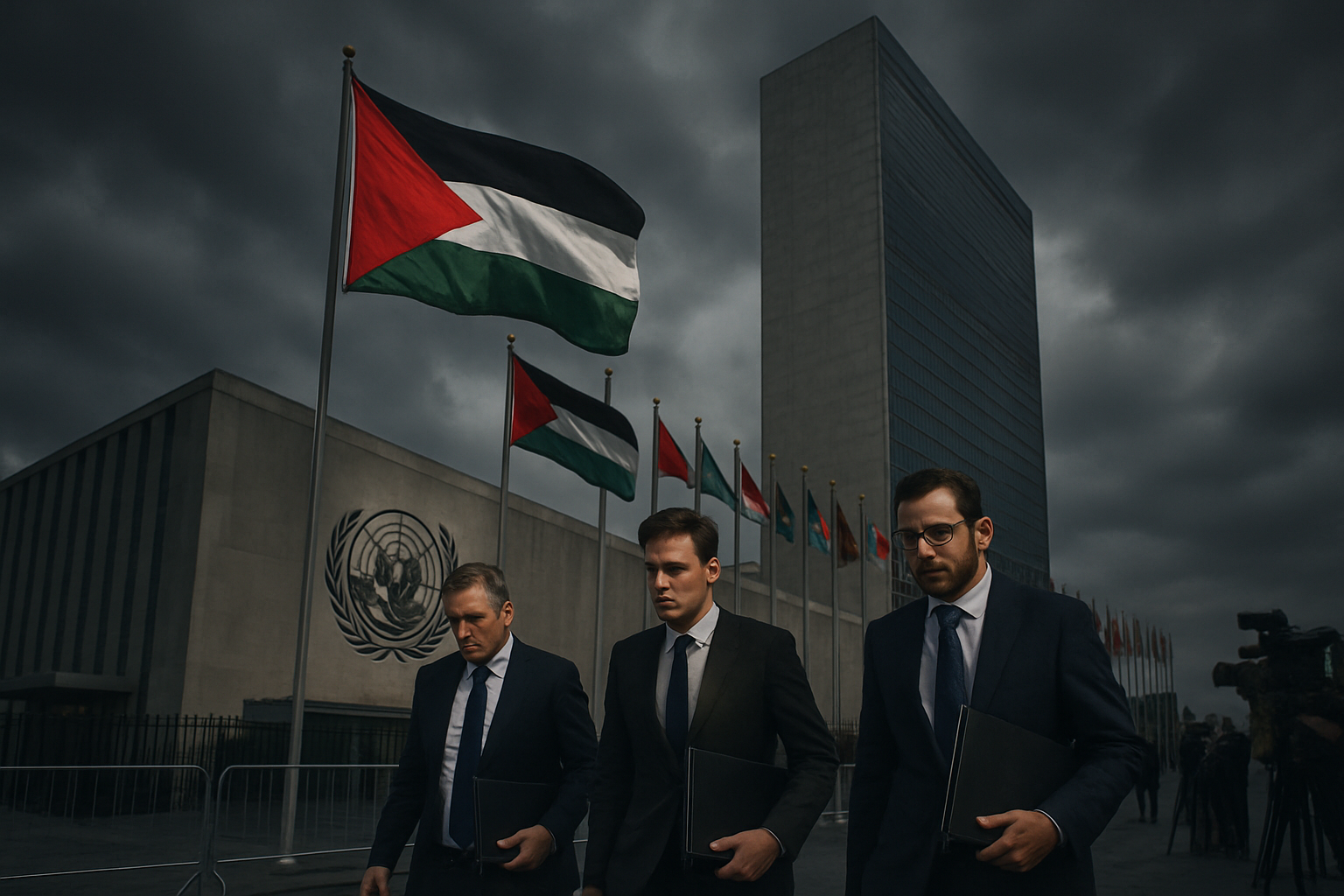
The United Nations human rights office has issued its most serious warning to date regarding the deteriorating humanitarian situation in Gaza and the West Bank, stating that Israeli actions appear to be creating conditions for potential ethnic cleansing while both Israeli forces and Hamas have committed atrocity crimes.
In a comprehensive report published Thursday, the UN Office of the High Commissioner for Human Rights declared that "intensified Israeli attacks and the forcible transfer of Palestinians appeared aimed at a permanent demographic shift in Gaza, raising concerns over ethnic cleansing." The unprecedented warning comes as international observers document systematic violations of international humanitarian law across occupied Palestinian territories.
Atrocity Crimes Documented by Both Sides
The UN report presents a damning assessment of conduct by all parties to the conflict. According to the findings, Israeli forces, Hamas, and other Palestinian armed groups have "committed serious violations of international humanitarian law in Gaza and carried out atrocity crimes."
The report specifically addresses Hamas's treatment of hostages, stating that "the holding and mistreatment of hostages by the Hamas Islamist militant group may amount to war crimes." However, the most serious allegations center on Israeli military operations and policies that the UN suggests constitute systematic violations aimed at demographic transformation.
The document describes how "intensified attacks, systematic destruction of entire neighborhoods, and the prevention of humanitarian aid appear aimed at achieving a permanent demographic change in Gaza." This language represents some of the strongest condemnation issued by the UN human rights office regarding Israeli actions in the occupied territories.
Israeli Rejection and International Response
Israel's permanent mission in Geneva dismissed the report's findings, issuing a statement that the UN human rights office had "lost its credibility." The Israeli mission accused the Office of the High Commissioner of engaging in "a vicious campaign of demonization and disinformation against the State of Israel."
"Office of the High Commissioner is engaged in a vicious campaign of demonization and disinformation against the State of Israel."
— Israeli Permanent Mission to the UN, Geneva
Hamas has not immediately responded to requests for comment regarding the allegations against the organization. The group has previously denied deliberately targeting civilians or committing war crimes, though international observers have documented violations by Palestinian armed groups.
Pattern of Systematic Violations
The UN report covers the period from November 2024 to October 2025 and documents what investigators describe as a pattern of systematic violations. The allegations include torture of Palestinian detainees and what the report characterizes as "hundreds of starvation deaths" - charges that Israel categorically denies.
According to multiple sources examined for this investigation, over 1,600 systematic ceasefire violations have been documented since the October 2025 truce agreement, resulting in more than 573 Palestinian deaths during what was supposed to be a peace period. The Gaza Government Media Office has recorded these violations as part of what it terms "systematic implementation failures" rather than isolated incidents.
The humanitarian situation has deteriorated dramatically, with Gaza's Civil Defense completely shut down due to fuel shortages and the Rafah crossing severely restricted to only 27 Palestinians crossing versus a 200-person daily quota. An estimated 20,000 Palestinians await medical evacuation that remains blocked by access restrictions.
West Bank Expansion and Demographic Engineering
The UN warning comes amid unprecedented Israeli expansion policies in the West Bank that international observers characterize as the most comprehensive attempt at territorial control since the 1967 occupation began. Israeli Finance Minister Bezalel Smotrich has explicitly stated these policies will "continue to kill the idea of a Palestinian state," while Energy Minister Eli Cohen acknowledged the measures constitute "factual sovereignty" implementation.
The Israeli government has approved the registration of "extensive" areas of West Bank land as "Israeli territory" for the first time since 1967, targeting hundreds of thousands of dunams with particular focus on the strategically vital Jordan Valley. These policies have drawn unprecedented international condemnation from 85 UN member states and prompted joint condemnation from eight Arab nations.
Legal Framework and International Law
International legal experts cite potential violations of UN Security Council resolutions and Geneva Conventions governing occupied territories. The systematic extension of Israeli civilian law and administration into occupied territory meets international legal definitions of annexation, regardless of formal declarations.
The measures effectively erode the Oslo Accords framework that has governed Israeli-Palestinian relations since the 1990s, with critics arguing the actions could make a two-state solution technically unfeasible through systematic demographic and geographic landscape alteration.
Unprecedented International Opposition
The scale of international condemnation has been extraordinary. Eight Arab and Muslim nations - Saudi Arabia, Jordan, Egypt, UAE, Qatar, Indonesia, Pakistan, and Turkey - issued a joint statement calling Israeli measures violations of international law "aimed at imposing unlawful Israeli sovereignty" that undermine the two-state solution.
European responses have been equally sharp. The European Union characterized Israeli actions as "a step in the wrong direction," emphasizing that annexation remains illegal under international law. Britain demanded Israel reverse the moves, warning that any "unilateral attempt to alter the geographic or demographic makeup of Palestine is wholly unacceptable."
UN Secretary-General António Guterres expressed "grave concern" about the measures, warning they threaten two-state solution viability through "dangerous escalation." Over 400 European Union diplomats have demanded increased pressure on Israeli authorities, while a European Left Coalition petition against EU-Israel partnerships has exceeded 400,000 signatures.
Gaza Humanitarian Crisis Deepens
The humanitarian situation in Gaza continues to deteriorate despite ceasefire agreements. Medical facilities face systematic challenges, with Doctors Without Borders suspending non-critical operations at Nasser Medical Complex in Khan Younis, citing security concerns about armed masked individuals in the hospital.
The environmental crisis has reached catastrophic proportions, with UNRWA collecting 5,000 tons of solid waste across the Gaza Strip. Local radio stations are attempting to return after a two-year hiatus, despite equipment shortages and intermittent attacks that highlight the fragility of civilian infrastructure.
Egypt has renewed calls for complete implementation of Phase 2 of ceasefire agreements, including international stability force deployment and Israeli withdrawal monitoring. However, fundamental disagreements over implementation sequences versus security arrangements continue to impede progress.
"Where is the ceasefire?"
— Dr. Mohamed Abu Selmiya, Al-Shifa Hospital Director
Trump Peace Initiative Under Threat
The deteriorating situation threatens the Trump administration's Board of Peace initiative, scheduled for February 19, 2026, at the Donald Trump Institute of Peace in Washington. The initiative aims to secure over $5 billion in Gaza reconstruction pledges from 27 member nations, with thousands of International Stabilization Force personnel committed.
However, ongoing violations and humanitarian crises create substantial obstacles for the "business approach" to conflict resolution that the Trump administration has promoted as an alternative to traditional UN frameworks. Hamas has categorically rejected disarmament demands through statements by leader Khaled Meshaal, maintaining that armed resistance remains justified "while occupation exists."
Regional and Global Implications
The UN warning about potential ethnic cleansing represents more than a regional crisis - it poses fundamental questions about international law enforcement and territorial sovereignty principles in the 21st century. The success or failure of international opposition to these policies will influence territorial sovereignty dispute resolution mechanisms globally and affect precedents for occupied territories worldwide.
Regional stability implications extend beyond immediate conflict zones. The systematic targeting of civilian infrastructure during winter months, described by critics as "energy terrorism," has created humanitarian pressure affecting millions of civilians and requiring massive international coordination for restoration and protection.
The Organization of Islamic Cooperation has condemned what it terms "continuing massacres," while regional diplomatic coordination through Egypt-Palestine meetings continues despite fundamental disagreements over ceasefire compliance mechanisms.
Legal and Moral Accountability
The UN report's language regarding ethnic cleansing represents a significant escalation in international legal terminology. Under international law, ethnic cleansing refers to the systematic removal of particular ethnic groups from specific geographic areas, typically through violence, intimidation, or forced deportation aimed at creating ethnically homogeneous territories.
The report's assertion that Israeli actions appear "aimed at a permanent demographic shift" suggests UN investigators believe there is intentionality behind policies that result in Palestinian displacement and Israeli territorial control expansion. This represents one of the most serious charges that can be leveled under international humanitarian law, short of genocide accusations.
Medical neutrality has been severely compromised, with healthcare facilities facing systematic attacks and restrictions that violate Geneva Conventions protections for medical facilities and personnel. The targeting of emergency services and repair personnel prevents infrastructure restoration and compounds civilian suffering.
Conclusion: Critical Test for International Order
The UN warning about potential ethnic cleansing in Gaza and the West Bank represents a watershed moment for international humanitarian law and the global order's capacity to prevent and respond to systematic violations of human rights. The convergence of documented atrocity crimes, forced displacement, territorial expansion, and humanitarian crisis creates what observers describe as the most serious challenge to Palestinian statehood and regional stability in decades.
The international community faces a critical test of its commitment to preventing ethnic cleansing and enforcing international law. The unprecedented scale of diplomatic opposition, involving 85 UN member states and coordinated responses across traditional geopolitical divisions, demonstrates the gravity with which the international community views current developments.
As diplomatic initiatives struggle against the reality of ongoing violations and systematic policies, the coming weeks will determine whether international pressure can achieve policy reversals or whether the situation will deteriorate further, making viable Palestinian statehood technically unfeasible through demographic and geographic transformation.
The stakes extend far beyond the immediate conflict, touching fundamental questions about the future of international cooperation, conflict resolution mechanisms, and the enforcement of territorial sovereignty principles in an increasingly multipolar world. The world is watching to see whether the international system can respond effectively to prevent what the UN warns could constitute ethnic cleansing in the 21st century.