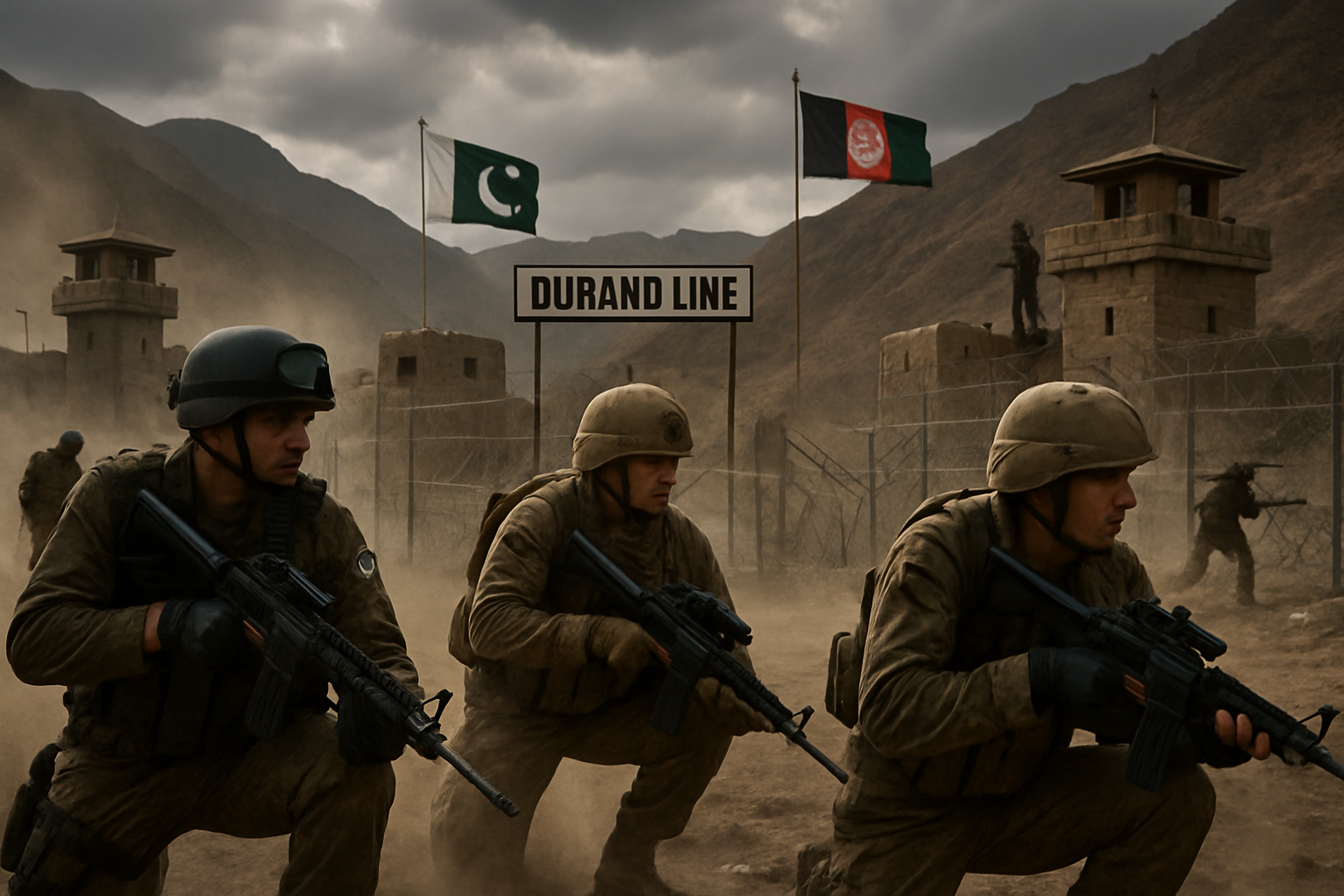
Violent clashes between Afghan Taliban forces and Pakistani military have escalated dramatically along the disputed Durand Line, with the United Nations Assistance Mission in Afghanistan (UNAMA) reporting at least 146 civilian casualties since February 26, including women and children killed in cross-border attacks.
The crisis represents the most serious military confrontation between the neighboring countries since the Taliban's return to power in August 2021, threatening regional stability and prompting urgent international intervention efforts.
Civilian Casualties Mount as Fighting Intensifies
UNAMA confirmed that from February 26 to March 2, 2026, at least 146 civilians have been killed or wounded across Afghanistan, with 42 deaths and 104 injuries documented among women and children. The casualties resulted from indirect fire, airstrikes, and artillery attacks targeting residential areas in multiple Afghan provinces.
In the latest incidents reported on March 3, four civilians including a woman and child were killed in Pakistani attacks on the districts of Zazi Maidan and Alisher in Khost province, with 16 others wounded. The strikes also destroyed dozens of houses and killed livestock, causing significant financial losses to local communities.
"The attacks also destroyed dozens of houses and killed a large number of livestock, as a result of which local residents have faced significant financial and human losses."
— Ariana News, citing local sources
Military Escalation Reaches Unprecedented Levels
The Afghanistan Ministry of Defense reported 25 separate clashes with Pakistani forces in a single 24-hour period, marking the most intensive fighting since the crisis began. Taliban spokesman Enayatullah Khowarzmi claimed Afghan forces have inflicted 150 Pakistani fatalities and wounded over 200 soldiers since operations commenced, while capturing 40 military posts.
Pakistani sources dispute these figures but acknowledge significant military engagement. According to Japan Today, Pakistan claims to have killed 67 Afghan security force members in what has become the fifth consecutive day of fighting.
The Taliban defense spokesperson detailed extensive military operations involving multiple corps, stating: "War has never been our first option, but anyone who sets eyes on Afghan soil with ill intent has been met with a firm response." He emphasized that Afghanistan would not allow its territory to be used for aggression against other nations.
International Community Calls for Immediate Ceasefire
UNAMA has issued urgent appeals for all parties to end hostilities immediately, warning that the ongoing clashes are exacerbating Afghanistan's already dire humanitarian situation. The mission called on both sides to uphold their obligations under international law and prioritize civilian protection.
The crisis has disrupted humanitarian aid delivery and caused growing displacement among border communities. Traditional trade routes through Chaman-Spin Boldak and Torkham have faced repeated closures, affecting thousands dependent on cross-border commerce.
Historical Context of Border Disputes
The current crisis stems from long-standing disputes over the Durand Line, the 2,640-kilometer colonial-era border established in 1893 that has never been formally recognized by Afghan governments. The porous mountainous terrain has long provided sanctuary for militant groups, complicating bilateral relations.
The immediate trigger for the current escalation was a February 16 attack in Pakistan's Bajaur district that killed 11 Pakistani soldiers, attributed to the Tehreek-e-Taliban Pakistan (TTP). Pakistan responded with airstrikes on February 22, targeting what it described as terrorist camps in Afghanistan's Nangarhar and Paktika provinces.
These retaliatory strikes, which Pakistan claimed killed over 80 militants, also resulted in civilian casualties including eight schoolchildren, prompting Taliban threats of "measured and appropriate response."
Economic Impact and Humanitarian Crisis
The conflict has caused severe economic disruption, with bilateral trade collapsing by 59% as Pakistan's exports to Afghanistan dropped from $550 million to $228 million over seven months. This economic devastation compounds Afghanistan's humanitarian crisis, where 88% of female-headed households are unable to meet minimum living requirements according to UN data.
The World Health Organization has delivered emergency medical oxygen to 23 hospitals across Afghanistan as medical facilities struggle to cope with the influx of casualties and ongoing healthcare challenges.
Regional Security Implications
The crisis tests the Taliban's governance capabilities and Pakistan's regional security strategy. Pakistan has acknowledged its diminished influence in Afghanistan compared to wealthier regional powers including Turkey, UAE, Qatar, Saudi Arabia, and China, potentially increasing reliance on military solutions.
Chinese officials have previously warned the UN Security Council about the presence of ISIS-K, al-Qaeda, and other terrorist groups in Afghanistan, contradicting Taliban claims of having defeated terrorism within their borders.
Mediation Efforts Show Limited Success
Despite various mediation attempts, including Saudi-facilitated prisoner exchanges in February 2026 that saw the release of three Pakistani soldiers captured during October 2025 border clashes, diplomatic solutions have proven insufficient to address underlying security challenges.
Iran has offered mediation services, warning that escalation could affect the broader region, while Turkish officials have initiated contact with both sides. However, the fundamental disagreements over border security, territorial sovereignty, and militant group control remain unresolved.
Looking Forward: Critical Juncture for Regional Stability
The current crisis represents a critical test of 21st-century conflict resolution mechanisms in South Asia. Success in de-escalating tensions could provide a template for managing territorial sovereignty disputes intersecting with transnational terrorism concerns.
However, failure to contain the violence risks broader regional confrontation between nuclear-armed neighbors, with implications extending far beyond bilateral relations to affect global security architecture and international law enforcement.
As UNAMA continues documenting civilian casualties and humanitarian agencies report growing displacement, the international community faces mounting pressure to develop effective conflict prevention mechanisms before the crisis escalates further. The coming days will be decisive in determining whether diplomatic engagement can overcome military escalation and prevent a broader regional conflagration.