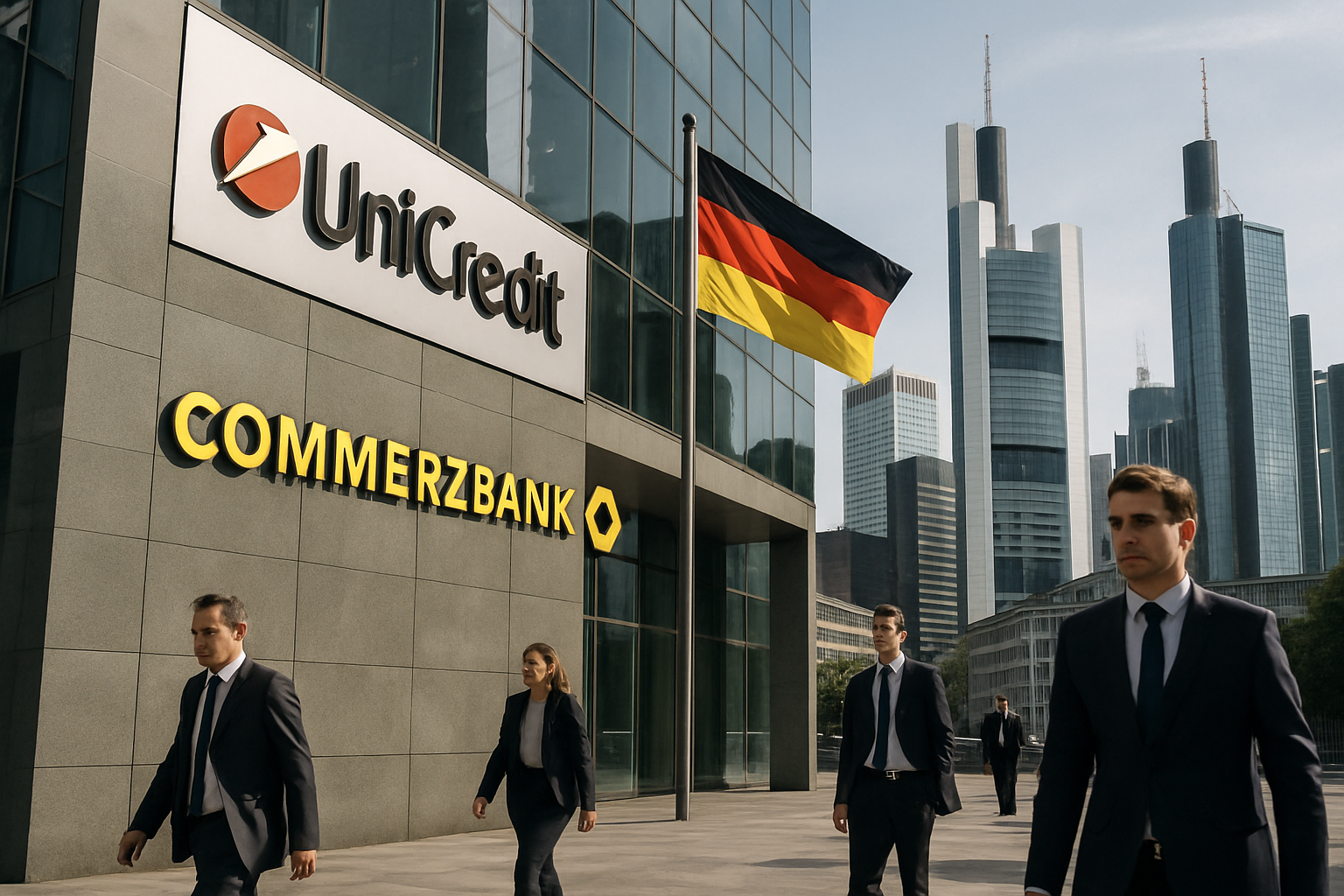
UniCredit, Italy's largest bank, has formally submitted an official takeover bid for Germany's Commerzbank, marking one of the most significant cross-border banking acquisitions in recent European financial history. The move comes as the Italian institution already holds the largest stake in the German lender, positioning itself for a complete acquisition despite resistance from Commerzbank's management.
The official announcement, confirmed by multiple sources including Germany's FAZ.NET, represents the culmination of months of strategic positioning by UniCredit under CEO Andrea Orcel. The Italian banking giant has been steadily building its position in Commerzbank, becoming the institution's largest shareholder before launching this formal takeover attempt.
Strategic Positioning and Market Response
UniCredit's bid has triggered immediate market reactions, with Commerzbank's stock price experiencing significant volatility following the announcement. The German bank's shares surged on speculation about the premium UniCredit might offer, while investors weighed the potential benefits against regulatory and integration risks.
However, Commerzbank's leadership has made clear their opposition to the takeover attempt. The German bank's management stated they see "no basis for discussions" with UniCredit, setting the stage for what could become a protracted hostile takeover battle. This resistance reflects broader concerns within Germany's banking sector about foreign control of major domestic financial institutions.
"The Italian bank is already the largest shareholder of Commerzbank. Now it is presenting an offer for the entire German banking house."
— FAZ.NET Financial Report
European Banking Consolidation Context
This takeover bid occurs within a broader wave of consolidation sweeping through European banking, as institutions seek scale and efficiency in an increasingly competitive and regulated environment. The move follows other major banking sector developments across the continent, where institutions are pursuing strategic combinations to strengthen their market positions.
The acquisition attempt represents a significant test case for cross-border banking integration within the European Union. Success would create one of Europe's largest banking groups with substantial operations across Italy and Germany, two of the eurozone's most important economies.
Industry analysts note that the banking sector has been under pressure to consolidate, driven by low interest rates, increasing regulatory costs, and the need for digital transformation investments. UniCredit's move reflects CEO Andrea Orcel's aggressive strategy to expand the bank's European footprint through strategic acquisitions.
Regulatory and Political Implications
The proposed takeover will face intense scrutiny from both German and European regulators. German financial authorities and politicians have historically been protective of the country's banking sector, viewing major institutions as strategic national assets. The acquisition would need approval from multiple regulatory bodies, including the European Central Bank and Germany's Federal Financial Supervisory Authority (BaFin).
Political considerations add another layer of complexity to the deal. German policymakers may resist foreign control of Commerzbank, which plays a crucial role in financing German businesses, particularly in the crucial Mittelstand sector of medium-sized enterprises that forms the backbone of Germany's export economy.
The timing of the bid is particularly significant, occurring amid broader discussions about European financial sovereignty and the need for stronger European champions in global banking. While European Union principles support cross-border consolidation, national interests often complicate such transactions.
Financial and Operational Synergies
UniCredit's pursuit of Commerzbank is driven by significant potential synergies between the two institutions. The combination would create substantial cost savings through operational efficiencies, technology integration, and elimination of duplicate functions. The merged entity would benefit from enhanced scale in both retail and corporate banking markets.
Commerzbank's strong position in German corporate banking complements UniCredit's Italian operations and growing presence in Central and Eastern European markets. The acquisition would provide UniCredit with deeper access to Germany's robust industrial economy while offering Commerzbank customers expanded international banking services.
However, integration challenges would be substantial. Combining two large banking institutions across different regulatory environments and corporate cultures presents significant risks. Previous cross-border banking mergers in Europe have faced difficulties achieving projected synergies while managing operational disruptions.
Market Competition and Industry Response
The takeover bid intensifies competition within European banking, where institutions are competing for market share amid challenging operating conditions. UniCredit's aggressive expansion strategy contrasts with more conservative approaches adopted by some competitors who prefer organic growth or smaller, strategic acquisitions.
Other major European banks are closely monitoring the situation, as success could trigger additional consolidation activities across the continent. The outcome may influence whether cross-border banking mergers become more common or whether national resistance continues to limit such transactions.
German banking sector reactions have been mixed, with some viewing the potential acquisition as bringing needed capital and expertise while others worry about foreign control of strategic financial infrastructure. The German government's response will likely set important precedents for future cross-border banking transactions.
Future Implications for European Banking
The UniCredit-Commerzbank takeover attempt represents a crucial test for European banking integration. Success would demonstrate that cross-border banking consolidation remains viable despite political and regulatory challenges, potentially encouraging similar transactions across the continent.
Failure, however, could reinforce national barriers to banking consolidation, maintaining the fragmented structure that many analysts believe weakens European banks compared to their American and Asian competitors. The outcome will influence whether Europe can develop the banking champions many believe are necessary for global competitiveness.
The transaction also tests the resilience of European Union principles promoting cross-border business integration against national interests in maintaining control over strategic financial institutions. The result will have implications beyond banking for other sectors where cross-border consolidation faces similar tensions.
As the takeover bid proceeds, market participants, regulators, and policymakers across Europe will be watching closely. The outcome will help define the future structure of European banking and the balance between integration and national sovereignty in the continent's financial sector.