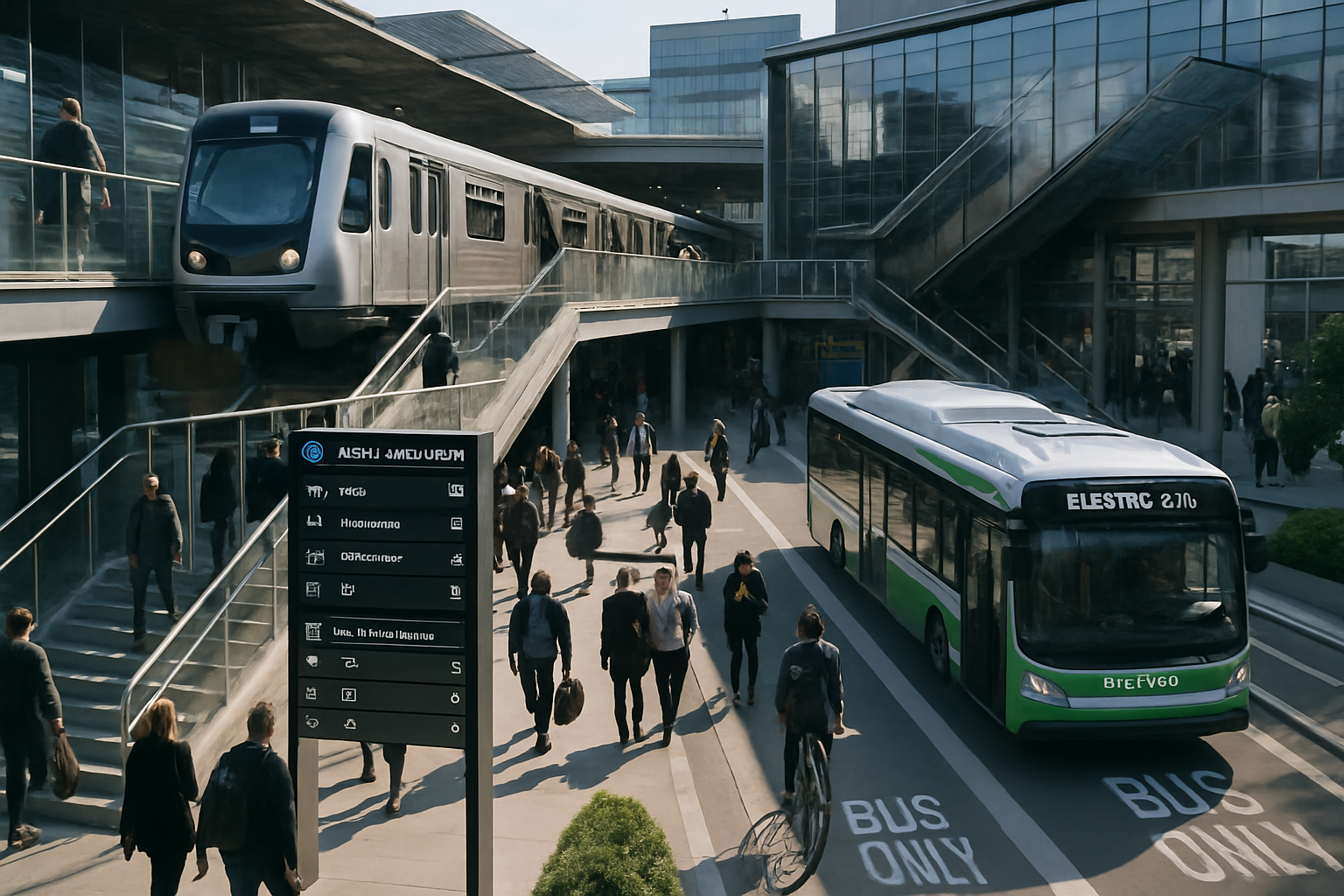
Urban transportation systems across Europe are undergoing dramatic transformations as major cities grapple with infrastructure modernization, service optimization, and evolving commuter needs in an era of rapid urban development and changing mobility patterns.
From Vienna's historic rail closure to Helsinki's controversial route eliminations, metropolitan areas are implementing bold infrastructure decisions that will reshape urban mobility for decades to come. These changes reflect a broader global movement toward sustainable, efficient transportation networks capable of serving modern urban populations while addressing climate adaptation and technological integration challenges.
Vienna Faces Historic Transportation Disruption
Vienna commuters are confronting one of the most significant public transport disruptions in the Austrian capital's recent history. Starting September 7, 2026, the S-Bahn mainline between Praterstern and Hauptbahnhof will be completely closed for over 14 months, forcing thousands of daily passengers to seek alternative routes.
The closure affects the core of Vienna's suburban rail network, a critical artery that connects the city center with surrounding districts and neighboring regions. Austrian Federal Railways (ÖBB) and Vienna Public Transport (Wiener Linien) have coordinated an extensive alternative service plan, significantly strengthening bus and tram connections to accommodate displaced passengers.
This infrastructure investment represents part of a broader European trend toward comprehensive rail modernization. The lengthy closure period allows for complete track renewal, signal system upgrades, and station accessibility improvements that would be impossible under normal operating conditions.
"This represents the largest rail infrastructure intervention in Vienna in decades, but the long-term benefits for passengers will be transformative."
— ÖBB Infrastructure Spokesperson
Helsinki's Controversial Transit Restructuring
In Finland's capital, the Helsinki Regional Transport Authority (HSL) has made the contentious decision to eliminate two major trunk bus lines serving South Helsinki, effectively ending comprehensive public transport coverage in the city's southernmost districts.
Local residents' associations have responded with alarm, arguing that the restructuring will leave neighborhoods effectively cut off from the public transport network. The changes force residents to rely exclusively on tram services, despite longer walking distances to tram stops compared to the eliminated bus routes.
HSL's decision reflects growing tensions in urban planning between service efficiency and universal accessibility. The authority argues that concentrating resources on high-capacity tram lines provides better overall service, while critics contend that this approach abandons transit equity principles that ensure all neighborhoods receive adequate public transport access.
The controversy illustrates broader challenges facing transit authorities worldwide: balancing operational efficiency with social equity while managing limited public resources in an era of increasing urbanization pressure.
Warsaw's Ambitious 15-Year Rail Vision
Poland's capital is pursuing one of Europe's most ambitious rail infrastructure expansion programs. Warsaw's comprehensive 15-year railway development plan focuses on increasing capacity and separating regional passenger traffic from long-distance services—a critical need as the metropolitan area continues rapid growth.
The project targets railway approaches from four major directions: Legionowo to the north, Piaseczno to the south, Tłuszcz to the east, and Mińsk Mazowiecki to the southeast. These corridors currently experience severe congestion as regional commuter trains share tracks with intercity and freight services.
Conceptual planning work is nearing completion, with implementation expected to transform Warsaw into a truly integrated metropolitan rail hub. The separation of traffic types will enable more frequent regional services while improving reliability for long-distance connections across Poland and Central Europe.
Warsaw's approach reflects sophisticated understanding of metropolitan transportation needs, recognizing that successful urban regions require seamless integration between local, regional, and national transport networks.
Global Context: Infrastructure Investment Surge
These European developments occur within an unprecedented global infrastructure investment surge exceeding $570 billion in 2026. From Vietnam's $120 billion expressway commitment to Mexico's completion of the El Insurgente train, nations worldwide are prioritizing transportation infrastructure as foundation for economic competitiveness and climate resilience.
The investment wave encompasses diverse projects: Croatia's Zagreb green corridor integrating sustainable tram technology, Uganda's historic $641 million financing for comprehensive infrastructure development, and Saudi Arabia's groundbreaking electric high-speed railway agreement with Qatar spanning 785 kilometers.
Technology integration has become central to modern transportation planning. Projects now routinely incorporate smart traffic management, real-time passenger information, integrated payment systems, and environmental monitoring from the design phase, enabling system adaptation and optimization throughout operational lifecycles.
Climate Adaptation and Resilience Challenges
Transportation infrastructure faces increasing pressure from climate change impacts. Recent extreme weather across Europe—including Storm Kristin, Leonardo, and Marta—has exposed vulnerabilities in traditional infrastructure design assumptions.
Portugal's transportation network suffered extensive damage during February 2026's flooding crisis, with the A1 highway viaduct collapse near Coimbra and prolonged railway service suspensions demonstrating the urgent need for climate-resilient infrastructure design.
Modern transportation projects increasingly incorporate climate adaptation measures: elevated structures in flood-prone areas, enhanced drainage systems, temperature-resistant materials, and redundant routing options to maintain service during extreme weather events.
"Infrastructure designed for 20th-century climate conditions is inadequate for 21st-century climate realities. We must build adaptive systems that remain functional under changing environmental conditions."
— European Transportation Climate Adaptation Expert
Financing Innovation and International Cooperation
Contemporary transportation projects demonstrate increasingly sophisticated financing mechanisms combining public resources, private investment, international development funding, and innovative financial instruments.
The success of projects like Uganda's Standard Chartered Bank partnership ($641 million for three major infrastructure initiatives) illustrates how developing nations access international capital markets for transformative infrastructure development. Similarly, Croatia's Zagreb green corridor benefits from EU structural funds specifically targeting climate-conscious transportation initiatives.
Regional integration has become a driving force behind infrastructure investment. Projects support broader economic integration objectives through the African Continental Free Trade Area (AfCFTA), European single market development, and South American bioceanic corridor initiatives that view transportation as fundamental to continental prosperity.
Technology and Smart Infrastructure Integration
Modern transportation systems increasingly leverage artificial intelligence, Internet of Things sensors, and advanced analytics to optimize operations, predict maintenance needs, and enhance passenger experience.
Estonia's remarkable federal digitization achievement—89.8% success across 295.8 billion rubles in investment—provides a template for integrating digital systems with physical infrastructure. Smart transportation networks enable dynamic routing, demand-responsive services, and seamless multimodal journey planning.
However, rapid technological advancement also creates challenges. The global semiconductor shortage and memory crisis affecting Samsung, SK Hynix, and Micron have significantly increased transportation technology costs while extending implementation timelines.
Social Equity and Community Engagement
Transportation infrastructure decisions increasingly face scrutiny regarding social equity impacts. Helsinki's bus route eliminations exemplify tensions between operational efficiency and community access, while Vienna's extensive alternative service planning demonstrates commitment to maintaining mobility during infrastructure disruption.
Successful projects prioritize meaningful community engagement throughout planning and implementation phases. Croatia's Zagreb green corridor included extensive resident consultation, while Antigua and Barbuda's Union Road repairs responded directly to community infrastructure damage reports.
The evolution toward community-centered transportation planning reflects growing recognition that infrastructure serves social cohesion and economic opportunity, requiring design approaches that enhance rather than diminish community connectivity.
Economic Multiplier Effects and Development Strategy
Transportation infrastructure generates significant economic multiplier effects extending far beyond immediate construction employment. Enhanced connectivity enables business development, tourism growth, labor market integration, and supply chain efficiency improvements that drive long-term economic development.
Paraguay's historic Commuter Train investment ($450 million with UAE partnership) exemplifies how transportation projects catalyze broader economic transformation. The revival of Don Carlos Antonio López's 1861 railway vision after 160 years demonstrates the enduring economic development potential of strategic transportation infrastructure.
Modern infrastructure investment strategies recognize transportation as foundational to 21st-century economic competitiveness, climate resilience, and regional integration rather than simply physical assets connecting geographic points.
Future Implications and Strategic Directions
The current transportation infrastructure transformation represents a fundamental shift toward adaptive, integrated, and technologically sophisticated systems capable of serving evolving urban mobility needs while supporting broader economic and environmental objectives.
Success depends on coordinated approaches that balance immediate operational needs with long-term strategic vision, incorporate climate resilience from initial design phases, and maintain community accessibility throughout transformation processes.
As cities continue growing and climate pressures intensify, the transportation infrastructure decisions made in 2026 will determine urban mobility patterns and economic development opportunities for decades to come. The ability to create adaptive, resilient, and equitable transportation systems has become fundamental to urban prosperity in the climate change era.