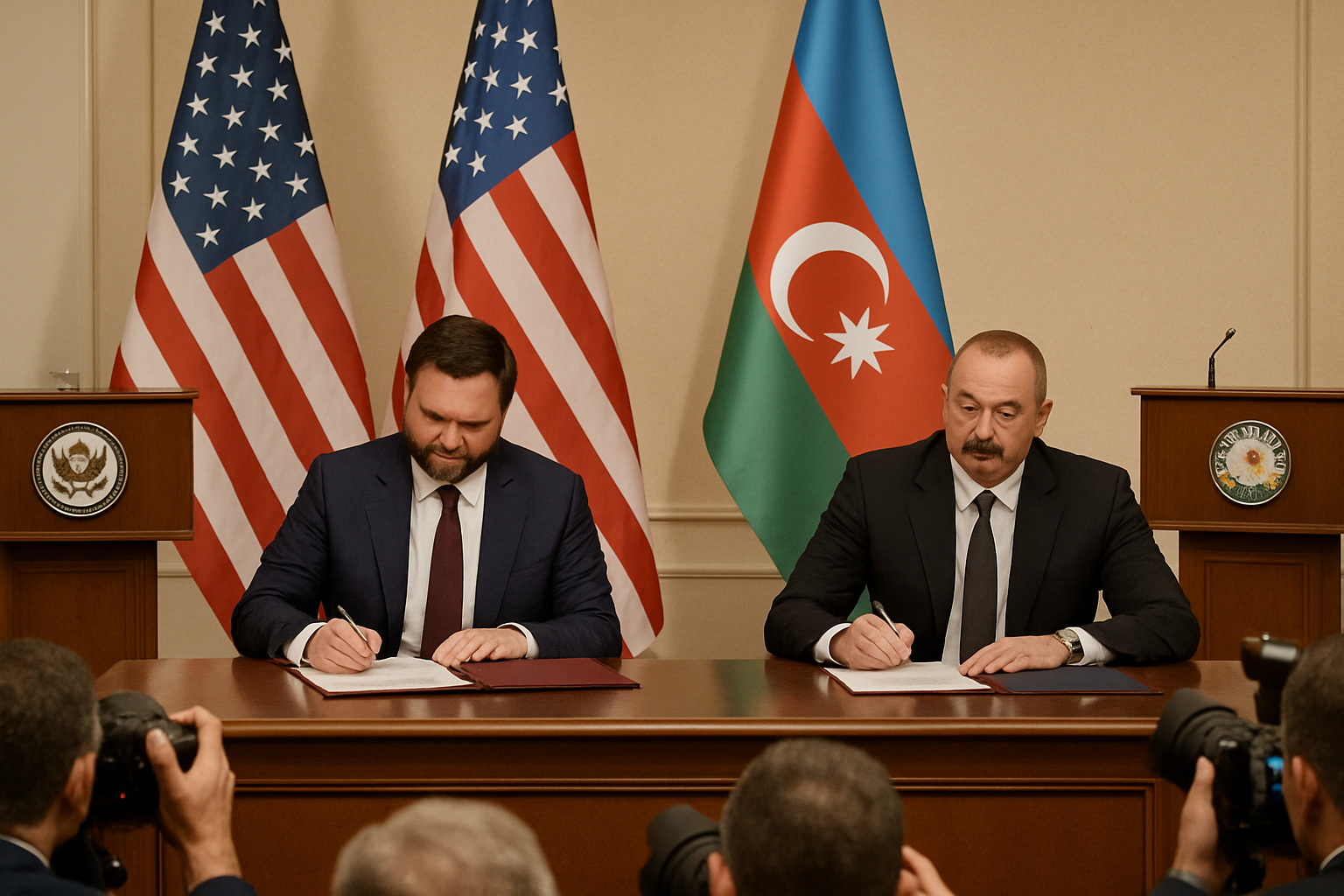
US Vice President JD Vance and Azerbaijani President Ilham Aliyev signed a landmark Strategic Partnership Charter in Baku on February 10, 2026, marking a historic milestone in bilateral relations between the two nations.
The signing ceremony, held at the presidential complex in Baku, formalized months of negotiations that began following a historic meeting in Washington last August between President Trump and President Aliyev. The charter establishes a comprehensive framework for cooperation across energy, security, economic development, and regional stability initiatives.
Charter Establishes Comprehensive Cooperation Framework
During their joint press statement, President Aliyev highlighted the significance of the partnership, noting that "six months ago, a historical meeting in Washington with President Trump and signing a document to establish the working group to elaborate the charter on strategic partnership opened new opportunities for bilateral cooperation."
Vice President Vance emphasized the mutual benefits of the agreement, stating that the "Strategic Partnership Charter will bring great benefits to both nations." The charter positions Azerbaijan as a key strategic partner in the South Caucasus region, with American companies increasingly viewing the country as a vital East-West energy hub.
"Besides Donald Trump, Ilham Aliyev is the only leader who has good relations with both Türkiye and Israel."
— JD Vance, US Vice President
Energy Cooperation at the Forefront
Energy partnership forms the cornerstone of the strategic relationship. The US Chamber of Commerce has identified Azerbaijan as a key regional energy coordinator, with current US-Azerbaijan trade totaling $74.9 million annually. However, this figure represents merely the beginning, as Azerbaijan's total global exports reach $27.2 billion, ranking the country 71st worldwide with massive expansion potential.
Current bilateral trade includes aluminum plating ($31.7 million), petroleum resins ($6.51 million), and ferroalloys ($6.79 million). The Chamber of Commerce plans expanded activities in Azerbaijan, recognizing high investment potential across energy, tourism, and regional coordination sectors.
The timing proves particularly significant as global energy markets experience volatility, with natural gas prices rising 24% in Europe and 78% in the US. Azerbaijan's Azeri Light crude recently reached $71.21 per barrel at Italy's Augusta port, reflecting the country's growing importance in global energy supply chains.
TRIPP Project Creates Economic Opportunities
A key component of the partnership involves the TRIPP (Trans-Regional Infrastructure and Partnership Project), which Vice President Vance described as creating "additional economic opportunities for Azerbaijan." The project aims to enhance regional connectivity and strengthen Azerbaijan's position as a strategic corridor between Europe and Asia.
Vance also announced concrete security cooperation measures, stating, "We're going to ship some new boats to Azerbaijan to help you all with your territorial waters protection." This commitment underscores the strategic security dimension of the bilateral relationship.
Regional Peace and Stability Focus
The Vice President praised Azerbaijan's role in regional peace efforts, offering "great thanks to President Ilham Aliyev for steps taken towards peace." This acknowledgment reflects Azerbaijan's diplomatic initiatives in the South Caucasus region and its efforts to normalize relations with neighboring countries.
Vance emphasized the partnership's broader regional implications, declaring, "We will create prosperity where there was once conflict." This vision aligns with the Trump administration's approach to transforming regional tensions into economic opportunities through strategic partnerships.
US Chamber of Commerce Leads Business Mission
Coinciding with the charter signing, the US Chamber of Commerce conducted its first-ever business mission to Azerbaijan. The delegation's presence signals strong private sector interest in expanding commercial ties and exploring investment opportunities in the country's growing economy.
The mission reflects broader American business confidence in Azerbaijan's strategic location and economic potential, particularly in energy, technology, and infrastructure development sectors.
Diplomatic Milestone in US-Azerbaijan Relations
The US Embassy in Azerbaijan characterized the Strategic Partnership Charter as a framework that "will further strengthen relations" between the two countries. The agreement represents the culmination of diplomatic efforts that intensified following the August 2024 Washington meetings between the two presidents.
The charter establishes regular consultation mechanisms, technical working groups, and monitoring frameworks to ensure effective implementation of bilateral agreements. This institutional architecture provides a foundation for sustained cooperation across multiple government levels and sectors.
Strategic Context and Global Implications
The US-Azerbaijan partnership develops within a complex geopolitical environment marked by shifting energy relationships and regional realignments. As global powers compete for influence in strategic regions, Azerbaijan's geographic position and energy resources make it an increasingly valuable partner for the United States.
The timing coincides with broader US efforts to diversify energy partnerships and reduce dependence on volatile supply chains. Azerbaijan's proven energy reserves and production capabilities offer American companies and consumers additional security in an uncertain global market.
The partnership also reflects the Trump administration's preference for bilateral agreements over multilateral frameworks, allowing for more direct and flexible cooperation arrangements tailored to specific national interests and capabilities.
Implementation and Future Prospects
The Strategic Partnership Charter establishes concrete mechanisms for translating diplomatic agreements into practical outcomes. Regular high-level consultations will ensure continued momentum, while technical working groups will address specific implementation challenges in energy, security, and economic cooperation sectors.
Success will depend on sustained political commitment from both nations, effective coordination between government agencies and private sector stakeholders, and the ability to adapt to changing regional and global circumstances.
As Vice President Vance concluded his historic visit to Baku, both nations expressed confidence in the partnership's potential to create lasting benefits for their peoples and contribute to broader regional stability and prosperity. The Strategic Partnership Charter represents not merely a diplomatic achievement, but a foundation for deeper cooperation that could reshape US engagement in the South Caucasus region for years to come.