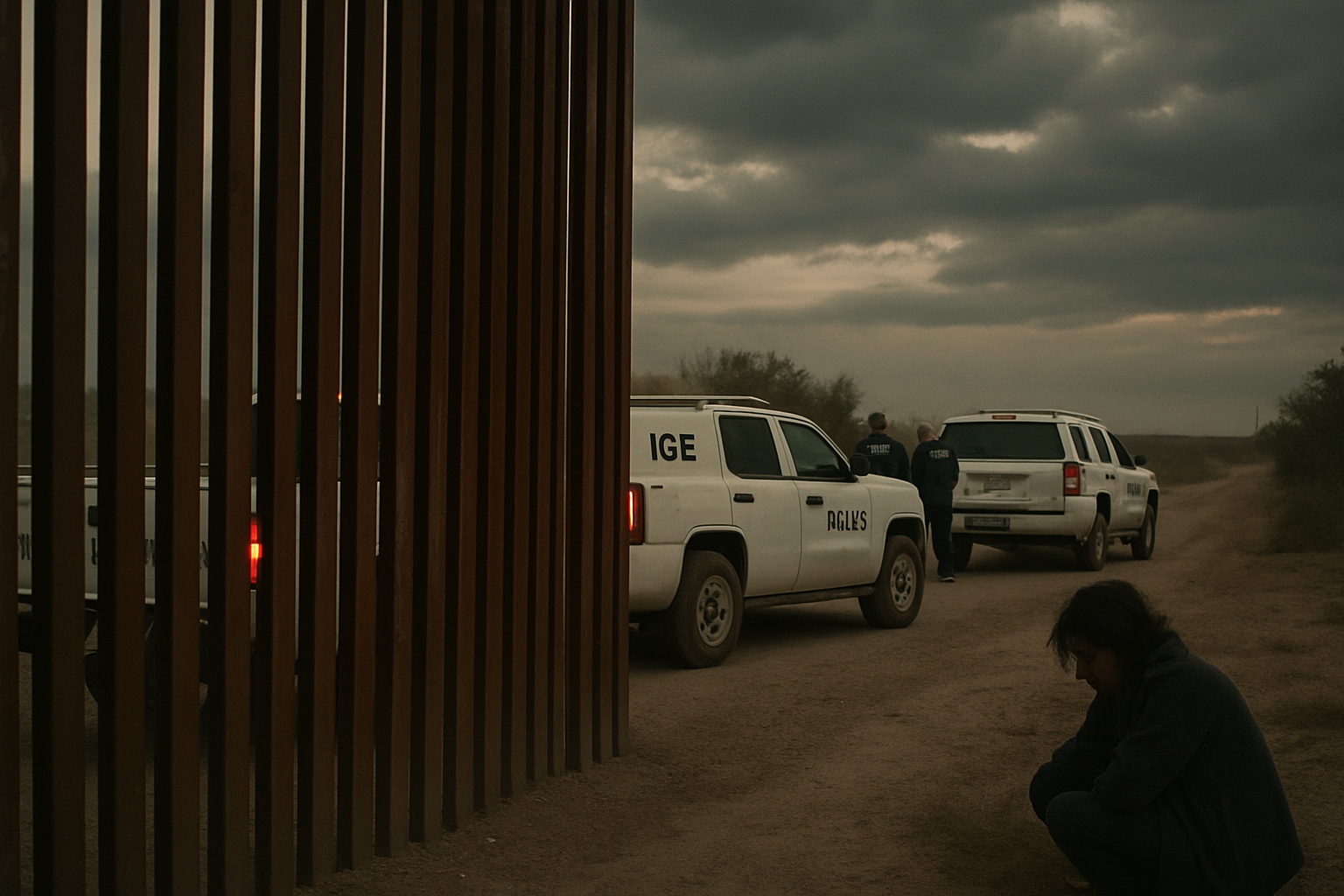
A convergence of harsh new banking requirements targeting immigrants and record-high deaths in ICE custody is creating an unprecedented humanitarian crisis, as the United States expands deportation operations to unexpected destinations including the Democratic Republic of Congo while international pressure mounts over enforcement tactics.
Twenty-nine people have died in Immigration and Customs Enforcement custody since October 2025—the start of the federal government's fiscal year—already surpassing the previous record of 28 deaths set in 2004, according to government data analyzed by NPR. The alarming milestone comes as the Trump administration pursues what University of California researchers confirm are quadrupled deportation operations compared to previous levels.
Simultaneously, banks across the United States are preparing to implement new requirements that would force customers to prove their immigration status before opening accounts, according to reports from Peru's El Comercio. The potential executive order would represent an unprecedented expansion of immigration enforcement into the financial sector, affecting millions of legal immigrants and mixed-status families.
Global Deportation Operations Expand to Africa
The scope of American immigration enforcement has taken an unexpected international turn, with fifteen people deported from the United States arriving in Kinshasa, the capital of the Democratic Republic of Congo, according to reports from Lithuania and Serbia. Local sources confirmed the deportees originated from Peru and Ecuador, highlighting the complex routing of what experts describe as "third-country deportations."
This marks a significant expansion of deportation agreements beyond traditional receiving countries in Latin America. The Congo arrivals represent part of a broader pattern of secretive agreements with African nations that immigration attorneys warn violates due process rights by sending migrants to countries with which they have no connection.
Federal Judge Brian Murphy in Massachusetts previously ruled such "third country deportation" policies unlawful, stating they violate due process by removing immigrants to nations regardless of language barriers, family ties, or cultural connections. The Congo deportations suggest the administration is continuing these practices despite court challenges.
Banking Sector Becomes Immigration Battleground
The proposed banking requirements would fundamentally alter how financial institutions operate, according to immigration attorney analysis reported in Peruvian media. Under the anticipated executive order, banks would be required to verify customers' immigration status before providing services, potentially cutting off millions from the formal financial system.
"Banks in the United States could begin requiring immigration status from their clients," according to El Comercio's reporting on the proposed changes. "This would affect migrants and banks" by creating new compliance burdens while potentially driving undocumented immigrants further into cash-only economies.
The banking requirements would particularly impact mixed-status families where some members hold legal status while others remain undocumented. Immigration advocates warn this could force families to avoid banking entirely, undermining financial stability and making them more vulnerable to exploitation.
Record Deaths Highlight Detention Crisis
The spike in ICE custody deaths occurs against a backdrop of the largest immigration detention infrastructure expansion in American history. The Trump administration has allocated $38.3 billion to retrofit warehouses into regional detention centers, each designed to hold 1,000-1,500 detainees.
Recent fatalities have intensified international scrutiny, including the death of 19-year-old Mexican migrant Royer Pérez Jiménez on March 16 at Florida's Glades County Detention Center, and Afghan refugee Nazeer Paktiawal on March 14, who had previously worked with U.S. special forces. Mexico's foreign ministry has formally protested the deaths of thirteen Mexican nationals in ICE custody, demanding accountability through diplomatic channels.
"The unacceptable situation of deaths in ICE custody represents a crisis threatening US-Mexico cooperation on border security and trade."
— Mexican Foreign Ministry Statement
The mortality rate surge comes as independent monitoring reveals systematic problems within detention facilities, including inadequate medical care, dangerous overcrowding, and insufficient oversight of private contractors operating many facilities.
International Diplomatic Pressure Mounts
The global implications of American immigration policies are becoming increasingly apparent as affected nations respond through diplomatic channels. The arrival of deportees in Congo prompted United Nations confirmation and monitoring, while European media outlets have described the enforcement operations using terms like "bloodbath" to characterize the humanitarian impact.
European officials have expressed concerns about the stability of American institutions during this period of intensified enforcement. The unprecedented scope of operations—extending from major airports to workplace raids to third-country deportations—has drawn criticism from traditional allies who question the sustainability of current approaches.
Australia recently demonstrated an alternative approach by granting humanitarian visas to Iranian women's soccer players who faced persecution for refusing to sing their national anthem. Home Affairs Minister Tony Burke's decision came after international pressure, including intervention from former President Trump himself, warning of a "terrible humanitarian mistake" if the athletes were forced to return to Iran.
Economic and Social Disruption Spreads
The enforcement escalation is creating ripple effects throughout American society, with major corporations facing employee pressure over workplace protocols. Target and other retail chains have been forced to develop policies governing ICE agent access to stores and parking lots, while agricultural, hospitality, and healthcare sectors report growing workforce shortages.
Native American communities have reported increased racial profiling incidents, leading tribal authorities to establish safe zones and issue special tribal identification cards. The psychological impact extends to families avoiding essential services, with Mexican families reportedly "feeling trapped behind deadbolts" during enforcement operations.
Congressional resistance is building, with House Democrats threatening to block Department of Homeland Security funding unless "drastic changes" are implemented. The political pressure led to a rare bipartisan vote extending Temporary Protected Status for 350,000 Haitians, with ten Republicans joining Democrats in challenging the administration's enforcement agenda.
Federal Courts Push Back
The judicial branch has mounted systematic resistance to administration policies, with federal judges increasingly requiring ICE to obtain warrants before arrests unless suspects pose flight risks. Judge Ana Reyes blocked the termination of Temporary Protected Status for 350,000 Haitians, citing evidence of discriminatory intent in the policy's implementation.
The legal challenges represent the most significant federal court pushback since the Watergate era, with judges across multiple jurisdictions finding constitutional violations in enforcement methods. Courts have particularly criticized the lack of due process in "third country" deportations and the expansion of detention without bond hearings.
In Hennepin County, Minnesota, prosecutors filed the first assault charges against a federal immigration agent related to enforcement operations, following the February deaths of Alex Pretti and Renee Nicole Good that led to nationwide protests and a three-day government shutdown.
European Policy Transformation Provides Context
The American crisis unfolds against a backdrop of global immigration policy transformation. European Union member states have approved historic changes allowing deportations to "safe" third countries through a coalition of center-right and far-right parties, representing the most significant shift from protection-based to deterrence-focused principles since World War II.
Enhanced cooperation mechanisms now allow smaller groups of EU members to advance restrictive policies without unanimous consent, with Greece leading a coalition that includes Germany, Netherlands, Austria, and Denmark in establishing external processing centers in Africa. The EU's Entry/Exit System has detected over 4,000 overstayers in its first four months of operation, proving the effectiveness of biometric border management.
Climate displacement pressures continue mounting, with March 2026 marking the nineteenth consecutive month of global temperatures exceeding 1.5°C above pre-industrial levels. Migration experts warn that current asylum categories remain inadequate for climate-induced displacement, adding complexity to already strained systems worldwide.
Looking Forward: A System at Breaking Point
The convergence of banking restrictions, record custody deaths, and expanded third-country deportations represents a watershed moment in American immigration policy. With two-thirds of Americans now believing ICE has "gone too far" according to NPR/PBS/Marist polling, the administration faces unprecedented public opposition to its enforcement methods.
The upcoming June 2026 Supreme Court ruling on birthright citizenship—the first time a sitting president has attended oral arguments involving his own policies—may fundamentally reshape immigration law for generations. Meanwhile, the November 2026 midterm elections loom as a potential referendum on enforcement approaches that have drawn international criticism and domestic resistance.
As Mexico demands accountability for the thirteen nationals who have died in ICE custody, and as Congress weighs funding restrictions for the Department of Homeland Security, the United States faces fundamental questions about balancing security objectives with humanitarian obligations and constitutional protections.
The template being established through current policies will likely influence international migration management for decades to come, making the resolution of America's immigration crisis a matter of global significance extending far beyond national borders.