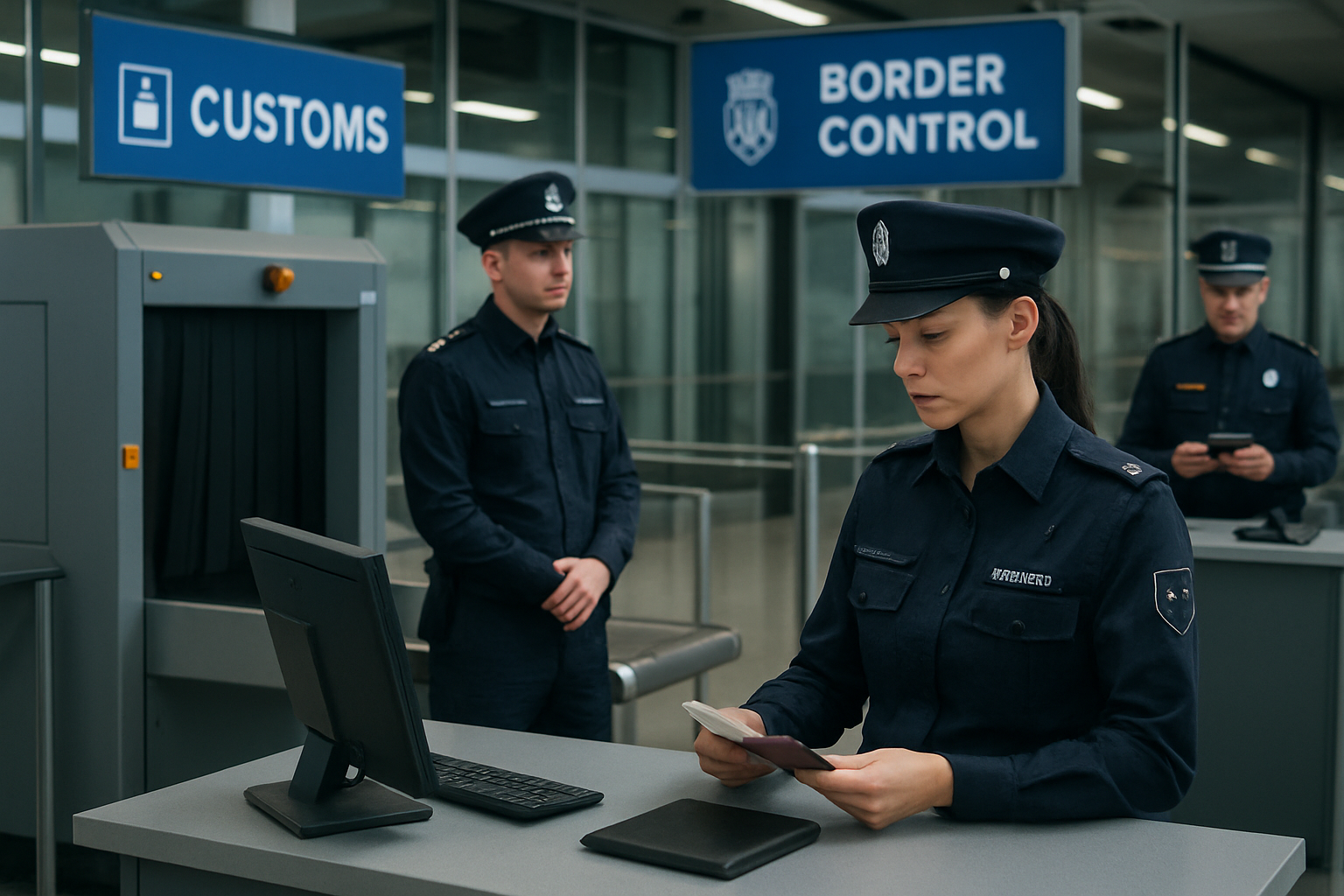
American lawmakers are demanding answers from the Trump administration after a 68-year-old Canadian man claims U.S. customs officers held him for three hours and forced him to provide a DNA sample before sending him home, raising serious questions about constitutional protections and border enforcement authority.
Kevin Larson of Kincardine, Ontario, told CBC Windsor that border officials detained him during what should have been a routine entry attempt, ultimately compelling him to provide biological samples through what he described as coercive circumstances. The incident has prompted immediate congressional scrutiny of U.S. Customs and Border Protection (CBP) procedures and the legal boundaries of biometric data collection at international crossings.
Congressional Response and Constitutional Concerns
The case has drawn attention from prominent Democratic lawmakers who are questioning both the legal authority for such collections and the broader implications for civil liberties at the border. Representatives Debbie Dingell and Jamie Raskin are among those calling for immediate investigation into CBP protocols regarding DNA collection from foreign nationals.
"This raises fundamental questions about the constitutional limits of border enforcement authority and the protection of individual rights during routine immigration procedures."
— Congressional source familiar with the investigation
The timing of the incident is particularly significant given the current administration's expanded immigration enforcement efforts, including the unprecedented deployment of ICE agents to major U.S. airports and the quadrupling of deportation operations compared to previous levels. Two-thirds of Americans now believe immigration enforcement has "gone too far," according to recent polling.
Border Security Technology and Biometric Expansion
The alleged DNA collection occurs within a broader context of rapidly expanding biometric capabilities at international borders. The European Union's Entry/Exit System has detected over 4,000 visa overstayers in just four months of operation, demonstrating the effectiveness of enhanced biometric tracking systems. However, the forced collection of DNA samples represents a significant escalation beyond fingerprints and facial recognition technology.
Legal experts note that DNA collection raises unique constitutional concerns due to the sensitive nature of genetic information and its potential uses beyond identity verification. Unlike fingerprints or photographs, DNA can reveal extensive personal and familial information, creating privacy implications that extend far beyond the individual being processed.
Historical Context and International Comparisons
Border security practices have evolved dramatically in recent years, with nations worldwide implementing increasingly sophisticated surveillance and identification technologies. The Netherlands recently suffered a major telecommunications breach affecting 6.2 million customers, highlighting the vulnerabilities inherent in centralized biometric databases that governments are rapidly expanding.
Multiple memory entries indicate ongoing tensions over border enforcement practices, including recent ICE airport deployments that have raised questions about the mixing of immigration enforcement with aviation security functions. The global semiconductor shortage has created a "critical vulnerability window" until 2027, potentially affecting the security of biometric systems being deployed at borders worldwide.
Legal Framework and Due Process Questions
The Larson case highlights fundamental questions about due process protections for foreign nationals at U.S. borders. While courts have generally granted border officials broad authority to conduct searches and detentions, the collection of biological samples without clear legal justification or suspected criminal activity represents potentially uncharted legal territory.
Federal courts have increasingly required ICE to obtain warrants for arrests unless flight risks are involved, following civilian casualties in enforcement operations. The trend toward enhanced judicial oversight of immigration enforcement makes the alleged DNA collection particularly problematic from a legal standpoint.
International Diplomatic Implications
The incident threatens to complicate U.S.-Canada relations at a time when both nations are grappling with immigration pressures and border security challenges. Canada has implemented its own enhanced border measures, including the electronic Travel Authorization system, but has not reported similar DNA collection practices.
International media coverage of American "governmental dysfunction" has increased following various immigration enforcement controversies. The DNA collection allegation adds to growing international concerns about U.S. border practices and their compliance with international human rights standards.
Technical and Procedural Questions
The alleged three-hour detention raises specific questions about CBP protocols and training. Border officers typically receive specialized training in immigration law and civil rights protections, but the circumstances Larson describes suggest either a breakdown in established procedures or the implementation of undisclosed policies.
The global cybersecurity crisis, with incidents surging 20.6% in the fourth quarter of 2025, has heightened concerns about the security of sensitive biological data collected by government agencies. Criminal networks have demonstrated sophisticated capabilities in exploiting government databases, making the protection of DNA information a critical security consideration.
Congressional Investigation Demands
Lawmakers are demanding comprehensive briefings on several key issues: the legal authority for DNA collection from foreign nationals, existing CBP protocols regarding biological samples, data storage and sharing practices, and oversight mechanisms to prevent abuse of collection authority.
The investigation comes amid broader congressional efforts to reform immigration enforcement following the fatal shootings of Alex Pretti and Renee Nicole Good in Minneapolis, which led to mandatory body camera requirements and enhanced accountability measures for immigration officers.
Broader Immigration Policy Context
The DNA collection controversy reflects deeper tensions in American immigration policy, where enhanced enforcement measures increasingly conflict with constitutional protections and international human rights standards. The incident occurs as the Trump administration pursues its most aggressive immigration enforcement campaign in recent history.
Enhanced cooperation mechanisms between law enforcement agencies have enabled more sophisticated immigration enforcement, but have also created new opportunities for procedural violations and civil rights breaches. The challenge for democratic institutions lies in maintaining effective border security while preserving fundamental rights protections.
Next Steps and Implications
Congressional investigators are expected to demand immediate documentation of CBP DNA collection protocols and any authorizations for such practices. The case may become a template for broader questions about the limits of border enforcement authority in an era of expanding biometric capabilities.
The resolution of this case will likely establish important precedents for the balance between border security and individual rights protection. With global migration pressures intensifying due to climate displacement and conflict, the principles established in investigations like this will influence international border management practices for years to come.
As the investigation continues, the fundamental question remains whether the alleged DNA collection represents an isolated incident or a broader shift in border enforcement practices that requires immediate congressional intervention and policy clarification.