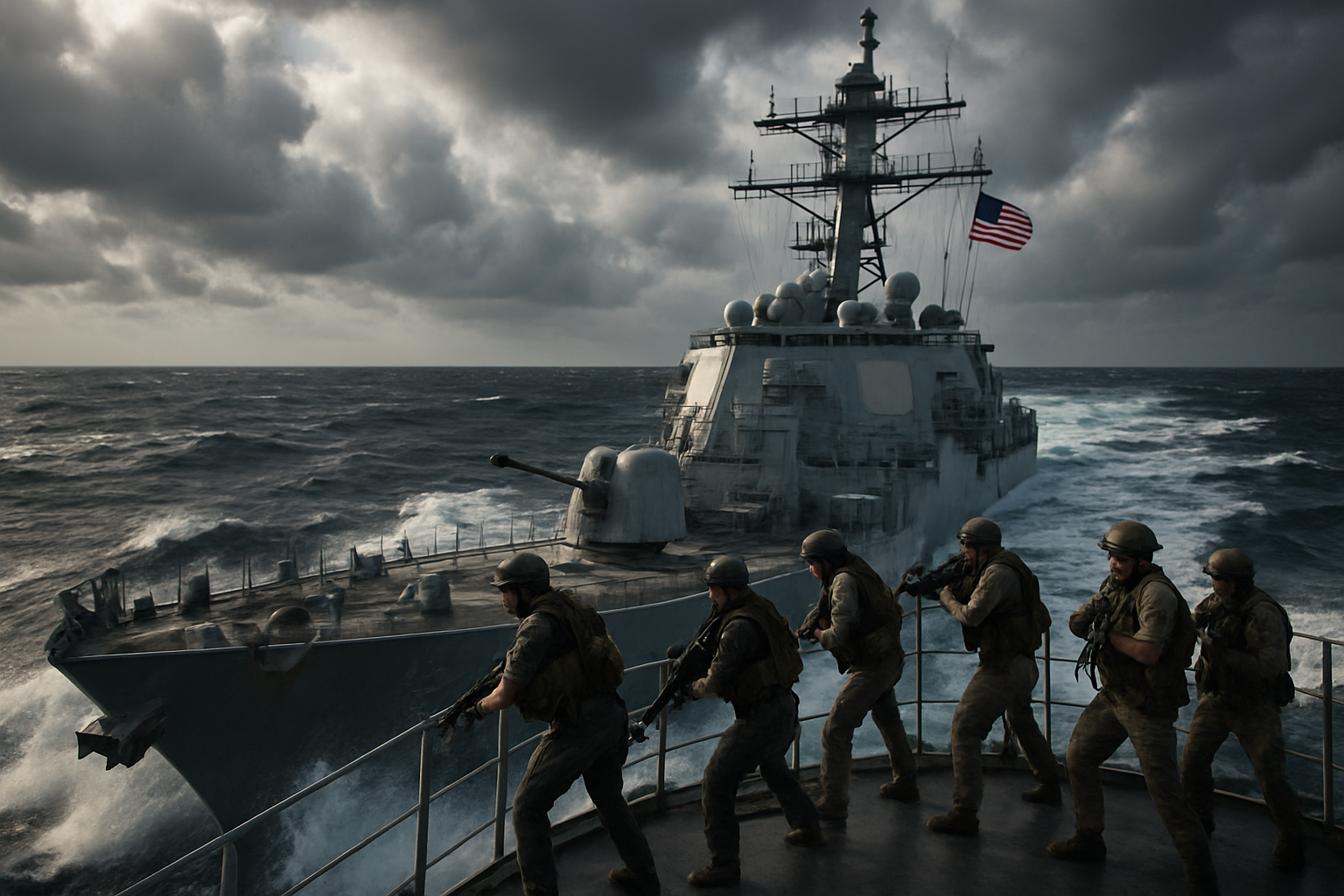
US military forces killed three alleged drug traffickers in a new strike on a suspected narcotics vessel in the Caribbean Sea, raising the death toll from the Trump administration's aggressive maritime campaign to 133 people across at least 38 attacks since early September 2025.
The latest operation, announced Friday by US Southern Command (SOUTHCOM), represents a continuation of what military officials have termed "Operation Southern Spear" – an unprecedented shift from traditional law enforcement interdiction to direct military targeting of vessels suspected of drug trafficking in international waters.
"Three narcoterrorists were killed during this action. No US military forces were harmed," SOUTHCOM declared in a statement posted on social media, using terminology that reflects the administration's classification of suspected traffickers as combatants rather than criminals.
Dramatic Policy Shift from Law Enforcement to Military Action
The campaign marks a fundamental departure from previous administrations' approach to counter-narcotics operations, which relied primarily on Coast Guard interdiction and law enforcement cooperation with partner nations. Under the Trump administration's second term, suspected drug vessels are now being targeted with lethal military force based on terrorist organization designations.
According to military sources, the operations fall under expanded rules of engagement that allow for kinetic strikes against vessels operated by organizations designated as terrorist entities. This legal framework provides military commanders with authority to use lethal force in international waters without traditional law enforcement protocols.
The death toll has steadily climbed since the campaign's inception: from initial strikes in September 2025 through the most recent February operation, with attacks spanning both the Caribbean Sea and eastern Pacific Ocean. Intelligence reports suggest the majority of vessels targeted were operating along established trafficking routes between South America and North American markets.
Historical Context: From Diplomatic Cooperation to Military Confrontation
The aggressive maritime campaign unfolds against the backdrop of broader Trump administration efforts to reshape Caribbean geopolitical dynamics through what analysts have termed the "Corolario Trump" – a 21st-century update to the Monroe Doctrine combining military deployment, economic coercion, and selective diplomatic engagement.
Paradoxically, these lethal operations have continued even as the administration has pursued diplomatic breakthroughs with key regional partners. Just days before the latest strike, Energy Secretary Chris Wright signed a comprehensive cooperation agreement with Venezuelan Acting President Delcy Rodríguez, formally ending the Trump administration's previous oil embargo on Venezuela.
Similarly, the February 3 White House meeting between President Trump and Colombian President Gustavo Petro established frameworks for counter-narcotics cooperation, with both leaders agreeing that sanctions have proven ineffective against trafficking networks. Yet the military strikes in international waters continue unabated.
Legal Framework and International Law Questions
The legal justification for the lethal strikes rests on the designation of certain trafficking organizations as terrorist entities, which provides military commanders with expanded authorities typically reserved for counterterrorism operations. However, the Trump administration has not presented public evidence demonstrating that targeted vessels were definitively engaged in narcotics transport.
International maritime law experts have raised concerns about the precedent set by conducting lethal military operations against civilian vessels in international waters based on suspected criminal activity rather than confirmed hostile actions. Traditional interdiction operations involve attempting to stop and board suspected vessels, with deadly force used only when crews present immediate threats to military personnel.
The Bulgarian news agency BTA noted that questions persist about the "legality of the campaign, which is officially aimed at countering drug trafficking but has never presented evidence that attacked vessels were actually involved in narcotics transport."
Regional Impact and International Response
The sustained military campaign has drawn extensive international attention, with European, Latin American, and Middle Eastern media highlighting both the unprecedented nature of the operations and growing humanitarian concerns about civilian casualties.
Regional partners have expressed mixed reactions to the aggressive approach. While some nations support robust counter-narcotics efforts, others have privately voiced concerns about the militarization of what traditionally has been approached as a law enforcement challenge requiring international cooperation and judicial processes.
The operations have effectively transformed portions of the Caribbean Sea and eastern Pacific into active military zones, with commercial shipping and fishing vessels advised to maintain significant distance from US naval operations. This represents a dramatic shift in the security environment for one of the world's most important maritime trade corridors.
Strategic Implications and Future Outlook
Military analysts suggest the Caribbean campaign serves multiple strategic objectives beyond counter-narcotics: demonstrating American military presence in waters increasingly contested by Chinese commercial interests, testing new operational doctrines for maritime security, and establishing precedents for unilateral military action against transnational criminal networks.
The effectiveness of the lethal strike approach in actually reducing drug trafficking flows remains unclear, as comprehensive data on interdiction results has not been made publicly available. Traditional metrics used to evaluate counter-narcotics success – such as cocaine seizures, arrest numbers, and price disruption in consumer markets – have not been provided for the military campaign.
What is clear is that the approach represents the most significant militarization of counter-narcotics policy in decades, with implications extending far beyond the Western Hemisphere. Other nations facing similar transnational criminal challenges are closely watching to determine whether the American model might be adopted elsewhere.
Questions of Sustainability and Accountability
As the death toll mounts and the campaign shows no signs of scaling back, questions emerge about the long-term sustainability of the military approach. Unlike traditional law enforcement operations, which produce arrested suspects, seized evidence, and judicial proceedings that provide public accountability, the military strikes produce only casualty reports and claims of success that cannot be independently verified.
The operations continue alongside diplomatic initiatives, including the Trump administration's broader Caribbean strategy that combines military pressure with economic incentives and selective engagement. This dual-track approach – maintaining lethal military operations while pursuing diplomatic cooperation – reflects the administration's belief that sustained military pressure enhances the effectiveness of diplomatic negotiations.
Congressional oversight of the campaign has been limited, with operations conducted under existing military authorizations rather than specific legislative approval for the Caribbean strikes. Democratic lawmakers have called for greater transparency regarding the legal framework, rules of engagement, and effectiveness metrics for the military approach.
As the Trump administration's second term continues, the Caribbean drug vessel strikes represent a significant test case for the viability of military solutions to transnational criminal challenges – with implications that will likely extend far beyond the current administration's tenure and the Western Hemisphere's borders.