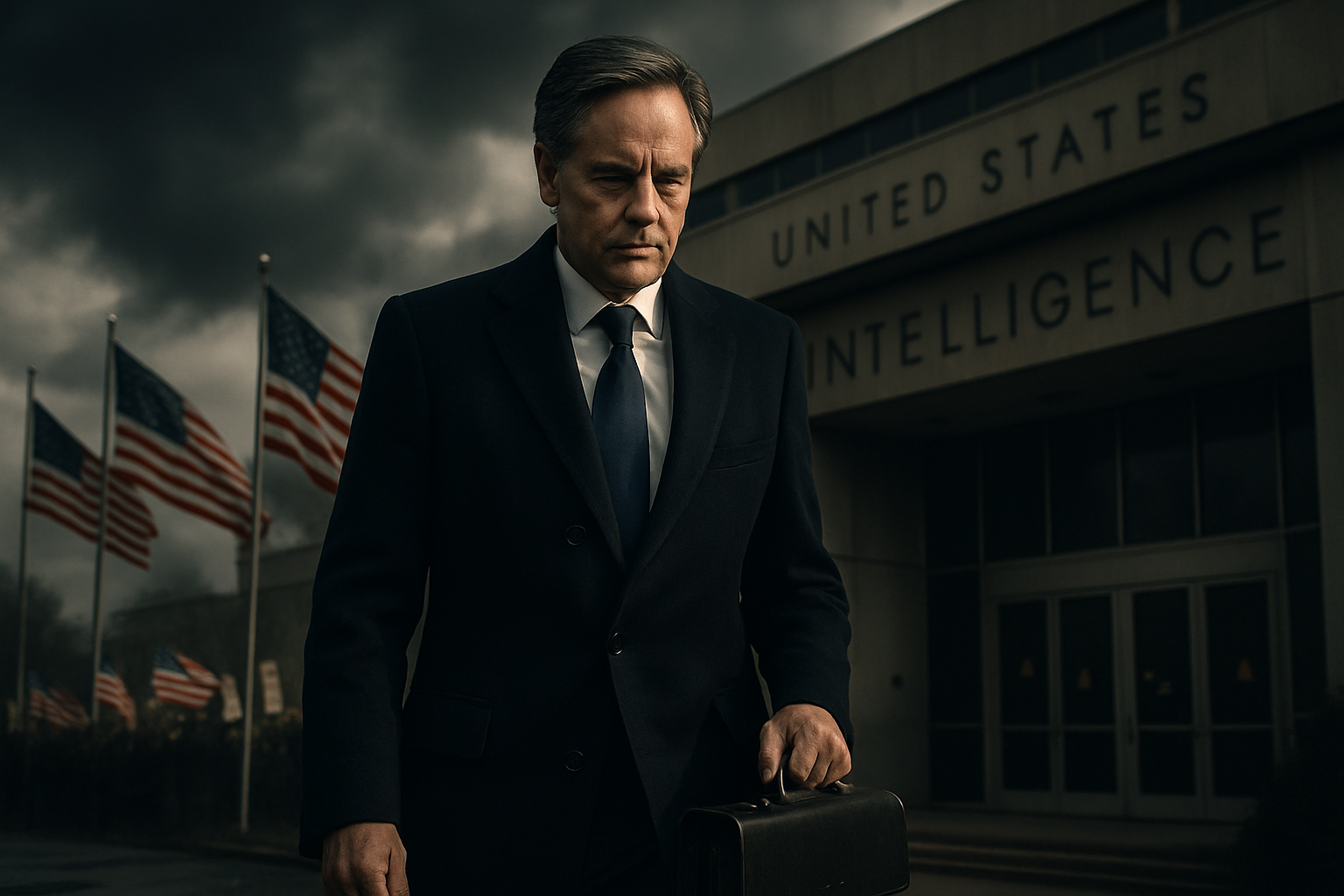
Joseph Kent, director of the US National Counterterrorism Center, resigned Tuesday in a dramatic protest over President Trump's Iran war strategy, becoming the highest-ranking administration official to publicly break with the president over Operation Epic Fury and declaring that Iran posed "no imminent threat" to the United States.
In a resignation letter posted on social media platform X, Kent delivered a scathing critique of the military campaign that has now entered its third week, calling it unjustified and warning that the same tactics that drew America into the Iraq War were being repeated. "I cannot in good conscience support the ongoing war in Iran," Kent wrote, arguing that the conflict was initiated under external pressure rather than legitimate security concerns.
A Veteran's Conscience
Kent, a former Green Beret who served 11 combat deployments, brought exceptional credibility to his criticism of the administration's Middle East strategy. Describing himself as a "Gold Star husband" whose wife was killed in Syria in 2019, Kent's personal losses in previous conflicts gave weight to his opposition to sending another generation to war.
"I cannot support sending the next generation off to fight and die in a war that serves no benefit to the American people nor justifies the cost of American lives," he stated in his resignation letter.
"I cannot in good conscience support the ongoing war in Iran. Iran posed no imminent threat to our nation, and this conflict undermines the America First platform that brought President Trump to office."
— Joseph Kent, Former Director of National Counterterrorism Center
The resignation comes as Operation Epic Fury has cost American taxpayers $11.3 billion in its first week alone, with Pentagon officials now preparing for operations extending through September—far beyond the initial 4-6 week timeline promised by the administration.
Intelligence Community Dissent
Kent's departure exposes significant divisions within the US intelligence community over the necessity and conduct of the Iran war. His critique went beyond strategic disagreements, accusing "high-ranking Israeli officials and powerful members of American media" of developing a "disinformation campaign" that undermined Trump's core political principles.
The resignation letter drew explicit parallels to the Iraq War, suggesting that similar intelligence manipulation and external pressure led to another costly Middle East intervention. This criticism is particularly significant given Trump's previous opposition to "endless wars" and his campaign promises to prioritize American interests.
According to sources familiar with the administration's internal deliberations, Kent's resignation has emboldened other intelligence officials who have privately expressed skepticism about the war's justification and conduct.
White House Pushback
The Trump administration responded defensively to Kent's resignation, with the president dismissing him as "weak on security" while claiming to possess "strong and compelling evidence" that Iran was preparing an attack on American interests. However, the defensive posture suggests the resignation struck a sensitive nerve, particularly given Kent's credentials as a former special forces officer overseeing US counterterrorism efforts.
The timing of Kent's departure is especially problematic for the administration, coming as congressional scrutiny over the war intensifies. Senator Richard Blumenthal stated he is "more concerned than ever" about potential ground troop deployment, while the conflict's unpopularity has reached what analysts describe as "almost unprecedented" levels, with only 25% of Americans supporting the military action.
Diplomatic Breakdown Context
Kent's resignation gains additional significance when viewed against the backdrop of collapsed diplomatic efforts. Just weeks before Operation Epic Fury began, Geneva talks had achieved what negotiators called "broad agreement on guiding principles"—representing the most progress in US-Iran nuclear negotiations since the 2018 JCPOA collapse.
British national security adviser Jonathan Powell assessed that the parties could have reached a comprehensive agreement before military action began, directly contradicting the administration's narrative that diplomacy had been exhausted.
The military campaign began despite these diplomatic advances, with fundamental disagreements over scope—Iran excluding ballistic missiles and regional proxies as "red lines" while the US demanded comprehensive agreements including missiles, armed groups, and human rights issues.
Global Consequences
The Iran war has triggered unprecedented global disruptions that underscore the stakes Kent outlined in his resignation. Over 18,000 flights have been cancelled worldwide in what aviation experts describe as the worst crisis since COVID-19, with Dubai International Airport—the world's busiest—remaining closed due to missile damage.
Oil prices have surged past $80 per barrel as Iran closed the Strait of Hormuz, affecting 40% of global oil transit. The energy crisis has led to natural gas price increases of 24% in Europe and 78% in the United States, while major shipping companies have suspended operations in the Persian Gulf.
The conflict has also seen the first attack on European territory since World War II, with Iranian drones striking RAF Akrotiri in Cyprus, prompting an unprecedented naval coalition response from Britain, Spain, Italy, France, the Netherlands, and Greece.
Template-Setting Implications
Kent's principled resignation provides a template for other administration officials uncomfortable with the war's trajectory and may encourage similar departures. His critique highlights the administration's preference for unilateral action over traditional alliance structures, with Trump notably rejecting British offers of naval assistance and excluding Kurdish forces from operations.
The broader implications extend to nuclear governance, occurring as they do amid the expiration of the New START treaty in February 2026—the first time in over 50 years without US-Russia nuclear constraints. UN Secretary-General António Guterres has called the situation "the greatest test of multilateral cooperation in the modern era."
Intelligence Community Credibility
The resignation raises fundamental questions about intelligence assessments that justified the military action. Kent's assertion that Iran posed "no imminent threat" directly contradicts public administration claims and suggests significant disagreement within the intelligence community about threat evaluation and response.
As the conflict enters its third week with mounting casualties and economic disruption, Kent's departure underscores the importance of independent intelligence analysis free from political pressure. His warnings about repeating Iraq War mistakes resonate with growing congressional and public concern about the war's justification and objectives.
Looking Forward
Kent's resignation comes at a critical juncture as the administration faces mounting pressure to explain its long-term strategy for Iran. With operations now expected to extend through September and costs mounting, his departure highlights the gap between initial promises of a limited campaign and the reality of prolonged regional conflict.
The resignation also occurs as Iran undergoes its own leadership transition following the death of Supreme Leader Ali Khamenei, with his son Mojtaba Khamenei emerging as the likely successor in what would be the Islamic Republic's first hereditary succession.
As the most senior administration official to resign over the Iran war, Kent's departure represents more than individual conscience—it symbolizes broader questions about America's role in Middle East conflicts and the decision-making processes that lead to military intervention. His warning that the war "serves no benefit to the American people" may prove prescient as the conflict's true costs become apparent in the weeks and months ahead.