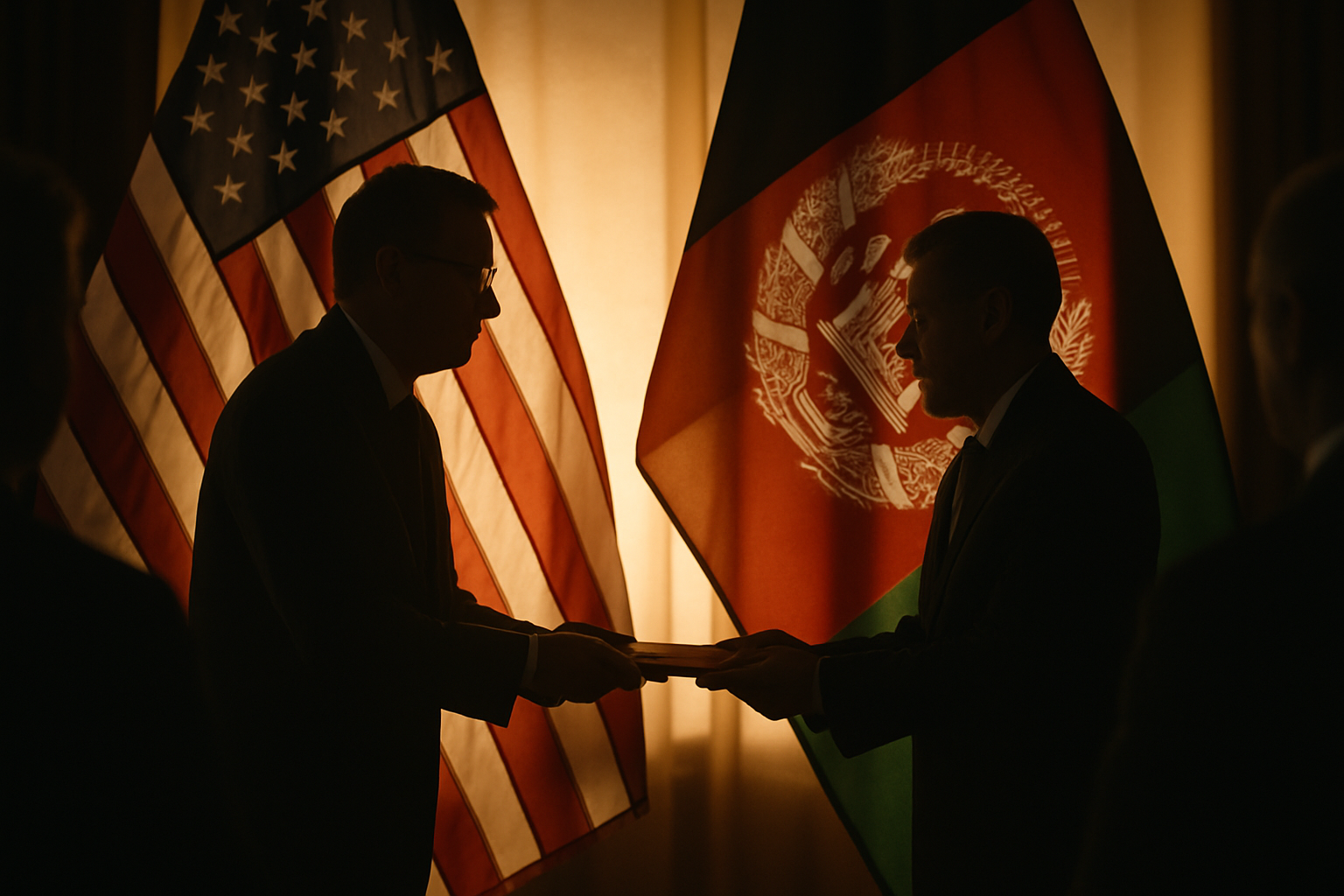
American citizen Dennis Coyle has been released from Taliban custody after more than a year of imprisonment in Afghanistan, marking a significant diplomatic breakthrough achieved through humanitarian channels and high-level mediation.
The Taliban's foreign ministry announced Coyle's release on Tuesday, March 24, following extensive diplomatic efforts involving former US envoy Zalmay Khalilzad and facilitated through the United Arab Emirates. The decision represents one of the rare instances of successful prisoner diplomacy between the Taliban government and Western nations since the Islamic Emirate's return to power in August 2021.
No Ransom Paid, Confirms US Official
US Special Presidential Envoy for Hostage Affairs Adam Boehler emphatically stated that Coyle's release came without any financial transaction or negotiated deal. Speaking on X (formerly Twitter) Tuesday, Boehler declared, "No deal was made, no money was paid. Hostage diplomacy is dead," emphasizing the purely diplomatic nature of the breakthrough.
This assertion directly contradicts the Trump administration's earlier designation of Taliban-controlled Afghanistan as a "state sponsor of wrongful detention" over cases involving detained Americans including Coyle and Mahmood Habibi. Secretary Marco Rubio had previously accused the Taliban of "terrorist tactics" including hostage-taking for ransoms and political concessions.
Humanitarian Grounds and Maternal Plea
Taliban officials described Coyle's release as an act of "humanitarianism and good faith," responding to a direct appeal from Coyle's mother to Islamic Emirate leadership during the Eid al-Fitr period. The timing coincides with traditional amnesty gestures during Islamic holidays, when authorities often release prisoners on humanitarian grounds.
"This action demonstrates our commitment to humanitarianism and good faith, hoping to strengthen inter-country trust."
— Taliban Foreign Ministry Statement
The humanitarian approach represents a departure from more confrontational prisoner exchange mechanisms, suggesting that personal appeals through cultural and religious channels may prove more effective than formal diplomatic negotiations in certain cases.
UAE's Critical Mediation Role
The United Arab Emirates played a crucial facilitation role in Coyle's transfer, with UAE special envoy Saif Al Ketbi present during the handover alongside Khalilzad. This continues the UAE's growing reputation as a regional mediator, having successfully facilitated various prisoner exchanges and humanitarian initiatives across the Middle East.
The UAE's involvement reflects its pragmatic approach to Taliban engagement, maintaining functional relationships while avoiding formal recognition of the Islamic Emirate government. This diplomatic positioning has enabled Abu Dhabi to serve as an intermediary in cases where direct US-Taliban negotiations face political obstacles.
Historical Context and Previous Cases
Coyle's release comes amid a broader pattern of prisoner diplomacy involving Afghanistan. Recent precedents include the UAE's release of 108 Afghan prisoners on National Day in February 2026, Azerbaijan's release of 14 Afghan nationals through embassy coordination, and various Saudi-mediated exchanges including the February 2026 release of three Pakistani soldiers from Taliban custody.
The case also occurs against the backdrop of severe regional tensions, including the month-long Pakistan-Afghanistan border crisis that began in February 2026. Despite military confrontations involving "Operation Ghazab-lil-Haq" and temporary Eid ceasefires, humanitarian diplomacy has continued to function through separate channels.
Diplomatic Implications and Future Relations
The successful release demonstrates that functional humanitarian cooperation remains possible despite the absence of formal diplomatic recognition between Washington and Kabul. Former US envoy Khalilzad's continued involvement suggests the importance of maintaining experienced diplomatic channels even when official relations remain frozen.
However, significant challenges persist in US-Taliban relations. The Trump administration maintains sanctions and has designated Afghanistan as a "state sponsor of wrongful detention," while the Taliban continues to face international isolation over human rights concerns, particularly regarding women's education and employment restrictions.
Regional Security Context
Coyle's release occurs during one of the most turbulent periods for regional stability since the Taliban's return. The Pakistan-Afghanistan border has witnessed unprecedented military confrontation since February 2026, with over 16,000 families displaced and 185 civilian casualties documented by UNAMA. Economic devastation has accompanied the violence, with bilateral trade collapsing 59% from $550 million to $228 million over seven months.
Despite these broader tensions, the humanitarian success suggests that specific diplomatic tracks can remain operational even during periods of military conflict, providing potential models for future crisis management in the region.
Looking Forward
The Taliban government expressed hope that Coyle's release would "strengthen inter-country trust" and potentially open avenues for broader diplomatic engagement. However, structural obstacles remain significant, including fundamental disagreements over governance, human rights, and counterterrorism cooperation.
For the international community, the case provides valuable insights into effective engagement mechanisms with the Taliban government. The success of humanitarian appeals, religious timing, and third-party facilitation offers a template that may prove applicable to other detained foreign nationals in Afghanistan.
As Dennis Coyle returns to freedom after his year-long ordeal, his case stands as a rare bright spot in an otherwise challenging diplomatic landscape. While broader US-Taliban relations remain frozen, the humanitarian breakthrough demonstrates that even in the most difficult circumstances, diplomatic persistence and creative mediation can achieve results that seemed impossible through conventional channels.