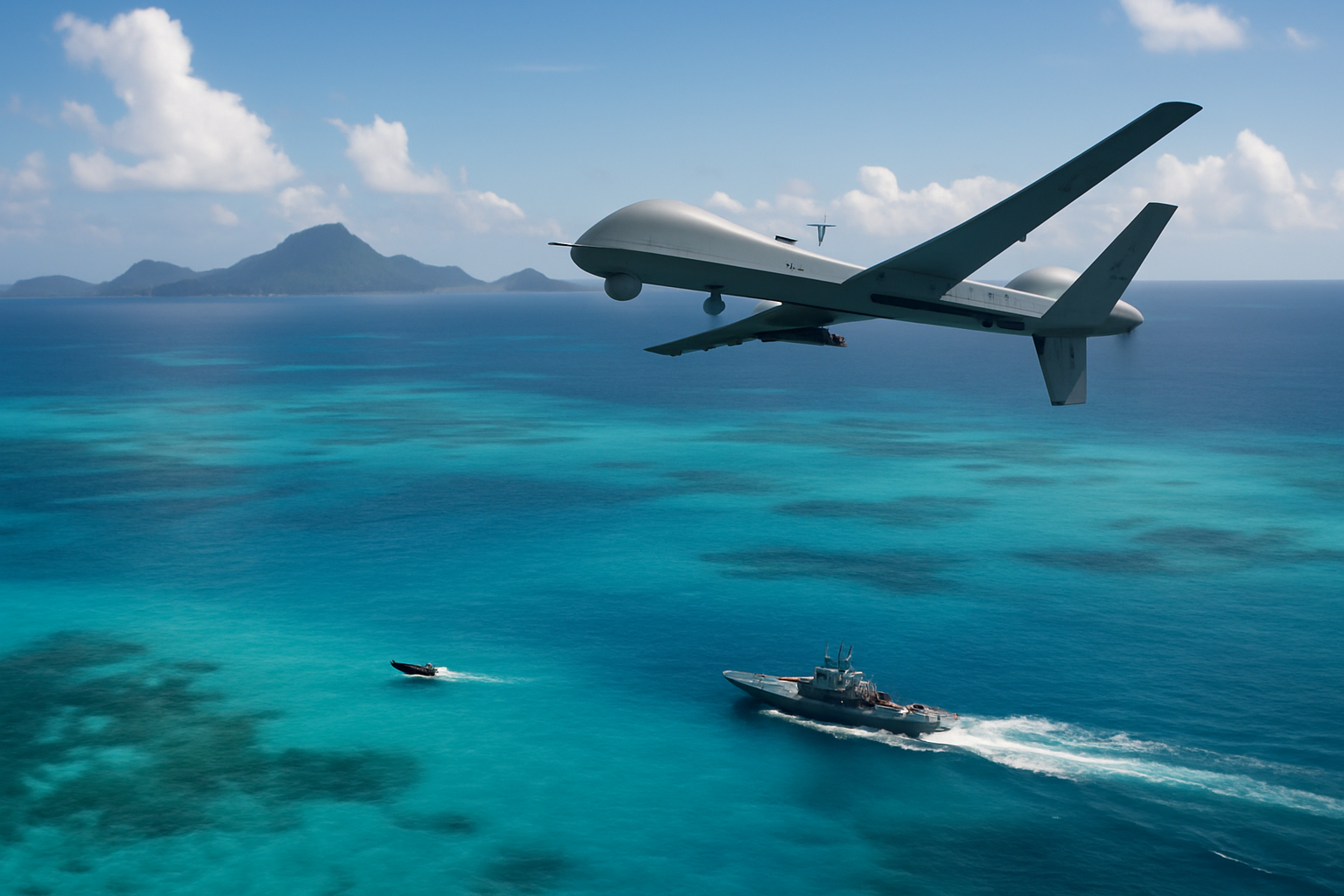
A US military drone strike conducted in the territorial waters of St. Vincent and the Grenadines on February 13, 2026, has resulted in the seizure of cocaine valued at approximately $500 million, marking both a significant counter-narcotics victory and a controversial sovereignty incident in the Caribbean.
The operation, which took place in waters off Bequia island within St. Vincent's exclusive economic zone, has sparked intense debate over US military operations in Caribbean territorial waters while simultaneously producing what authorities describe as the largest drug seizure in the island nation's history.
The Strike and Its Aftermath
According to St. Vincent's Minister of National Security St. Clair Leacock, the US drone strike occurred on February 13 in the country's economic zone, targeting what US authorities identified as drug trafficking vessels. The operation's immediate aftermath saw a massive influx of cocaine washing ashore on St. Vincent's main island, creating what officials described as "large-scale drug proliferation."
Commander Deon Henry of the St. Vincent and the Grenadines Coast Guard Service confirmed the strike on vessels in local waters, though details about the specific targets and the exact nature of the operation remain limited. The Royal Saint Vincent and the Grenadines Police Force has since launched extensive recovery operations to secure the narcotics that dispersed following the strike.
"The drone strike occurred in the economic zone of St. Vincent and the Grenadines and produced significant consequences for drug interdiction efforts in the region."
— St. Clair Leacock, Minister of National Security
Official Response and Diplomatic Concerns
Prime Minister Godwin Friday revealed on February 19 that his government had received no official communication from the United States regarding the military action prior to its execution. This lack of formal notification has raised serious questions about diplomatic protocol and respect for Caribbean sovereignty.
"No official information was received on the deadly US strikes on boats," Prime Minister Friday stated, highlighting a significant gap in diplomatic communication that has characterized recent US military operations in the Caribbean.
The Royal Saint Vincent and the Grenadines Police Force attempted to reassure the public, stating that the military activity was specifically linked to narcotics trafficking operations. However, the lack of prior notification and the operation's execution within territorial waters has created tension between regional security needs and national sovereignty.
Regional Context and Operation Southern Spear
This operation is part of the broader US "Operation Southern Spear" campaign, which has dramatically escalated military responses to drug trafficking in Caribbean and Pacific waters. Since September 2025, this campaign has resulted in over 145 deaths across 42 attacks, representing a fundamental shift from traditional law enforcement to direct military targeting of suspected trafficking vessels.
The campaign, conducted under US Southern Command authority, relies on terrorist organization designations to provide legal justification for kinetic military operations in international waters. However, the February 13 strike's location within St. Vincent's territorial waters raises additional legal and diplomatic questions.
Regional concerns have mounted as Caribbean fishing communities report increased anxiety about operating in waters where US military forces conduct strikes. Previous incidents have reportedly resulted in civilian casualties, including the deaths of three Saint Lucian fishermen in SVG waters, adding humanitarian concerns to the operational challenges.
The Scale of Drug Recovery
Joint operations between St. Vincent's Narcotics Unit, Rapid Response Unit, and Special Services have recovered substantial quantities of cocaine following the strike. In one notable seizure in West Kingstown, authorities recovered 22.9 pounds of cocaine, while a Lowmans Bay fisherman pleaded guilty to trafficking charges related to the dispersed narcotics.
The $500 million valuation represents the street value of the cocaine that has been recovered or accounted for following the strike. This figure places the operation among the most significant drug interdictions in Caribbean history, demonstrating both the scale of trafficking operations in regional waters and the potential impact of military intervention.
Impact on Local Communities
The aftermath of the drone strike has created complex challenges for local law enforcement and communities. The widespread dispersion of cocaine along St. Vincent's coastlines has required extensive police operations to prevent public access to the narcotics while conducting systematic recovery efforts.
Security officials have assured the public that measures are in place to manage the situation, but the incident has highlighted the vulnerability of small island nations to both drug trafficking operations and the collateral effects of military countermeasures.
Local fishermen and maritime workers have expressed concerns about operating in waters where military strikes may occur without warning. The Royal SVG Police Force has issued guidance encouraging fishermen to maintain normal operations while staying in communication with authorities, but questions remain about the safety of legitimate maritime activities.
Legal and Sovereignty Issues
The operation raises significant questions about maritime law and territorial sovereignty. While the US maintains authority to conduct operations against designated terrorist organizations in international waters, the February 13 strike occurred within St. Vincent's exclusive economic zone, traditionally requiring host nation consent for military operations.
Maritime law experts have questioned the precedent of conducting lethal strikes against civilian vessels based on suspected rather than confirmed criminal activity. The lack of prior diplomatic notification compounds these legal concerns, potentially setting problematic precedents for military operations in Caribbean territorial waters.
The incident reflects broader tensions between US security objectives and Caribbean sovereignty, as regional nations balance their need for assistance against drug trafficking with concerns about military operations conducted without adequate consultation or coordination.
Broader Regional Security Implications
This strike is part of a broader pattern of US military escalation in Caribbean anti-narcotics operations. The Trump administration's "Corolario Trump" strategy has combined military pressure with economic coercion and selective diplomatic engagement, representing a more militarized approach to regional security challenges.
The Caribbean region serves as a critical transit point for South American narcotics bound for North American and European markets. Criminal organizations have demonstrated sophisticated planning capabilities and technological resources, creating complex security challenges for individual island nations with limited capacity to address international trafficking networks.
Regional cooperation mechanisms face strain as military operations affect civilian fishing industries while individual Caribbean nations lack the institutional capacity to address sophisticated international criminal operations independently.
International Response and Oversight
The lack of Congressional oversight for these operations, conducted under existing military authorizations, has drawn criticism from Democratic lawmakers who demand transparency on effectiveness metrics and rules of engagement. Unlike traditional law enforcement approaches involving arrests and judicial proceedings, military strikes provide primarily classified operational reports with limited public accountability.
European, Latin American, and Middle Eastern media coverage has highlighted humanitarian concerns and legal framework questions surrounding the operation, reflecting broader international skepticism about the militarization of counter-narcotics efforts.
The incident demonstrates the challenge of balancing effective drug interdiction with respect for international law, territorial sovereignty, and civilian protection in an era of increasingly sophisticated transnational criminal networks.
Looking Forward
The February 13 drone strike and subsequent $500 million cocaine seizure represents both a significant tactical success in drug interdiction and a controversial example of military operations in Caribbean territorial waters. The incident highlights the complex intersection of national security, international law, and regional sovereignty in 21st-century counter-narcotics efforts.
As US military operations continue under Operation Southern Spear, Caribbean nations face the challenge of addressing legitimate security concerns while protecting their sovereign rights and civilian populations. The lack of formal diplomatic coordination in this case underscores the need for enhanced communication mechanisms and clearer operational protocols for military activities in regional waters.
The success of the drug seizure, while significant, raises questions about the sustainability and legal framework of military solutions to criminal challenges that primarily require law enforcement and judicial approaches. The international community continues to watch these operations as potential templates for addressing transnational organized crime, making their conduct and outcomes critical for future regional security architecture.