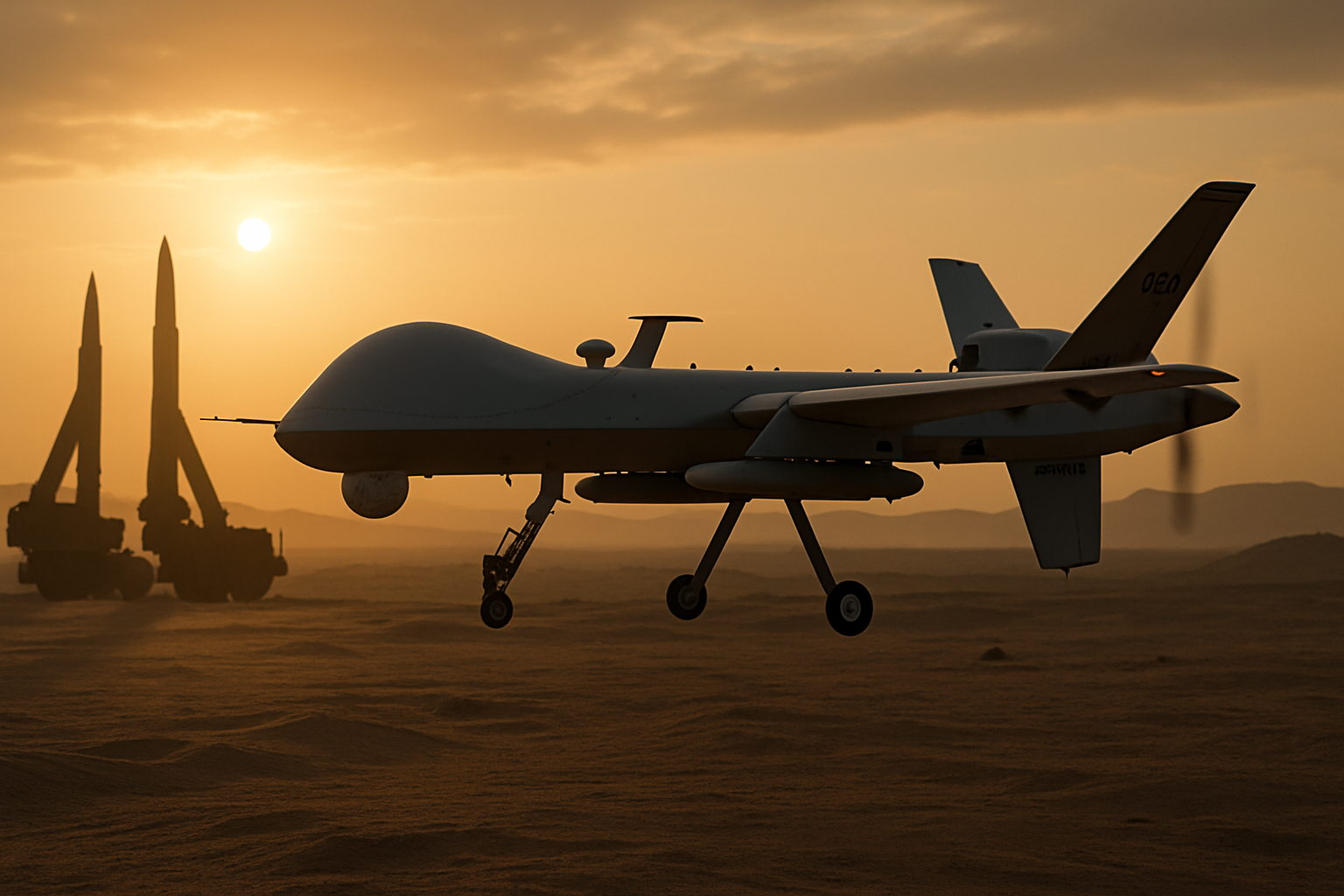
New leaked footage from US military archives has revealed dramatic encounters between American combat drones and unidentified flying objects near the Syrian border, while Iran simultaneously unveiled its most advanced ballistic missile system, marking a significant escalation in Middle Eastern military tensions.
Two classified videos from US military sources show American combat drones pursuing mysterious objects that demonstrate unprecedented flight characteristics along the Syria-Turkey border region. The objects, captured in high-definition surveillance footage, appear to conduct maneuvers that defy conventional aircraft capabilities while showing no heat signature despite their physical presence.
Unprecedented UFO Hunt Operations
According to the leaked military documents, US combat drones detected and pursued multiple unidentified aerial phenomena displaying flight patterns that conventional military analysis cannot explain. The objects demonstrated ability to perform rapid directional changes, sustained hovering at extreme altitudes, and acceleration patterns that exceed known aerospace technology.
"These objects maintain physical presence without thermal signatures typically associated with aircraft or known drone technology," stated one classified assessment contained within the leaked files. The surveillance operations occurred over several weeks near strategic Syrian border crossings, areas of heightened geopolitical significance.
The encounters represent the first documented cases of active military pursuit of unidentified objects in the Middle Eastern theater, occurring amid broader regional tensions involving Syria, Turkey, and Iranian-backed forces operating in the border region.
Iran's Khorramshahr-4 Missile Revelation
Simultaneously with these mysterious aerial encounters, Iran's Revolutionary Guard Corps (IRGC) unveiled what military analysts consider their most sophisticated ballistic missile system to date. The Khorramshahr-4 represents a quantum leap in Iranian missile technology, featuring a massive 1.5-ton warhead capacity that significantly exceeds previous Iranian ballistic missile capabilities.
The IRGC revealed the weapon during a carefully orchestrated presentation at an underground missile facility, demonstrating Iran's expanding subterranean military infrastructure. The facility showcases Iran's ability to protect strategic weapons systems from aerial bombardment while maintaining operational readiness.
Technical specifications released by Iranian military sources indicate the Khorramshahr-4 incorporates advanced guidance systems, extended range capabilities, and multiple warhead configurations. The missile represents Iran's response to regional military pressure and demonstrates Tehran's commitment to developing indigenous defense capabilities.
Regional Military Implications
These developments occur against the backdrop of broader Middle Eastern security challenges, including ongoing nuclear negotiations between the United States and Iran scheduled for February 7, 2026, in Oman. The timing of both revelations suggests coordinated messaging by military establishments on multiple sides.
Military analysts note that the UFO encounters near Syrian borders coincide with increased US surveillance operations in regions where Iranian proxy forces operate. The Pentagon has maintained heightened alert status throughout the region following recent incidents involving Iranian drones approaching US naval assets in the Arabian Sea.
Iran's missile revelation serves multiple strategic purposes: demonstrating deterrent capabilities to regional adversaries, showcasing technological advancement to domestic audiences, and establishing negotiating leverage ahead of diplomatic talks.
Technology and Intelligence Concerns
The leaked UFO footage raises significant questions about aerial surveillance capabilities and potential foreign technology operating in sensitive border regions. Defense officials expressed concern about unknown aircraft conducting operations near strategic military installations and key transportation corridors.
Intelligence assessments suggest the objects demonstrate capabilities that exceed publicly known aerospace technology, leading to speculation about advanced foreign military programs or experimental aircraft testing by regional powers. The lack of thermal signatures particularly puzzles military analysts accustomed to tracking conventional aircraft through heat emissions.
Iran's Khorramshahr-4 missile system incorporates technology that suggests significant advancement in precision guidance and payload delivery systems. The 1.5-ton warhead capacity represents a three-fold increase over previous Iranian ballistic missiles, enabling conventional or potentially nuclear payload delivery across extended ranges.
Strategic Context and Future Implications
Both revelations occur during a critical period in Middle Eastern geopolitics, with multiple diplomatic initiatives attempting to address regional security concerns through negotiation rather than military confrontation. The UAE, Saudi Arabia, Qatar, and Egypt have expressed support for diplomatic solutions to regional tensions.
The mysterious UFO encounters highlight the complexity of modern military surveillance in regions where multiple nations conduct operations. Syria's border areas remain contested territory with Turkish, US, Russian, and Iranian-backed forces maintaining varying degrees of presence and influence.
Iran's missile demonstration serves as both defensive posturing and diplomatic leverage, occurring just days before scheduled nuclear talks in Oman. The timing suggests Tehran's intention to enter negotiations from a position of demonstrated military strength rather than perceived weakness.
International Response and Analysis
NATO officials have expressed concern about both developments, viewing the UFO encounters as potential security threats and Iran's missile advances as regional destabilization factors. European allies are closely monitoring developments as they prepare for potential roles in Middle Eastern diplomatic initiatives.
Regional powers are assessing the implications of Iran's enhanced missile capabilities for their own security calculations. The 1.5-ton warhead capacity enables Iran to deliver devastating conventional strikes against military or civilian targets across the region, fundamentally altering deterrence calculations.
The UFO encounters have prompted calls for enhanced international cooperation in aerospace monitoring and identification protocols. Military officials emphasize the need for transparent information sharing to distinguish between conventional aircraft, experimental technology, and genuinely unidentified phenomena.
Looking Ahead
These parallel developments underscore the evolving nature of Middle Eastern military challenges, where traditional security threats intersect with emerging technological mysteries and sophisticated weapons systems. The coming weeks will prove critical as diplomatic talks proceed against this backdrop of military uncertainty and demonstration.
The leaked footage and missile revelations demonstrate how rapidly military technology and surveillance capabilities are advancing, creating new categories of security challenges that require innovative diplomatic and defensive responses. Regional stability increasingly depends on managing both known threats and unknown capabilities that challenge conventional military planning.
As negotiations continue in Oman and regional powers assess these latest developments, the international community faces the complex task of maintaining peace while addressing legitimate security concerns raised by both mysterious aerial phenomena and clearly documented ballistic missile advances.