Iran's Revolutionary Guard claimed responsibility for shooting down multiple US military aircraft on Friday, marking the first confirmed loss of American fighter jets in the five-week conflict, as search and rescue operations continue for missing American personnel.
The incidents occurred as the most dangerous international crisis since the Cold War entered its second month, with confirmed reports of at least one F-15E Strike Eagle shot down over Iranian territory and a second US aircraft, reportedly an A-10 attack aircraft, downed later in the day according to US officials.
Confirmed Aircraft Losses
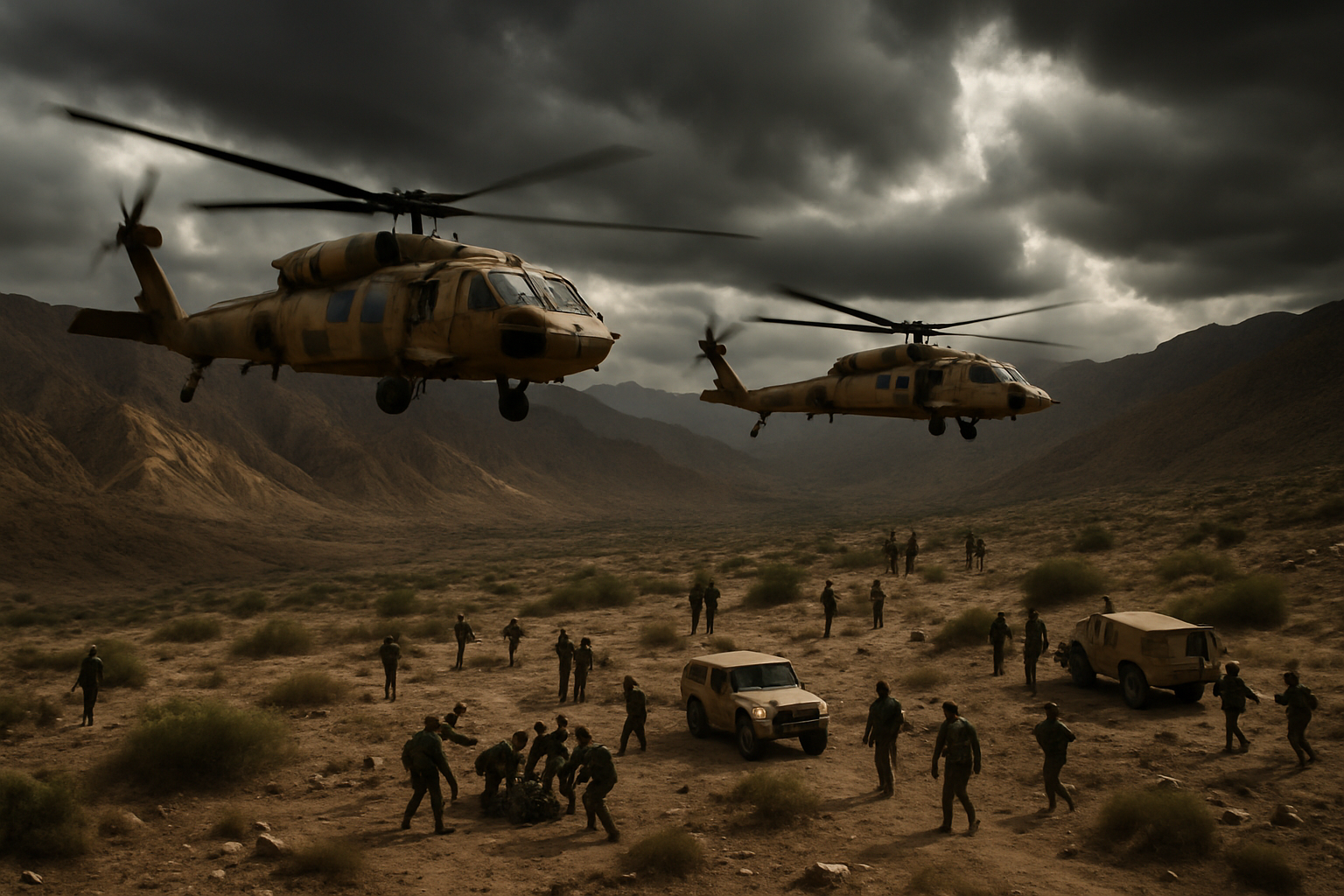
The Pentagon confirmed that one crew member from the downed F-15E fighter-bomber has been successfully rescued by US Air Force search and rescue teams, while the fate of the second crew member remains unknown. The rescue operation involved a US Air Force Black Hawk helicopter, according to reports from The New York Times.
Iranian state television, citing the Islamic Republic's armed forces, claimed that an A-10 ground attack aircraft was also struck by Iranian air defense systems and crashed into the Persian Gulf waters between Qeshm and Hengam Islands. US officials have not yet confirmed the status of the pilot from this second aircraft.
"A US fighter jet has been shot down over Iran and search-and-rescue efforts have so far recovered one of two crew members who ejected, in the first known incident of its kind in the nearly five-week-old war."
— Sydney Morning Herald report
Search Operations Intensify
Multiple sources confirm that both Iranian and American forces are racing against time to locate missing American personnel. Iranian media reports suggest the Revolutionary Guard has launched "comprehensive field operations" to capture any surviving pilots, with disturbing reports of civilian rewards being offered for their capture.
The White House confirmed that President Donald Trump has been "informed of the situation," though officials have not provided details about ongoing search and rescue operations for operational security reasons.
Escalating Regional Crisis
The aircraft downings represent a major escalation in what has become the most dangerous international crisis since the Cold War began. The conflict has already resulted in:
- Over 18,000 flights cancelled worldwide
- Oil prices surging past $100 per barrel
- The closure of the Strait of Hormuz affecting 40% of global oil transit
- The first attack on European territory since WWII (Cyprus)
- Massive international evacuations with over 115,000 Australians trapped in the region
The crisis began following the complete breakdown of nuclear negotiations between the United States and Iran, despite what diplomats described as a "broad agreement on guiding principles" achieved in Geneva talks earlier this year.
Iran's "Operation True Promise 4"
The aircraft downings are part of Iran's systematic retaliation campaign dubbed "Operation True Promise 4," launched after the death of Supreme Leader Ali Khamenei on March 1. The Revolutionary Guard has declared "no red lines remain" in targeting US and Israeli assets across the region.
Iranian military spokesman Ebrahim Zolfaghari stated that the F-15 was shot down using Iran's "new advanced defense system," marking a significant tactical victory for Iranian forces against American air superiority.

Global Economic Impact
The International Energy Agency has authorized the largest strategic petroleum reserve release in its 50-year history, with 400 million barrels being released from 32 countries to stabilize global energy markets. Japan is releasing 80 million barrels, marking its first such action since the 2011 Fukushima disaster.
The aviation industry faces its worst crisis since COVID-19, with eight Middle Eastern countries simultaneously closing their airspace. Dubai International Airport, the world's busiest for international passengers, remains completely shut down due to missile damage.
Congressional Concerns Mount
Senator Richard Blumenthal expressed that he is "more concerned than ever" about the potential deployment of ground troops, as Operation Epic Fury costs have exceeded $11.3 billion in just the first week. The conflict maintains historically low public support at only 25% among Americans, according to recent polling.
The Pentagon has prepared operations extending through September, far beyond the initial 4-6 week timeline suggested by the White House, raising questions about the scope and duration of the military campaign.
Succession Crisis in Iran
The aircraft downings occur during Iran's first hereditary succession crisis, with Mojtaba Khamenei, son of the deceased Supreme Leader, positioned to take control. CIA assessments suggest the Revolutionary Guard has consolidated unprecedented control over Iranian governance, marking a shift from clerical to military leadership during active warfare.
International Response
European allies have deployed an unprecedented naval coalition to protect Cyprus following the first attack on European territory since World War II. HMS Dragon, along with Spanish, Italian, French, and Greek vessels, are providing protection after Iranian drones struck RAF Akrotiri on the British sovereign base.
However, tensions within NATO have emerged, with Spain refusing to provide base access for US operations against Iran, citing concerns about international law compliance.
"This marked a major escalation in the conflict just two days after Donald Trump said the US had 'beaten and completely decimated Iran'."
— Breaking News Ireland
Nuclear Diplomacy Breakdown
The current military confrontation emerged from the complete collapse of nuclear negotiations, despite achieving what diplomats called the most progress since the 2018 JCPOA breakdown. Iran maintained that ballistic missiles and regional proxies were "red lines" that could not be included in nuclear-only talks, while the US demanded a comprehensive agreement covering missiles, armed groups, and human rights.
Iran continues uranium enrichment at 60% purity with over 400 kilograms of material, approaching the 90% threshold needed for weapons-grade uranium. The crisis unfolds amid broader nuclear governance challenges, as the New START treaty between the US and Russia expired in February, leaving the world without formal nuclear constraints between major powers for the first time in over 50 years.
Humanitarian Consequences
The Iran Red Crescent reports over 787 civilian casualties from US-Israeli strikes, including a devastating school attack in Minab that killed between 53-85 students and staff. The incident has prompted Geneva Conventions investigations into potential war crimes.
International evacuations are proceeding at the largest scale since the Arab Spring in 2011, with multiple nations extracting hundreds of thousands of citizens from the conflict zone.
Looking Ahead
UN Secretary-General António Guterres has described the crisis as "the greatest test of multilateral cooperation and crisis management in the modern era." The outcome of this confrontation is expected to establish precedents for 21st-century international relations, affecting approaches to nuclear governance, energy security, and conflict resolution for decades to come.
As search operations continue for the missing American aircrew, the international community faces a critical juncture that will determine whether diplomatic solutions remain viable for modern nuclear crises or if military approaches become the preferred template for international disputes.
The template-setting nature of this crisis extends far beyond the Middle East, with implications for global energy security, nuclear proliferation prevention, and the fundamental principles of the post-World War II international order being tested simultaneously in what experts describe as the most dangerous moment since the end of the Cold War.