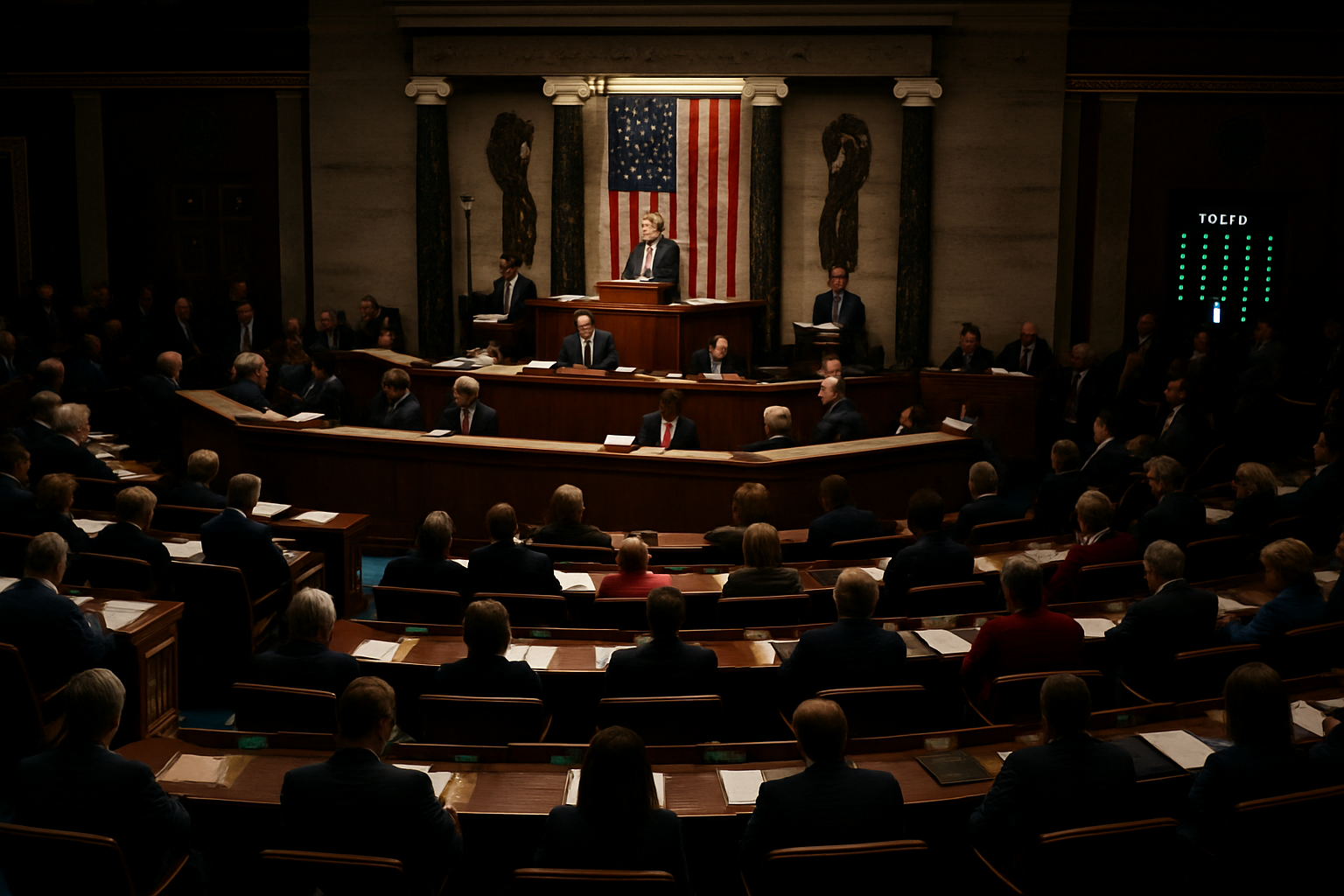
The U.S. House of Representatives delivered a rare bipartisan rebuke to President Donald Trump on Wednesday, voting 219-211 to end his controversial tariffs on Canadian goods in a dramatic challenge to his trade policy authority.
The largely symbolic vote saw several Republicans break ranks to join nearly all Democrats in opposing the tariffs, highlighting growing congressional anxiety over Trump's economic agenda just as the administration faces mounting pressure on multiple diplomatic fronts, from Iran nuclear negotiations to ongoing trade disputes.
Unprecedented Congressional Challenge
Wednesday's House vote follows similar action by the Senate, creating an unusual situation where both chambers of the Republican-controlled Congress have now formally opposed a sitting Republican president's trade policy. The legislation aims to terminate Trump's use of national emergency powers as justification for imposing punitive trade measures on Canadian goods.
The vote represents the most significant organized opposition to Trump's trade agenda since he returned to office, with six Republican defections joining the Democratic opposition. House Speaker Mike Johnson had unsuccessfully attempted to prevent the vote from reaching the floor.
"This vote demonstrates growing concerns among lawmakers about the administration's approach to our closest trading partners," said a senior Republican aide who spoke on condition of anonymity.
— Senior Republican Congressional Aide
Economic and Diplomatic Context
The congressional action comes amid broader concerns about Trump's use of tariffs as a diplomatic weapon. In recent weeks, the administration has threatened 25% tariffs on countries conducting business with Iran, while simultaneously lifting penalties on India and expanding agricultural imports from Argentina by 500%.
Canada remains one of America's largest trading partners, and the tariffs have created friction in a relationship that spans the world's longest undefended border. The timing is particularly sensitive as Trump has also threatened to block the opening of the $4.7 billion Gordie Howe International Bridge connecting Michigan and Ontario unless the U.S. receives ownership stakes in the Canadian-funded project.
International economists have noted that the vote comes as Trump's broader trade strategy faces scrutiny. While some bilateral agreements have shown success—including the recent U.S.-India framework reducing tariffs from 25% to 18%—the Canada tariffs have drawn criticism for targeting America's most integrated economic partner.
Trump's Veto Power Looms
Despite the congressional opposition, Trump retains significant leverage through his veto authority. The president would need to sign any legislation ending the tariffs, something he has shown no inclination to do. Overriding a presidential veto would require a two-thirds majority in both chambers—a threshold that appears unlikely given the narrow margins in Wednesday's vote.
The Trump administration has defended the tariffs as part of a broader strategy to renegotiate trade relationships and ensure "fairness" for American workers and businesses. White House officials have characterized congressional opposition as interference with executive authority over trade policy.
Growing Republican Unease
The six Republican defections signal growing unease within Trump's own party about his aggressive use of trade tools. Many Republicans have historically supported free trade principles and maintain concerns about the economic impact of tariffs on American consumers and businesses.
The vote also reflects broader tensions over Trump's expansion of executive power in trade policy. Some Republicans worry about setting precedents that could be used by future Democratic administrations, while others question the effectiveness of tariffs in achieving diplomatic objectives.
Agricultural interests, in particular, have expressed concern about retaliatory measures affecting American farmers. Despite Trump's recent expansion of beef imports from Argentina, ranchers and other agricultural producers worry about losing access to crucial Canadian markets.
International Implications
The congressional vote has been closely watched by international allies and trading partners as an indicator of American political stability and policy predictability. European officials have privately expressed concerns about the precedent set by using trade measures for diplomatic pressure, particularly affecting allies.
The Canada tariffs exist within a complex web of Trump's trade policies, including his recent threats against countries trading with Iran and his ongoing negotiations with various bilateral partners. Some analysts see the congressional pushback as an attempt to constrain executive authority over trade policy before it expands further.
Regional cooperation frameworks, including USMCA (the renegotiated NAFTA), could face strain if trade disputes with Canada continue to escalate. The uncertainty has already affected business planning and investment decisions across multiple sectors dependent on cross-border commerce.
Looking Forward
The immediate practical impact of Wednesday's vote remains limited given Trump's veto authority, but the symbolic weight carries significant political implications. The measure demonstrates that congressional Republicans are willing to challenge Trump on trade policy when they believe it conflicts with broader economic interests.
Future trade negotiations may be influenced by this congressional signal, particularly if Trump seeks to expand his use of national emergency powers for trade purposes. International partners now have evidence that Trump's trade policies face domestic opposition, potentially affecting their own negotiating strategies.
The vote also sets up potential future confrontations if Trump continues to expand his trade authorities or if economic conditions change. With midterm elections approaching, Republicans in competitive districts may face pressure to take positions on trade policies affecting their local economies.
As Trump's administration continues to pursue an aggressive "America First" trade agenda across multiple fronts—from Iran sanctions to Argentina agreements—Wednesday's vote serves as a rare institutional check on presidential power, even if its immediate practical effects remain constrained by constitutional reality.