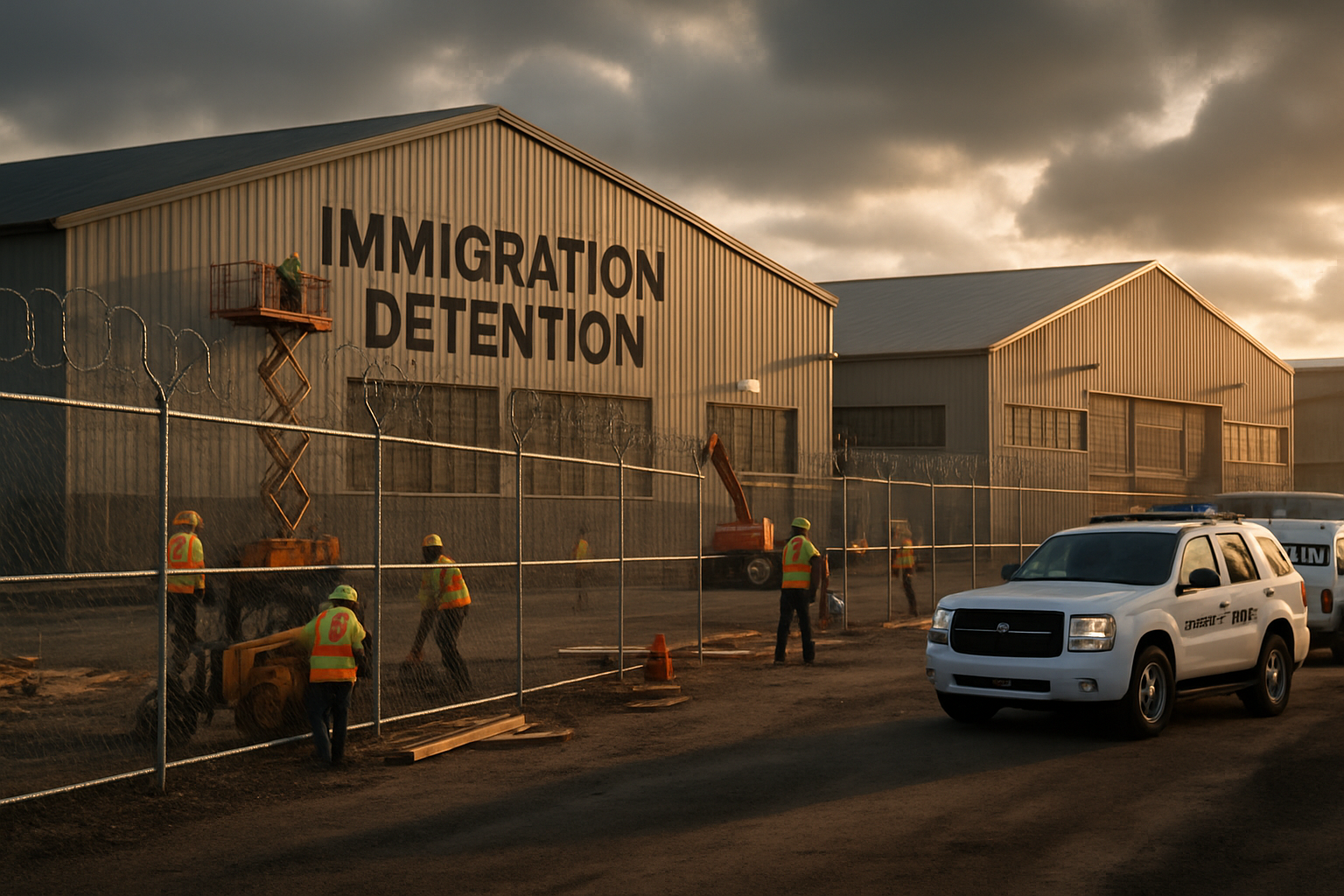
The Trump administration has unveiled a massive $38.3 billion plan to expand immigration detention facilities nationwide, converting 16 warehouses into regional processing centers capable of holding tens of thousands of migrants as enforcement operations intensify across the country.
According to documents released by US Citizenship and Immigration Services (USCIS), the Department of Homeland Security plans to acquire and retrofit warehouses into detention centers, each capable of holding 1,000-1,500 detainees. The project represents the largest expansion of immigration detention infrastructure in U.S. history.
Unprecedented Scale of Detention Expansion
The plan, detailed in a document titled "Detention Reorganization Project" bearing the Department of Homeland Security seal, outlines Immigration and Customs Enforcement's (ICE) new model based on "the acquisition and renovation of eight large-scale detention centers and 16 processing sites." The scope dwarfs previous detention expansions and reflects the administration's commitment to what officials call a "comprehensive approach" to immigration enforcement.
Sources familiar with the planning indicate the facilities will be strategically distributed across the United States to handle what the administration anticipates will be dramatically increased detention numbers. The warehouses will undergo extensive retrofitting to meet federal detention standards while maintaining the capacity for rapid processing of immigration cases.
Political Crisis Over Enforcement Methods
The detention expansion announcement comes amid intense political turmoil over immigration enforcement tactics. The Department of Homeland Security is currently operating under a partial government shutdown triggered by Congressional Democrats' demands for accountability measures following the fatal shootings of Alex Pretti and Renee Nicole Good by ICE agents in Minneapolis in January 2026.
The crisis has led to unprecedented oversight measures, including mandatory body cameras for ICE agents implemented by DHS Secretary Kristi Noem, effective February 2. Congressional Democrats are threatening to block DHS funding unless "drastic changes" are implemented in ICE operations, with current funding only secured through February 13.
"This represents a fundamental shift in how we approach immigration enforcement in this country. The scale is unprecedented."
— Senior DHS Official, speaking on condition of anonymity
Enforcement Operations Under Scrutiny
The expansion plans emerge as the Trump administration faces mounting criticism over its enforcement methods. A University of California study reveals deportations have quadrupled during the first nine months of Trump's second administration compared to previous levels, with ICE detentions similarly multiplying.
Recent polling by NPR/PBS/Marist shows two-thirds of Americans believe ICE has "gone too far" in immigration enforcement, marking a significant shift in public opinion. The sentiment has led to tactical adjustments in Minnesota, where the administration withdrew 700 federal agents following community protests and the fatal shootings.
Border Czar Tom Homan, defending the policy changes, characterized the Minnesota withdrawal as "smarter law enforcement, not less law enforcement," while emphasizing that overall enforcement strategy remains unchanged despite local tactical adjustments.
International Dimensions
The detention expansion has drawn attention from international media and governments. Mexican consulates have issued warnings to their nationals about ICE operations during major public events, including the recent Super Bowl LX. Guatemala's Institute of Migration reported 5,094 Guatemalan nationals were returned from the US and Mexico in January 2026 alone, with an average age of 24.
Major corporations, including Target, are facing employee pressure over ICE workplace raid protocols, demanding clearer guidance on federal agent access to stores and parking lots. The economic impacts include immigrant families avoiding essential services and workforce disruptions in agriculture, hospitality, and healthcare sectors.
Legal and Constitutional Challenges
The expansion faces multiple legal challenges across federal courts. Civil rights organizations have filed lawsuits challenging visa suspensions affecting 75 countries, while Federal Judge Ana Reyes blocked the termination of Temporary Protected Status for 350,000 Haitians, citing discriminatory intent.
Oregon federal judge rulings now require ICE to obtain warrants before arrests unless there is an escape risk, representing a significant shift toward judicial oversight of immigration enforcement. These legal developments could impact how the new detention facilities operate and what procedural protections detainees receive.
Economic and Social Implications
The $38.3 billion investment represents one of the largest federal expenditures on immigration infrastructure in decades. Critics argue the funds could be better allocated to immigration court backlogs and legal processing improvements, while supporters maintain that enhanced detention capacity is essential for effective enforcement.
Community organizations report widespread fear among immigrant populations, with families avoiding medical care, education, and other essential services. The climate of concern has prompted some sanctuary cities to review their cooperation policies with federal immigration authorities.
Implementation Timeline and Challenges
While specific timelines remain classified, sources indicate the first retrofitted facilities could become operational within 12-18 months. The project faces significant logistical challenges, including site selection, construction oversight, staffing recruitment, and ensuring compliance with federal detention standards.
The administration must also navigate ongoing funding battles in Congress, where Democrats have demonstrated willingness to use budget leverage to demand policy changes. House Speaker Mike Johnson has scheduled two weeks of ICE reform debates following the resolution of the current shutdown crisis.
"We're looking at a fundamental transformation of America's immigration detention capabilities. This will define enforcement policy for the next generation."
— Immigration Policy Expert, Congressional Research Service
Looking Forward: Policy and Political Implications
The detention expansion represents a significant test of democratic oversight over federal law enforcement agencies. The combination of unprecedented infrastructure investment, enhanced enforcement operations, and strong congressional opposition creates a complex political dynamic that will likely influence immigration policy well beyond the current administration.
International observers note that the U.S. approach may influence global immigration enforcement policies, particularly as other nations face similar migration pressures. The emphasis on detention-based solutions rather than comprehensive immigration reform represents a distinct policy choice with long-term implications for American immigration law.
As the political battle continues, the ultimate scope and implementation of the detention expansion will depend on the resolution of current funding disputes, ongoing legal challenges, and the administration's ability to maintain public support for its enforcement approach despite growing opposition from civil rights advocates and local communities.
The coming weeks will be crucial as Congress returns to debate DHS funding and ICE reform measures, while federal courts continue to weigh in on the constitutional and legal parameters of expanded immigration enforcement. The outcome will shape not only the immediate future of American immigration policy but also establish precedents for federal law enforcement accountability in democratic governance.